漆器为什么能埋八千年不坏
韵和鸣 · 韵和鸣公众号 · 2026/10/14 12:00:00 · 16 阅读
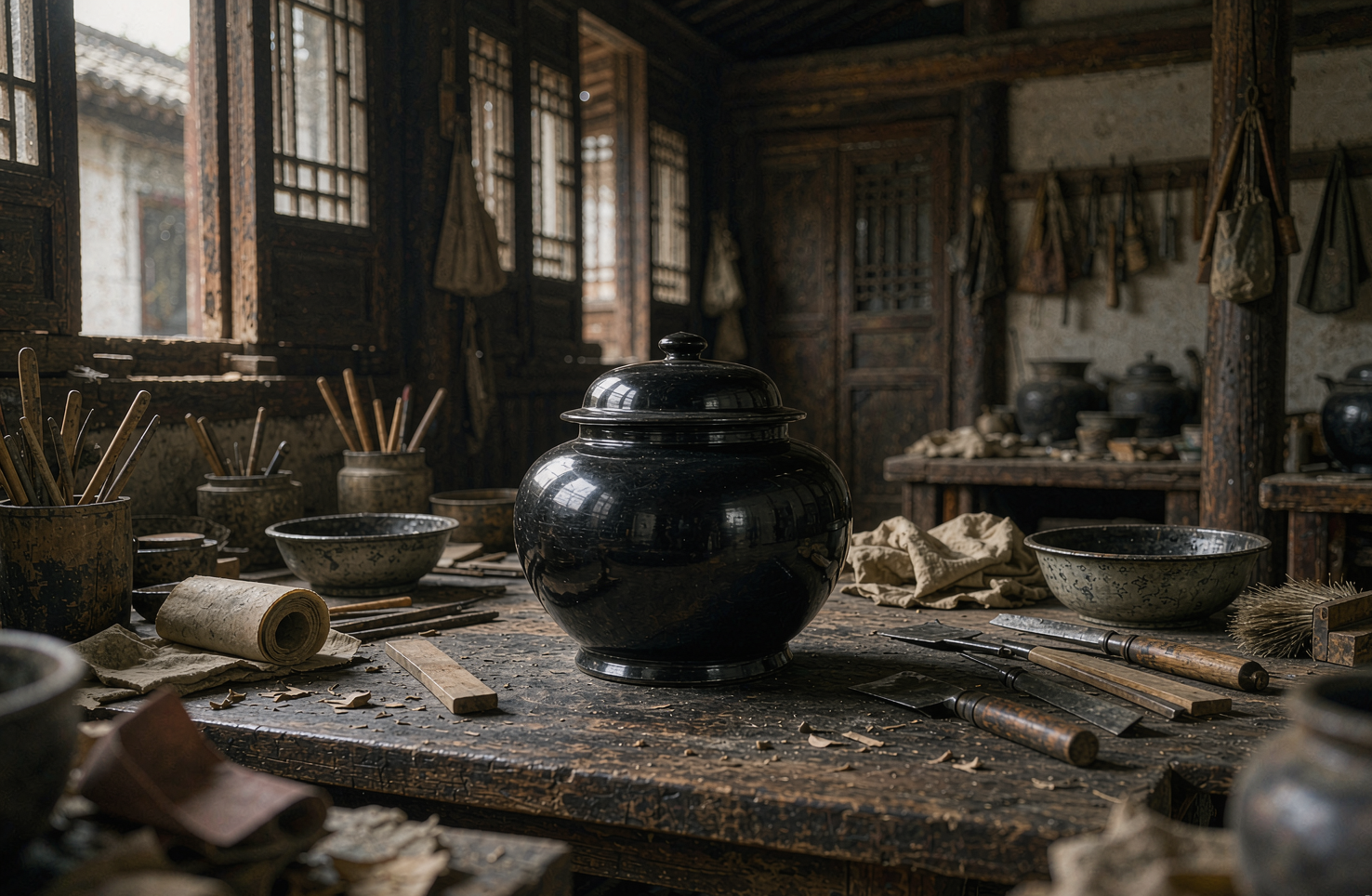
在博物馆做漆器研究与修复的研究员老周,桌上常年摆着两样东西:一段出土的漆皮残片,一只新做不久的平遥推光漆盘。他说这两样东西隔着八千年,却是同一种材料。这次对话,我们从"漆器为什么埋几千年不坏"聊起,聊到最后,其实是手艺对材料的理解问题。
▍八千年前的那张弓
老周说起浙江杭州萧山的跨湖桥遗址,语速会慢下来。那是一柄桑木做的弓,残长一米二出头,表面髹着朱红色的漆——经测定距今约八千年,是迄今所见年代很早的漆器之一。漆在这里不是装饰,是功能:弓身裹漆,防潮防蛀,桑木的含水量稳住了,弓的性能才稳得住。
再晚一点,余姚井头山遗址出土的木器上,那层黑色涂层经过显微镜观察、红外光谱、热裂解质谱和酶联免疫法四重检验,被确认为人工涂覆的天然漆。到河姆渡文化,一只朱漆瓜棱木碗已经敢用来盛饭——先民不但用漆,还调了色。
▍漆为什么会这么耐用
问到材料的道理,老周把它讲得很平实。生漆来自漆树,主要成分漆酚在接触空气后氧化聚合成膜,这层膜耐酸、耐潮、隔水隔气,而且越磨越亮。他说,古人未必懂高分子,但他们用几千年时间反复试出了这个材料的脾性,然后把脾气驯成了工艺。
《髹饰录》为明代黄成所著,是中国早期的漆艺专著,其中以坚牢其质、光彩其文概括漆的品格。
"坚牢其质,光彩其文"——老周念这八个字的时候,指了指桌上的漆盘:平遥推光漆器的讲究,正是这八个字的当代版。木胎之外裱布、刮灰、一道道髹涂阴干,末了用手掌蘸着砖灰与麻油一遍遍推光。八千年前的弓裹漆为了稳,今天的手推光为了温润——耐久与体面,是同一条路走出来的两端。
他还补了一段教科书外的观察:历史上漆艺的重心几经迁移,战国楚地的漆绘巨棺、北魏司马金龙墓的漆画屏风、成都扬州的唐代漆坊,各领一段风骚——但无论哪一段,"等漆干"这件事没人省过。阴干房里一层漆要等上几天,急不得,也快不得。所谓八千年的耐久,说穿了是把"等"字写进了工艺——省时间的手艺,往往也省掉了时间给的回报。
▍地下的八千年与案头的十年
聊到最后,我问了一个不太客气的问题:现在的漆器,还能用八千年吗?老周笑了。他说大漆的性质没有变,变的是工序有没有做足、使用的人肯不肯养。地下埋八千年靠的是材料与工艺,案头用十年靠的是别拿它当一次性消费品——阴干要等,清洗要轻,暴晒与干燥的暖气片都躲着点。
他见过反例。有人把一只不错的漆盘泡进洗洁精水里过夜,第二天漆面起了细密的皱——不是材料辜负了人,是人没按材料的脾气待它。也见过一只用了三十年的漆盒,主人定期用细棉布干擦、避开灶台,漆面比出坊那天还润。"所以别问漆器能用多久,"老周说,"先问你打算怎么待它。"
▍问答
问 | 出土的漆器长期泡在水里,为什么反而不容易烂?
答 | 关键在那层漆膜。大漆固化后的膜隔水隔气,把木胎与外界的潮气、微生物基本隔开,所以饱水环境里漆器常常保存得比想象中好。当然出土后失水会开裂变形,脱水定形是修复里最难的一步。
问 | 大漆器和化学漆器,放久了差别会显现吗?
答 | 会,而且差别越来越大。大漆膜越用越温润,老化的表现是慢慢失光;化学涂层则倾向于发黄、粉化、起皮。买的时候看工序说明,用的时候看光泽变化,时间会把两种材料分开。
问 | 怎么分辨一件漆器是不是手工真作?
答 | 看三点:工序是否说得出(髹涂、阴干、推光一道不缺);痕迹是否有人的微差(手推的光泽有方向、有温度,机器喷涂的均匀得刻板);来源是否讲得清(出自哪位匠人、哪个工坊)。韵和鸣的器物都经得起这三问,因为每一件都是与非遗老师联名、由传承人手工完成的。
📩 非遗项目 | 匠人举荐 | 跨境出海 | 线下联营
欢迎留言或后台联系,我们与匠人同行。
—— 韵和鸣 · 与匠人同行
〖 匠 〗
English
When Zhou speaks of the Kuahuqiao site in Xiaoshan, Hangzhou, he slows down. It is a bow of mulberry wood, a touch over 1.2 meters long as it survives, coated in vermilion lacquer—dated to roughly eight thousand years ago, among the earliest lacquerware ever found. Here lacquer is not ornament but function: the coated body resists damp and insects; the wood's moisture stays stable, and so does the bow.
A little later, on wooden objects from the Jingtoushan site in Yuyao, the black coating passed four rounds of testing—microscopy, infrared spectroscopy, pyrolysis mass spectrometry and immunoassay—and was confirmed as man-applied natural lacquer. By the Hemudu culture, a vermilion-lacquered melon-ridged bowl was already fit for the table—people were not merely using lacquer, but tinting it.
Asked about the material's logic, Zhou puts it plainly. Raw lacquer comes from the lacquer tree; its principal component, urushiol, oxidizes and polymerizes into a film that resists acid and damp, bars water and air, and grows brighter with polishing. The ancients knew no polymer chemistry, he says, but through millennia of trial they learned this material's temperament—and tamed that temperament into craft.
The Xiushi Lu, written by Huang Cheng in the Ming dynasty, is China's early monograph on lacquer art; it sums up lacquer's character as firmness in substance, brilliance in surface.
"Firmness in substance, brilliance in surface"—as Zhou recites the eight characters, he points at the tray: what Pingyao polished lacquerware pursues is precisely their contemporary edition. Beyond the wooden core come cloth-laying, ash-priming, coat after coat of lacquering and shade-drying, and at the last, hand-polishing with brick dust and linseed oil, pass after pass. The ancient bow was coated for stability; today's palm-polishing is for warmth—durability and refinement are the two ends of one same road.
He adds an observation from beyond the textbooks: the center of lacquer art has migrated through history—the painted coffins of the Warring States Chu tombs, the lacquer screen from the Northern Wei tomb of Sima Jinlong, the Tang-dynasty workshops of Chengdu and Yangzhou, each holding the stage in turn. Yet in none of those chapters did anyone skip the waiting. Each coat in the drying room takes days—unhurried, unaccelerated. The so-called durability of eight millennia, plainly put, is the character "wait" written into the craft: a technique that saves time usually also forfeits what time used to pay back.
Eight Millennia Below, Ten Years on the Desk
Near the end I asked a blunt question: can today's lacquerware last another eight millennia? Zhou laughed. The material, he said, has not changed; what changes is whether the process was done in full, and whether the owner is willing to care for it. Eight thousand years underground owe to material and craft; ten years on a desk owe to never treating it as disposable—let shade-drying take its time, clean gently, and keep it away from blazing sun and parching radiators.
He has seen the counterexamples. A decent tray left soaking overnight in dishwater came up with a fine maze of wrinkles the next morning—the material did not fail the owner; the owner ignored the material's temperament. And he has seen a thirty-year-old lacquer box, its owner wiping it dry with fine cotton cloth on a schedule, kept clear of the stove, its surface mellower than the day it left the workshop. "So don't ask how long lacquerware lasts," Zhou says. "First ask how you intend to treat it."
Why do excavated lacquer pieces survive centuries in water without rotting?
The key is the film. Once cured, the lacquer membrane bars water and air, sealing the wooden core off from moisture and microbes—which is why waterlogged lacquer often survives better than expected. Excavation does bring cracking as it dries, and stabilizing the dehydration is the hardest step of restoration.
Do lacquerware and synthetic-coated pieces diverge as they age?
Yes, and the gap widens. Raw lacquer grows mellower with use, aging as a slow loss of sheen; synthetic coatings tend to yellow, chalk and peel. Read the process notes when buying, watch the sheen as years pass—time will tell the two materials apart.
How can you tell whether a lacquer piece is genuinely handmade?
Three checks: whether the process can be recited—lacquering, shade-drying, polishing, none omitted; whether traces carry human variance—hand-polished luster has direction and warmth, machine-sprayed evenness is mechanical; whether provenance is clear—which master, which workshop. YUNHEMING's pieces stand up to all three questions, for each one is co-signed with a heritage master and completed by the bearer's own hands.
ICH Projects · Artisan Referrals · Global Distribution · Salon Partnerships
你可能还感兴趣
一方宋锦里,藏着宋人的审美秩序
初见宋锦,我的反应不是"好看",而是"安静"。它不像人们想象里的锦那样满身是光。带我看锦的老师傅说,正是这份安静,最难织。
韵和鸣 · 2026/10/8 · 10 阅读
一位漆器匠人的失败清单,那些没做成的器物
一间漆坊的账,通常记的是卖出了多少件;平遥一位做了三十多年推光漆器的老师傅,却另有一个本子,专记做坏了多少件。失败清单这门"倒着记的账",恰恰是手艺扎实与否的底细——器物耐看的那一面,是从废品堆里刨出来的。
韵和鸣 · 2026/10/12 · 8 阅读
十六岁学艺,他如今想让漆器走进年轻人的家
在平遥,学漆艺的人正在换代。老匠人把五十年的功夫交给徒弟,年轻教师把漆带进课堂。一门千年手艺要传下去,卡住的往往不是技法。
韵和鸣 · 2026/10/2 · 4 阅读
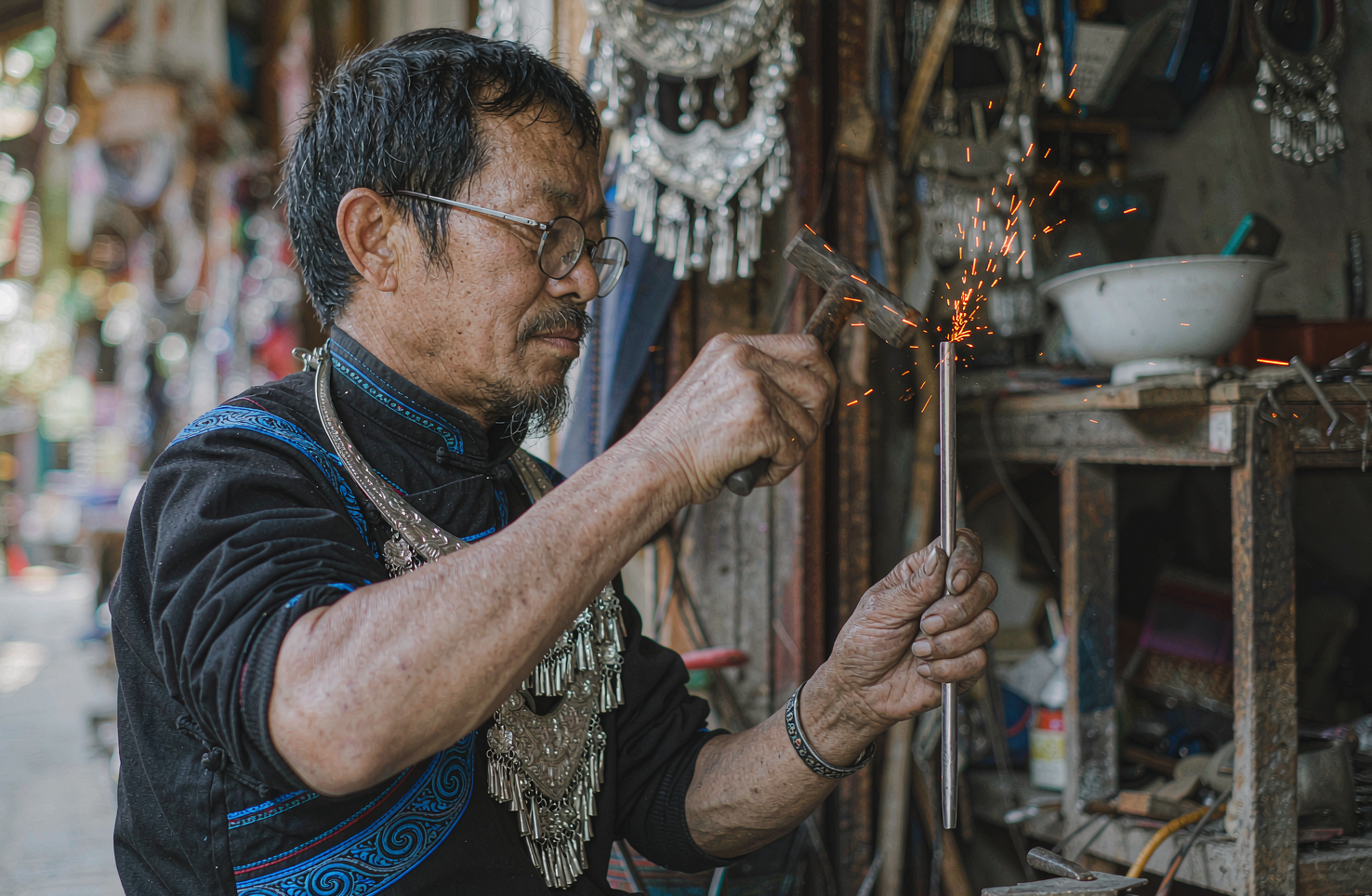
去贵州雷山,看一块银元如何变成一支银簪
在黔东南的苗寨里,银不只是一种首饰材料。它曾经是可以随时熔掉、重新打制的"存款",也是节日里一个女人身上最亮的那部分。关键在于,当一块老银元被放进坩埚,它要经过多少双手、多少道火,才重新成为一件能戴出门的东西。
韵和鸣 · 2026/10/9 · 27 阅读
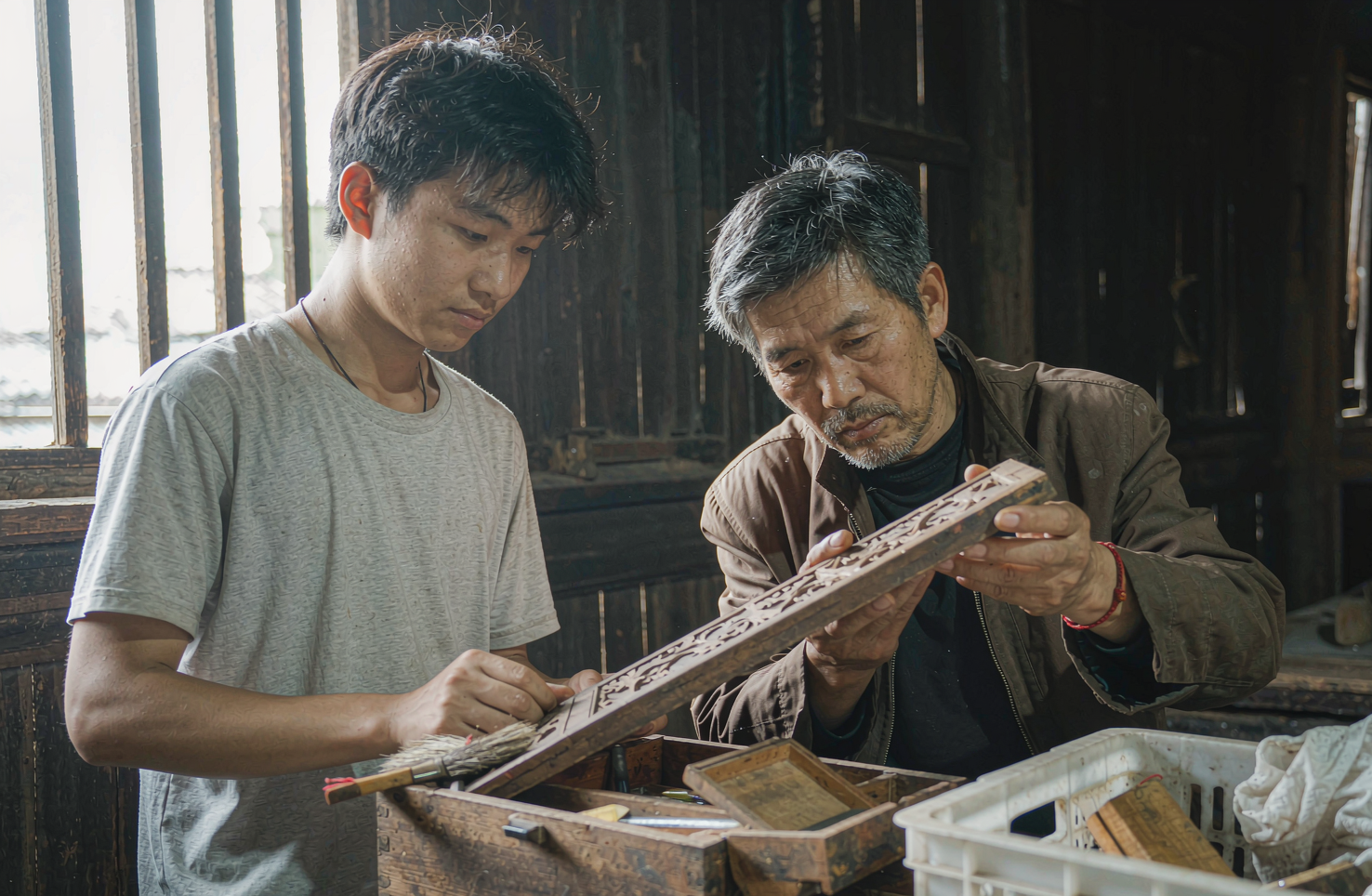
年轻人不愿学老手艺,该怪年轻人,还是怪这门手艺?
非遗传承里被讨论得最多的一句话是"后继乏人"。这句话往下追一层,就分成两条路:一条通向年轻人,说他们耐不住、看不上;一条通向他们面对的那门手艺,说它没能给出一条能活下去的路。这两条路,最近又吵起来了。
韵和鸣 · 2026/10/8 · 10 阅读
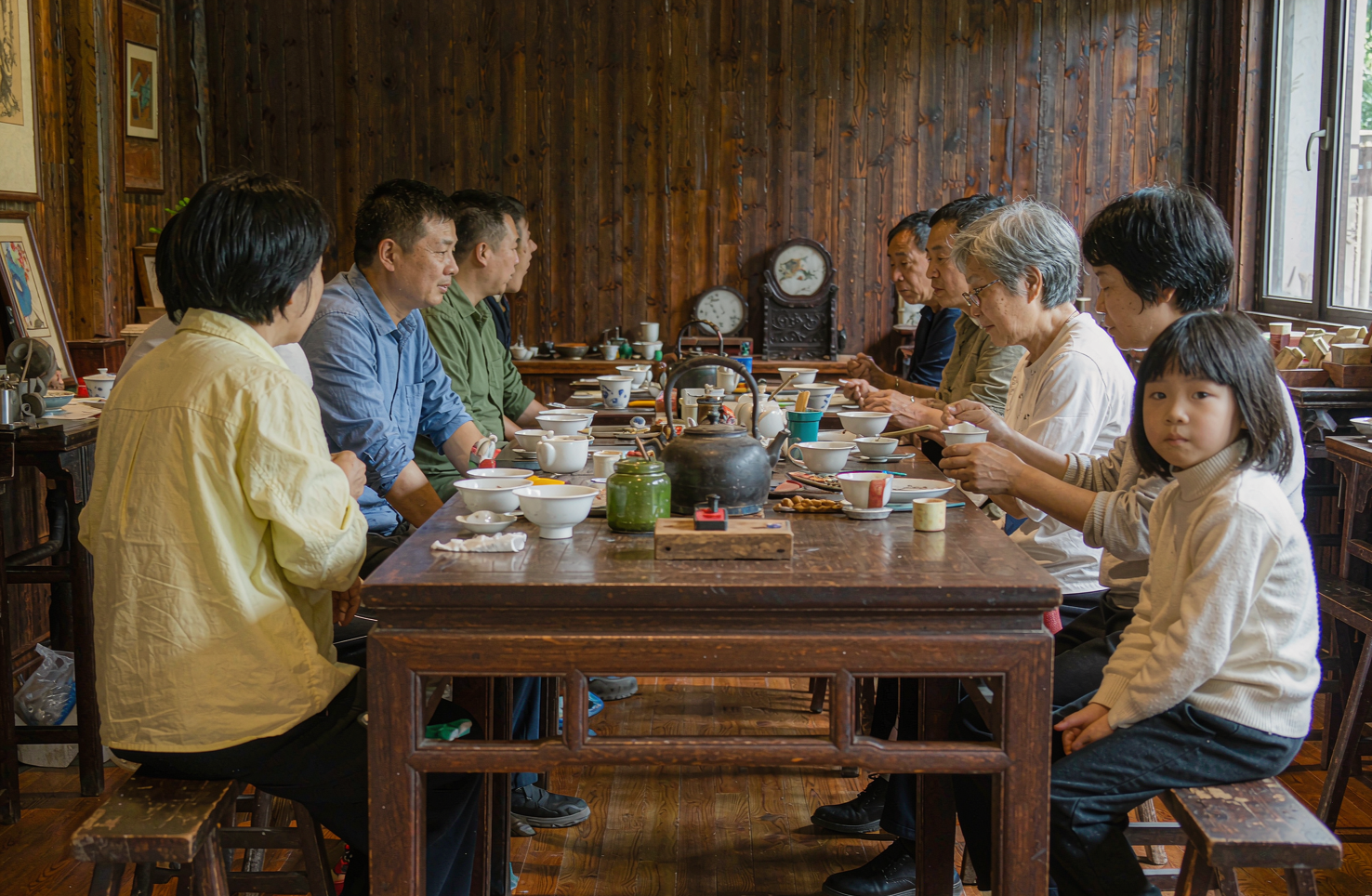
把"慢"做成一种体验:一间非遗会客厅的想法
我们习惯按功能给空间分类:吃饭的、购物的、办公的。但有一种很难归类——它在城市的闹处,不催你走,也不急着让你买单。关键在于,当"慢"被认真设计出来,它本身就可以是一种产品。
韵和鸣 · 2026/10/9 · 9 阅读