平金开黑:金与黑,为什么这么耐看
韵和鸣 · 韵和鸣公众号 · 2026/10/10 12:00:00 · 7 阅读
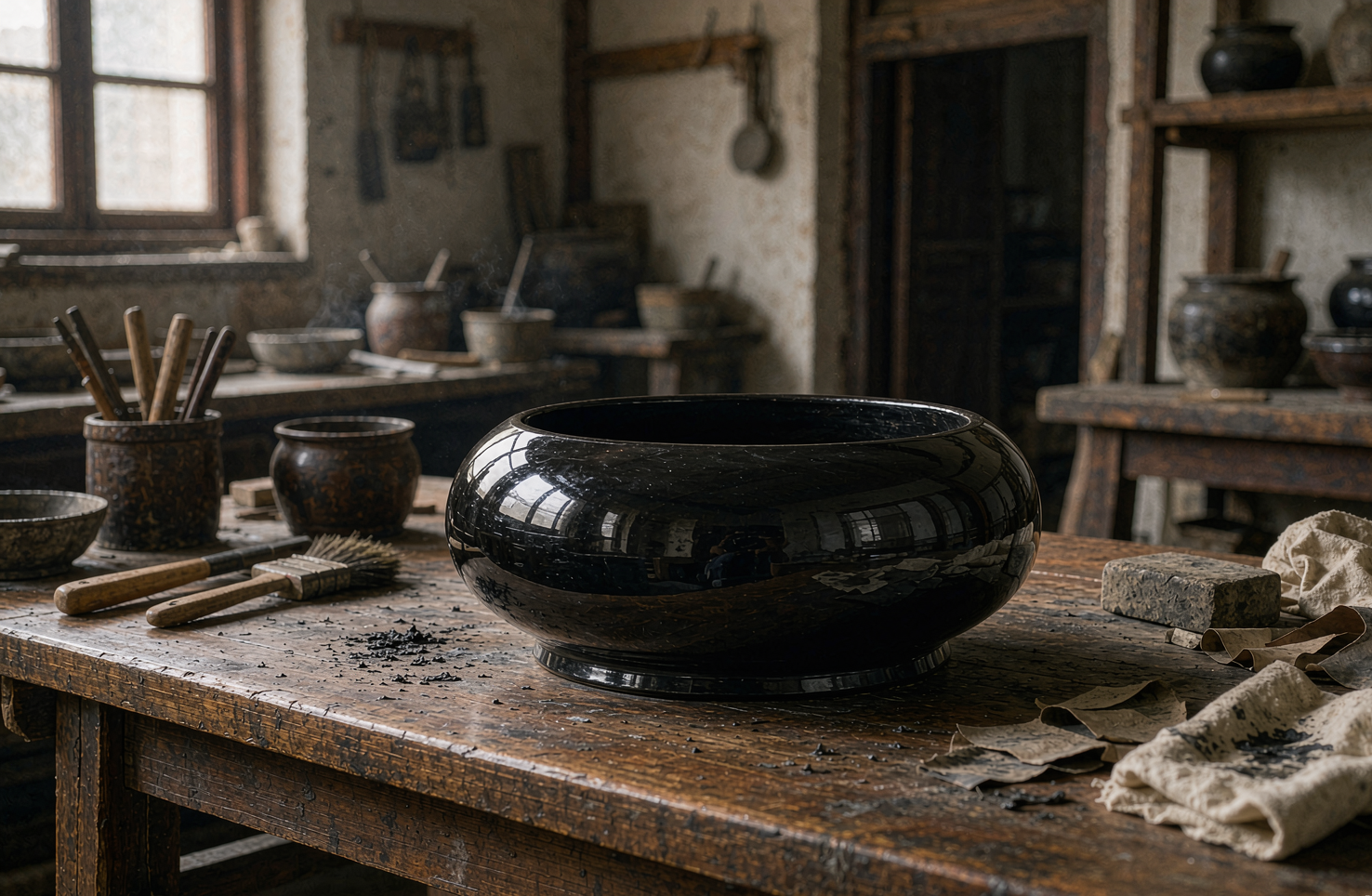
逛漆器店时,最容易让人停下来多看两眼的,往往不是花纹最密的那一件,而是一片黑底上的一线金。它克制得近乎安静,却比满身颜色更抓人。说到底,看懂了金与黑怎么相处,就看懂了漆器审美的一半。
▍先把名字说清楚
它来自山西平遥:一门 2006 年入选国家级非物质文化遗产名录的髹饰技艺,申报地是晋中市平遥县。
描金彩绘包括平金开黑、堆鼓罩漆、勾金、罩金和蛋壳镶嵌等传统技法。(中国非物质文化遗产网 · 平遥推光漆器髹饰技艺)
所谓"平金开黑",指的是以黑漆作底、以金作饰:把金线或金面平贴、平描在漆面上,再用黑漆把纹样的轮廓"开"出来,让金与黑互为底衬。名字听着拗口,做的事其实很朴素——先把黑做干净,再让金落上去。
▍黑为什么难,金为什么贵
先说黑。大漆固化成膜后,颜色会由浅转深,漆器要的是那种能照出人影的黑。这层黑靠"推光"得来:先用细砂纸把漆面打磨光滑,再用椴木烧制的木炭块蘸水细磨,接着用头发蘸油打磨,最后用手掌蘸细砖灰和麻油,一点点推磨到光亮如镜。
一道黑要过这么多道手,才有资格当底。它不许有砂眼、不许有刷痕,因为任何一点毛糙,都会在贴金时被放大。
再说金。漆器里的"金",多半不是一整块金子,而是薄到近乎透明的一层——金箔、金粉或金泥。它经不起手汗,也经不起风:落箔那一下就定生死,歪一点、皱一点,只能整块揭掉重来。
至于工具,也常是自己做的。髹饰用的"漆栓"要用牛尾和大漆、桐油制成,好的还用人的头发;描金的笔是艺人拿山猫脊背的鬃毛特制,一般的毛笔用不了——因为入漆的颜料是用大漆调的,黏稠、咬毛。
▍金与黑的关系,其实是一种秩序
很多头一回看漆器的人会问:为什么不干脆把金铺满,多气派?
一位做了几十年的师傅给的答案很短:"满就死了。"金铺满,眼睛没有落点,看两秒就腻;留出黑,金才有呼吸的地方。黑不是没有内容,它是"退"的那一半——它把光让出去,自己守住整片面。
这也是为什么好的描金漆器常常是"少金多黑"。线的粗细、深浅、疏密,全在控制里;一两处重笔,其余都是留白。放在今天看,这种克制恰好对上了一种当下流行的审美——不靠堆料,靠分寸。
▍从一只盒子看整套手艺
在一只描金首饰盒上,这套关系看得最清楚。盖面一件主纹,四周留黑;盒身一圈细线收边,转角处金黑相交,必须在同一条弧上,差一丝就断气。
这样的盒子,工期按层算,一层不等干透不能上下一层,遇阴雨天还得停。所以它的"贵",并不在材料那层金,而在看不见的等待里。这也是严选时判断一件漆器值不值的落点:不是金有多厚,是黑有多干净、线有多稳。
▍问答
问 | 怎么分辨一件漆器是真的描金,还是印上去的图案?
答 | 看线和光。手工描金的线有起收笔,粗细有微妙变化,金面随角度变色、不是一整片死亮;印上去的图案边缘齐整得像尺子画的,金层也没有随光转动的层次。再就是看底:手推的黑有温润的深度,印刷底多偏灰偏平。
问 | 平金开黑的金,会不会用久了就掉?
答 | 正常使用下比较耐久,因为金层是在漆面上贴牢、再被推光工序压实的。真正伤它的是外部条件:长时间暴晒会让漆面老化,反复摩擦会把金线磨淡,水渍久留也会留下印子。日常用软布拂尘、避开直射阳光即可。
问 | 同样是买描金漆器,韵和鸣挑的时候看什么?
答 | 一句话:不手工的不进。看得细一些是三处——工序是否完整(髹涂、阴干、推光缺一不可)、来处是否清楚(谁做的、在哪做的)、痕迹是否自然(手工件件有微差,仿品件件相同)。这三处过不去,价格再合适也放下。
▍说在最后
金与黑能配上一千多年,靠的不是颜色本身,而是两者的分寸:一个愿意退,一个才敢进。器物如此,做事的人也是。你家里有没有一件"越看越顺眼"的老器物?欢迎留言,说说它是什么。
📩 非遗项目 | 匠人举荐 | 跨境出海 | 线下联营
欢迎留言或后台联系,我们与匠人同行。
—— 韵和鸣 · 与匠人同行
〖 器 〗
相关搜索 | RELATED SEARCHES
平金开黑 是什么 · 描金漆器 怎么辨别 · 平遥推光漆器 工艺 · 金箔 漆器 掉色 · 韵和鸣 严选
English
It comes from Pingyao, Shanxi: a lacquer-decoration technique inscribed in 2006 on the national intangible cultural heritage list, nominated from Pingyao County, Jinzhong.
Gold tracing and painting include such traditional techniques as "pingjin kaihei," raised-and-coated lacquer, gold outlining, gold coating and eggshell inlay. (China Intangible Cultural Heritage Network)
"Pingjin kaihei" refers to working with black lacquer as ground and gold as ornament: gold lines or gold fields are laid or traced flat onto the surface, then black lacquer "opens" the outline of the motif so that gold and black serve as each other's ground. The name is awkward, but the work is plain—first make the black clean, then let the gold settle onto it.
Start with black. Once raw lacquer cures into a film, its color deepens from light to dark, and lacquerware wants the kind of black that can mirror a shadow. That black comes from polishing: sanding the surface smooth with fine paper, then working it with water and charcoal made from linden wood, then with oil and hair, and finally with the palm and fine brick dust mixed with sesame oil, little by little, until it shines like a mirror.
So many hands go into one black before it qualifies as a ground. It tolerates no pinholes and no brush marks, because any roughness will be magnified the moment gold goes on.
Then gold. The "gold" in lacquerware is usually not a solid piece but a layer thin to near transparency—gold leaf, gold powder or gold paste. It cannot stand sweat or draught: the instant of laying decides everything, and a slight shift or crease means peeling the whole piece off and starting again.
Even the tools are usually homemade. The lacquer brush used for coating is made from ox tail, raw lacquer and tung oil, the best with human hair; the gold-tracing brush is hand-made from the mane of a wildcat, since ordinary brushes will not do—pigments mixed with lacquer are thick and eat the hairs.
The Relation between Gold and Black Is a Kind of Order
Many seeing lacquerware for the first time ask: why not cover it fully in gold and be lavish?
A master of several decades answers briefly: "Fullness kills it." Spread gold everywhere and the eye has nowhere to land, tiring within seconds; leave black, and gold has room to breathe. Black is not emptiness—it is the half that yields, giving up the light while holding the whole surface.
This is why good gold-traced lacquerware is often "little gold, much black." The thickness, depth and spacing of every line stay under control; one or two heavier strokes, the rest left open. Seen today, this restraint happens to meet a current taste—not piling on material, but measuring proportion.
In a gold-traced jewelry box this relation is clearest. The lid carries one main motif with black left around it; the sides take a fine band of edging, and at the corners gold meets black, which must sit on the same arc—off by a hair and the line is dead.
Such a box is scheduled by coats; no next coat until the last is dry, and rain days halt everything. So its cost lies not in the gold but in the waiting no one sees. This is where curation judges whether a piece is worth it: not how thick the gold is, but how clean the black and how steady the line.
How can one tell real gold tracing from a printed pattern?
Look at the line and the light. A hand-traced line has entry and exit strokes and subtle changes in thickness, and its gold shifts with the angle rather than staying flat and bright; a printed pattern has edges as even as a ruler and no play of light. Then look at the ground: hand-polished black has a warm depth, while printed grounds tend grey and flat.
Will the gold in "pingjin kaihei" come off with use?
Under normal use it is fairly durable, since the gold is set firmly onto the lacquer and then pressed by polishing. What really harms it is external: prolonged direct sun ages the surface, repeated rubbing dulls the gold lines, and standing water leaves marks. A soft cloth for dust and keeping it out of direct sun will do.
When YUNHEMING picks gold-traced lacquerware, what does it look at?
In one line: if it is not handmade, it does not come in. Looked at closely, there are three checks—whether the process is complete (coating, drying and polishing all required), whether the origin is clear (who made it, where), and whether the marks feel natural (handwork varies piece to piece; imitations do not). Fail these, and it is set aside whatever the price.
Gold and black have paired for well over a thousand years not because of the colors themselves but because of proportion: one is willing to yield, so the other dares to advance. So it is with objects, and with people at work. Do you own an old object that grows more pleasing the longer you look? Tell us what it is.
ICH Projects · Artisan Referrals · Global Distribution · Salon Partnerships
你可能还感兴趣
一件漆器该有多重,手感不会说谎
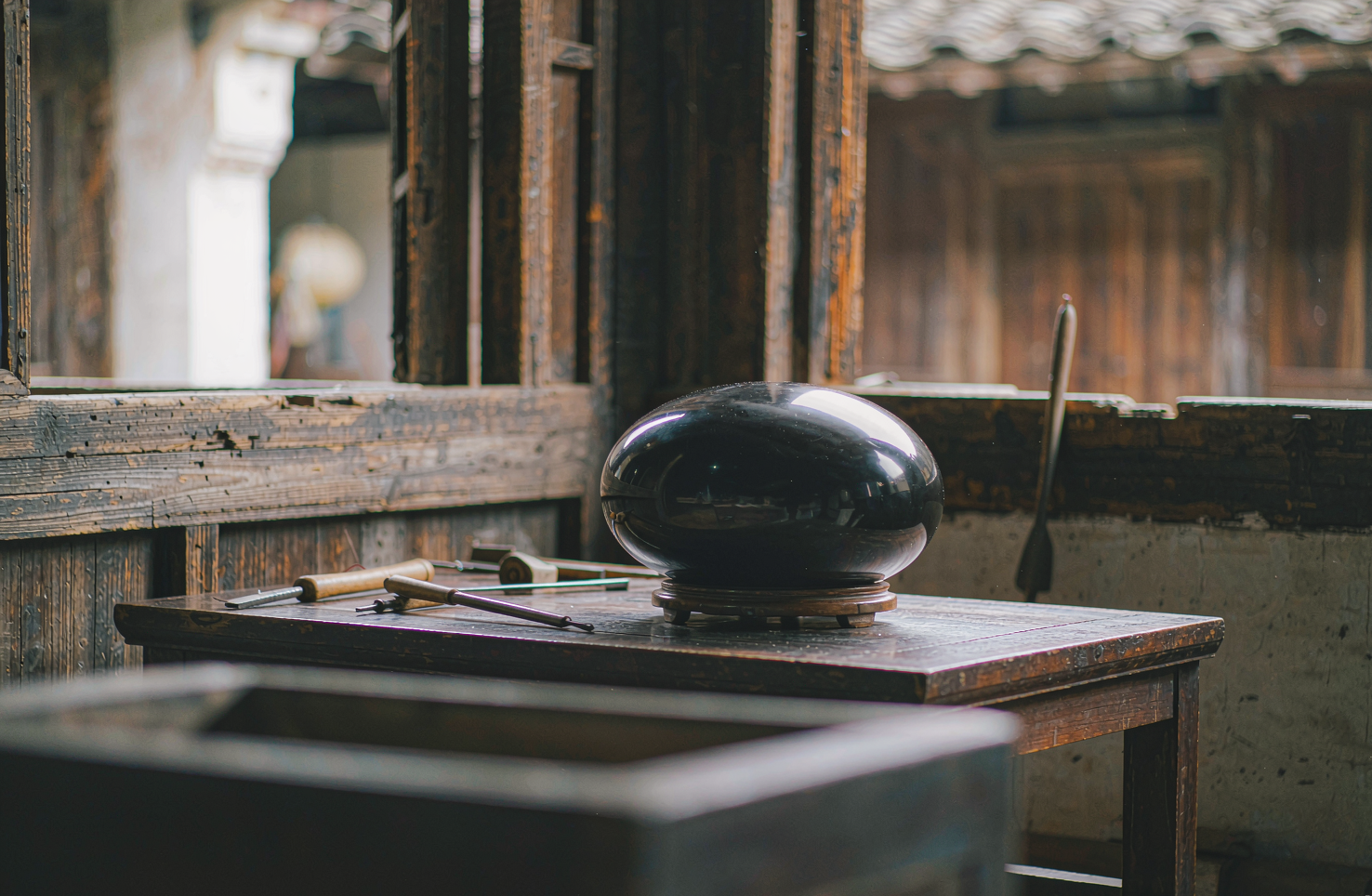
严选器物,看纹样、看款识、看证书,都是明面上的事。但有一道标准写不进任何参数表——上手。同一尺寸的两只漆盘,一只压手温润,一只轻飘干瘪,差别从何而来?这次把"分量"这件事拆开讲。说到底,重量是工序的记账本。
韵和鸣 · 2026/10/14 · 14 阅读
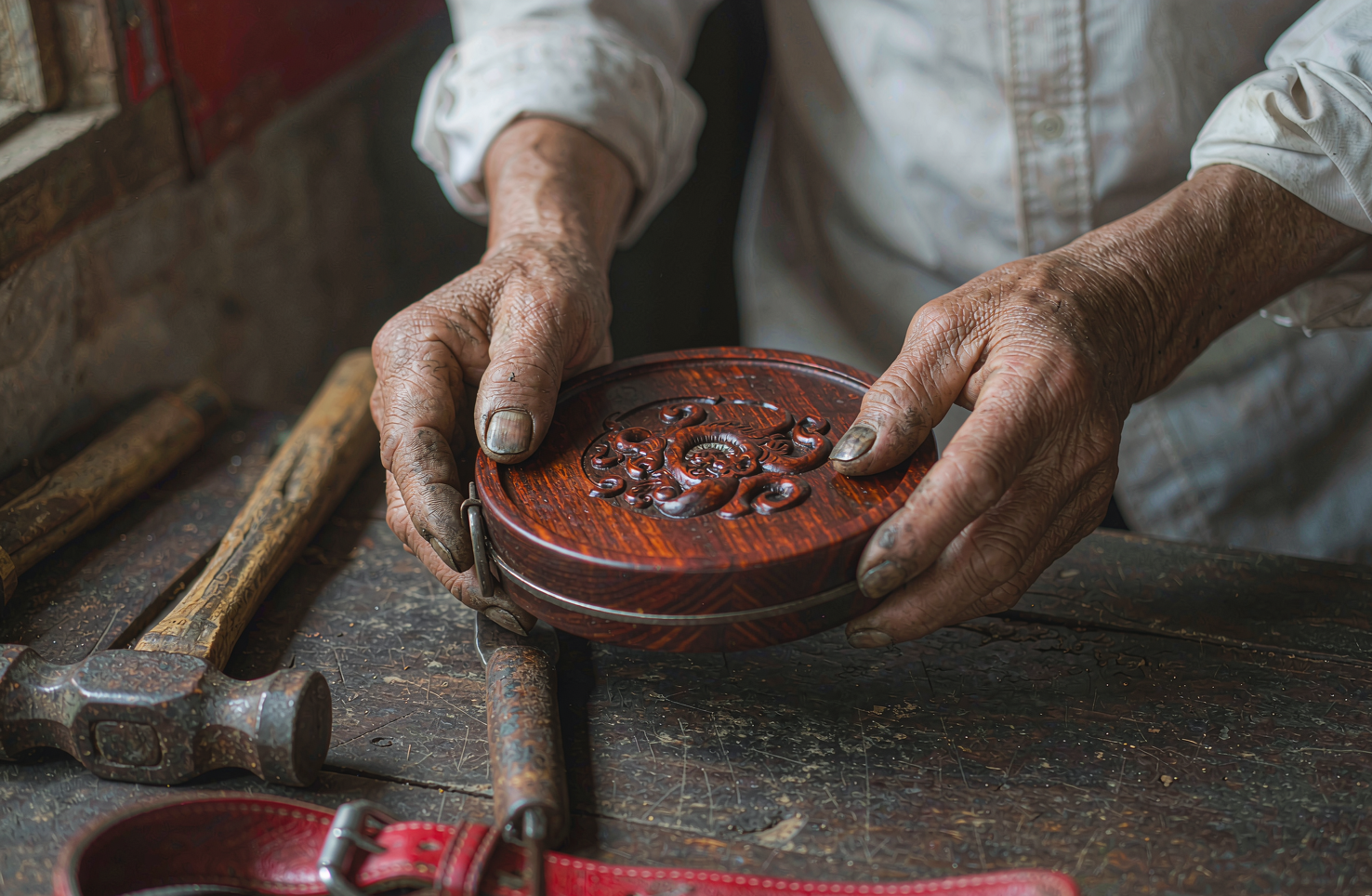
一件非遗手作凭什么"值":把时间的账算一遍
谈非遗手作,绕不开一个字:值。有人觉得贵得离谱,有人觉得便宜得可疑。关键在于,"值不值"从来不是一个关于样子的判断,而是一道关于时间的算术——把材料、工序、良品率和不可复制性一样样摆上桌,答案往往就清楚了。
韵和鸣 · 2026/10/9 · 12 阅读
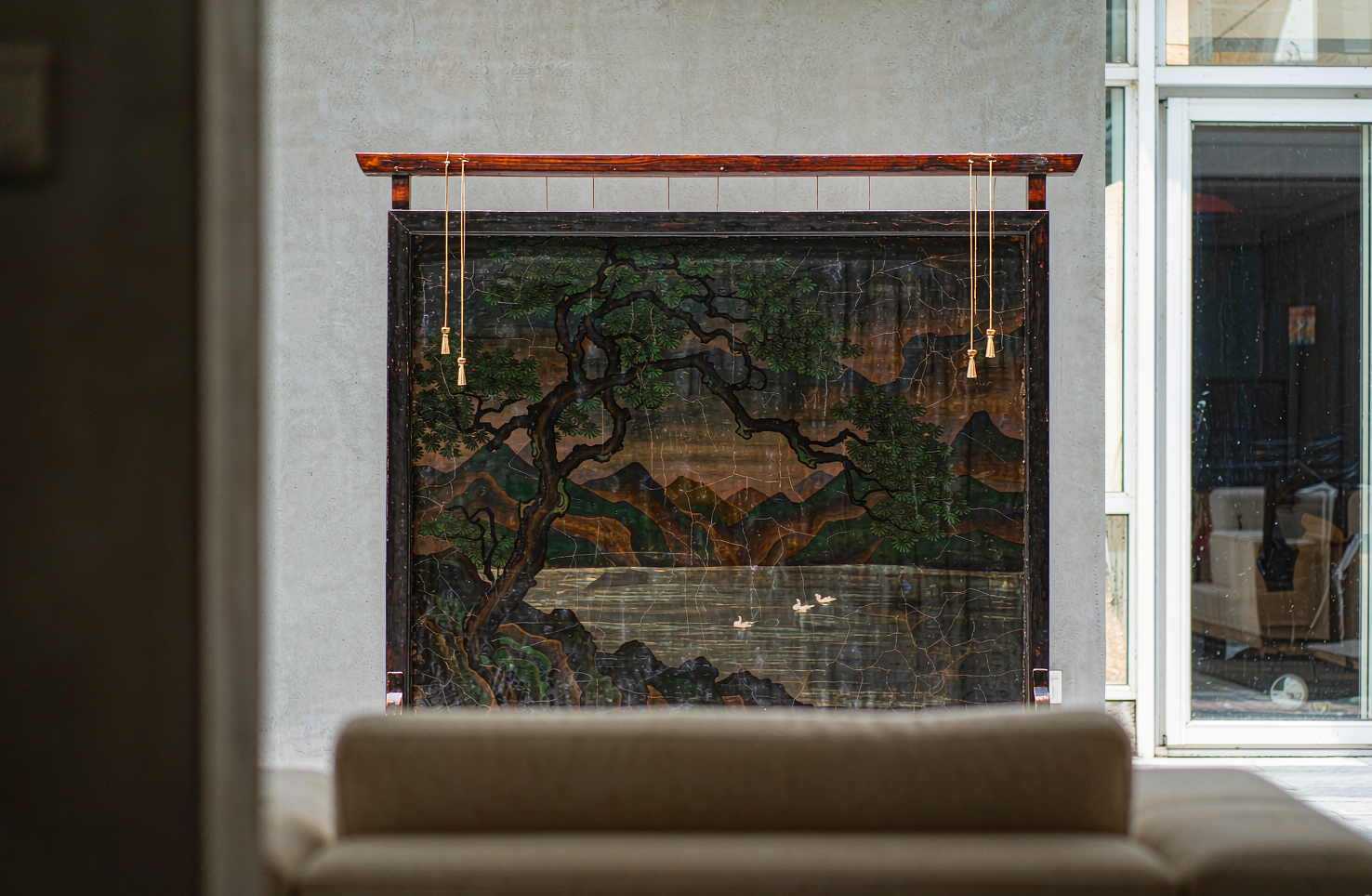
一面屏风,如何成为一个家的「眼」
老房子里,屏风从来不只是挡一挡。它决定你一进门先看哪里。四面墙的屋子有了屏风,才像有了一个"眼"。
韵和鸣 · 2026/10/8 · 12 阅读
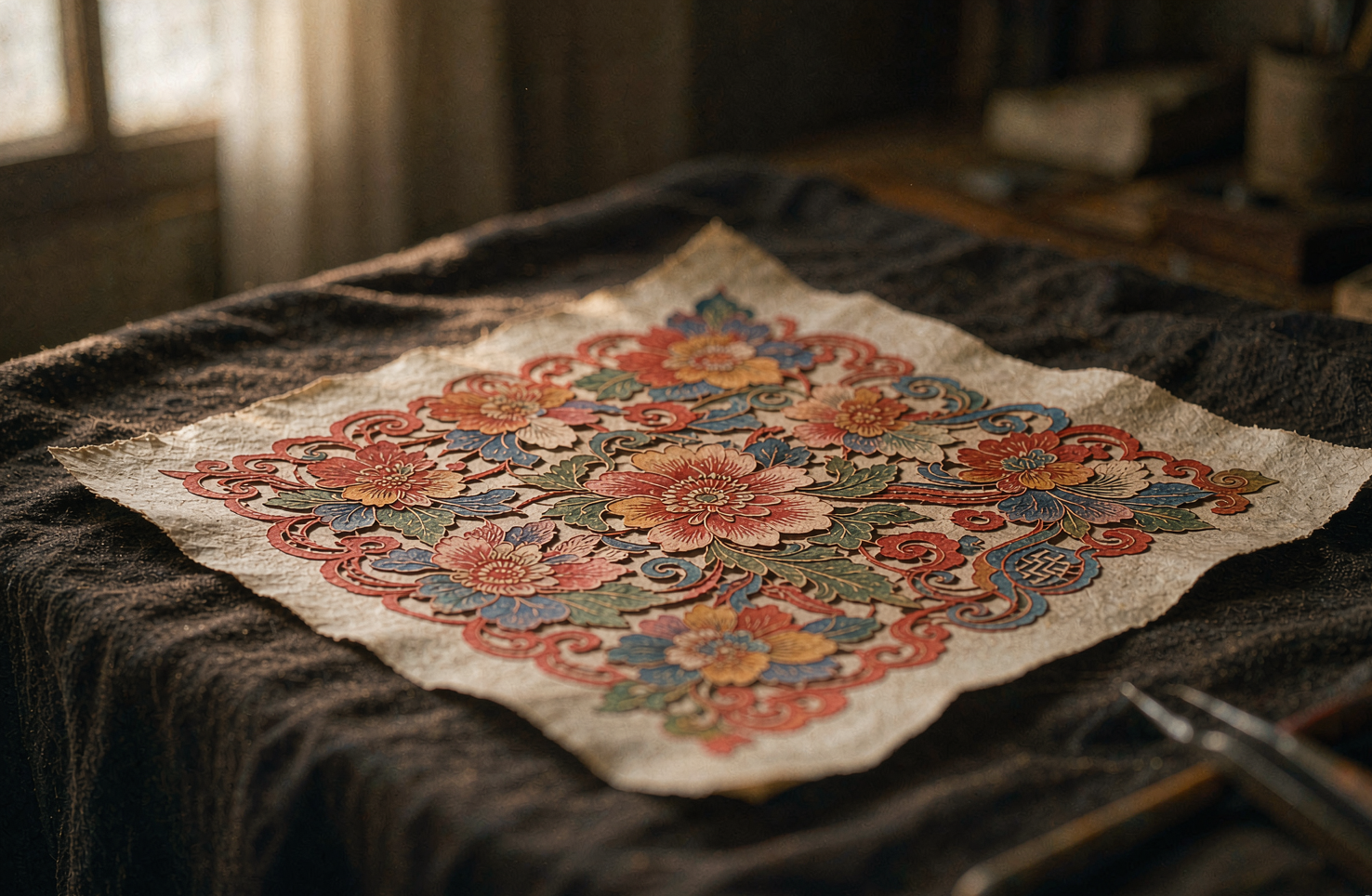
一张蔚县剪纸,彩色的刻刀活
严选录这一期看一张不太一样的剪纸:它不用剪刀,用刻刀;不止红色,还带着点染出来的粉与绿。河北张家口蔚县的剪纸,是剪纸大家族里"反着来"的一支——别处以剪为主、以红为正,蔚县以刻代剪、以点彩上色。说到底,这两个"反着来"的本质,是蔚县人把剪纸从窗前的女红,做成了作坊里的分工手艺:看懂了这一点,才算看懂了这张纸。
韵和鸣 · 2026/10/13 · 10 阅读
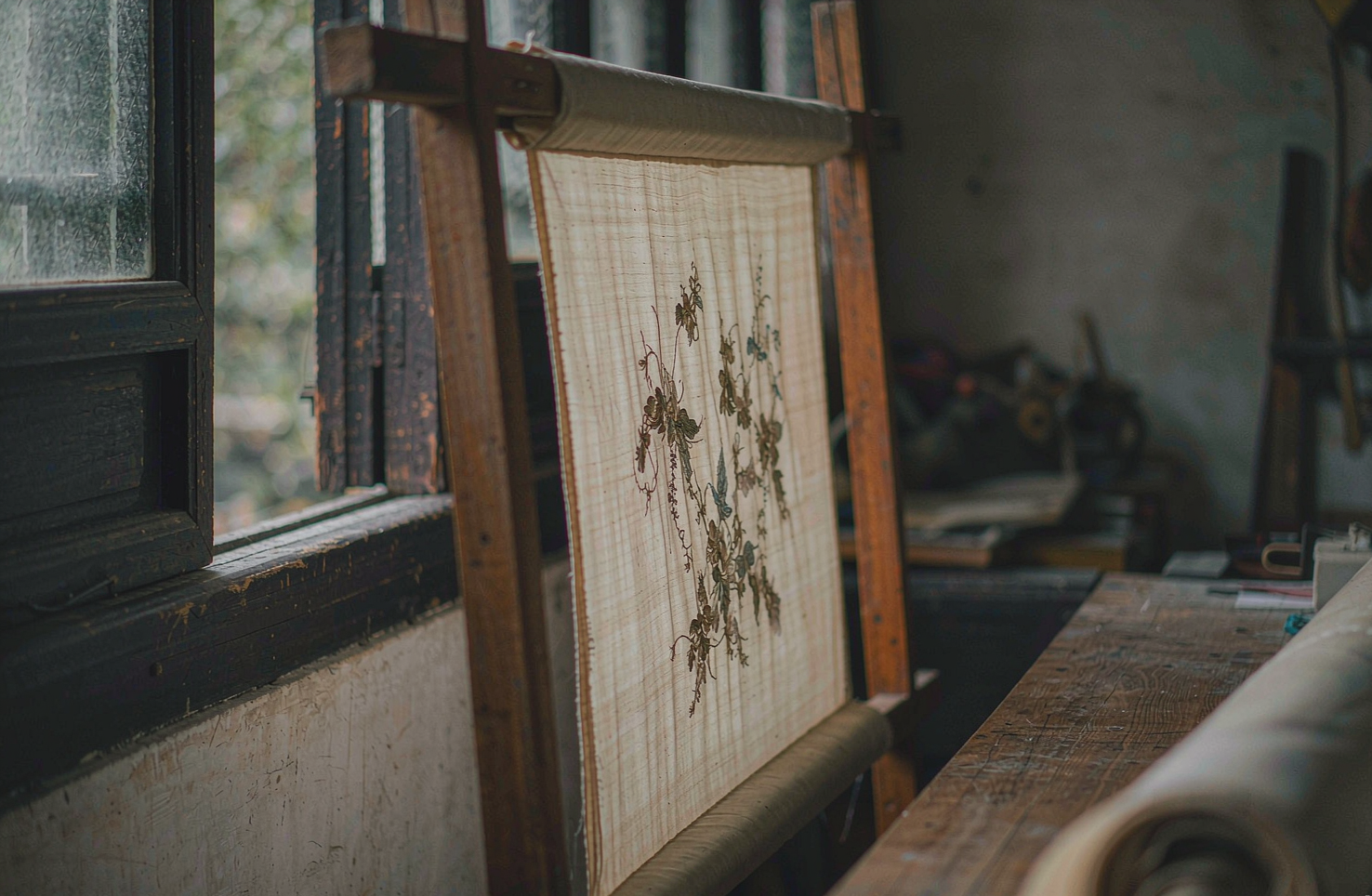
一枚苏绣绣片,丝光里藏着多少根丝
看一枚巴掌大的苏绣绣片,凑近了看,再凑近一点。你会发现它的光不是绣上去的,是"长"出来的——丝被劈到几乎看不见,一针一针顺着一个方向排,光就顺着丝走。说到底,苏绣的讲究,是从把一根丝线"拆开"那一刻开始的。
韵和鸣 · 2026/10/11 · 10 阅读
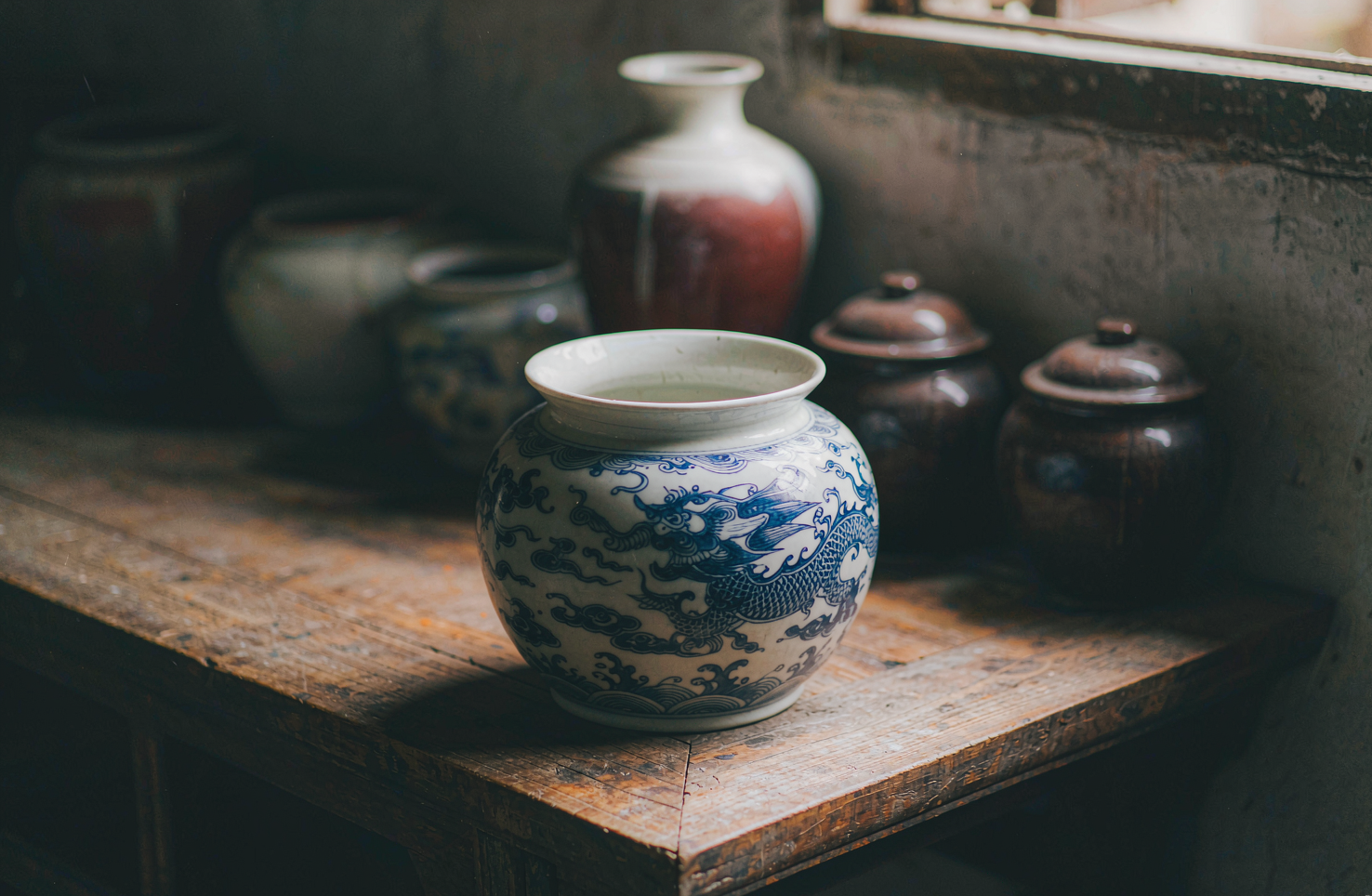
一盏博山琉璃:颜色是炉火给的,不是颜料调的
说到底,琉璃与玻璃的分界,不在透明不透明,而在颜色从哪来。在山东博山,一盏鸡油黄琉璃的颜色长在料里、生在炉里,出炉之后再不改色。这是严选录这一期想讲清楚的事。
韵和鸣 · 2026/10/12 · 9 阅读