他把设计院的图纸,带回了漆坊
韵和鸣 · 韵和鸣公众号 · 2026/10/10 12:00:00 · 3 阅读
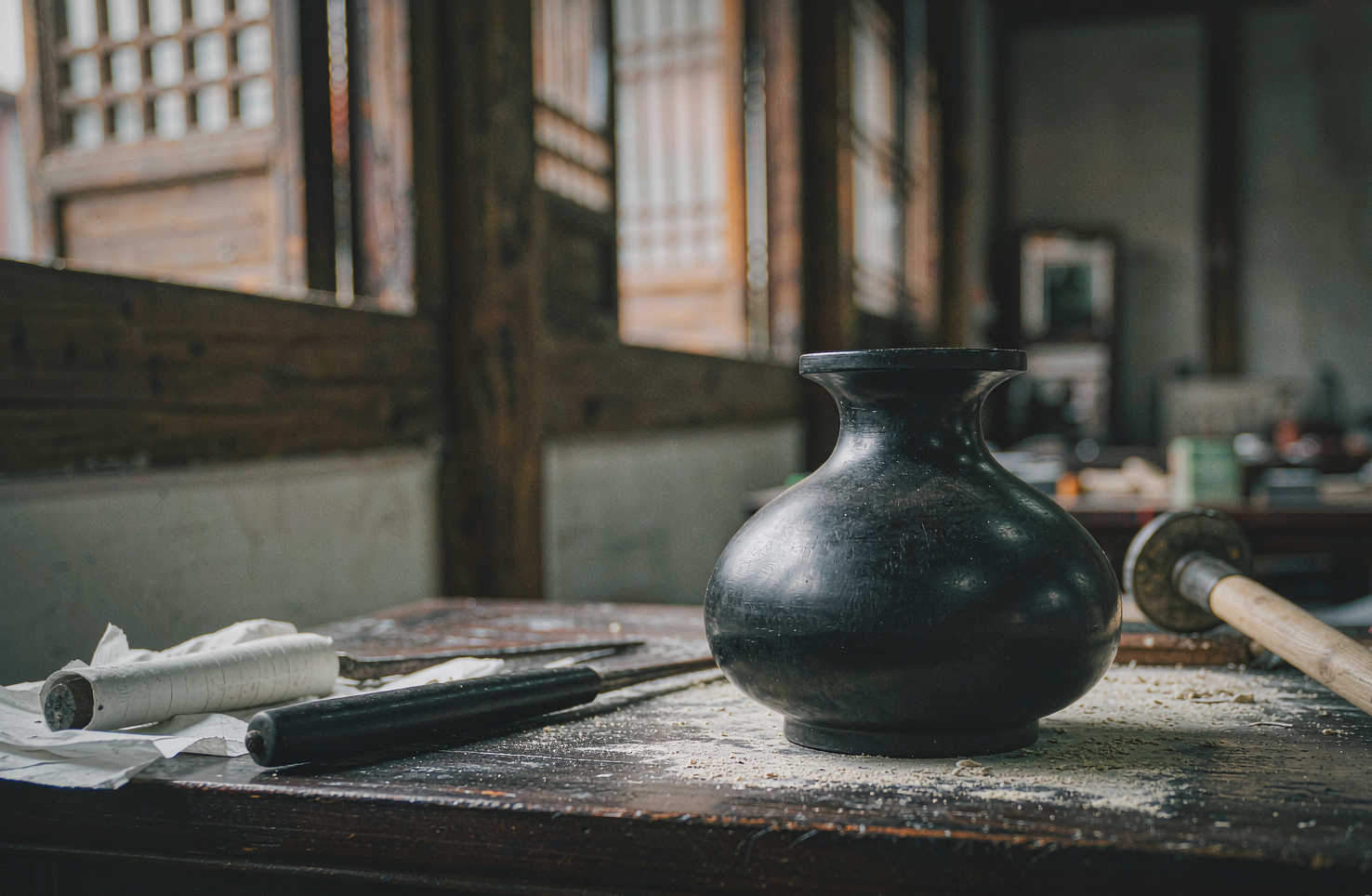
他学的是设计,毕业后在一家设计机构做器物。三年前,他收拾东西回了平遥,在一间老漆坊里从最基础的活计重新学起。他说,不是手艺需要他,是他需要手艺——说到底,图纸能画出样子,却画不出器物立不立得住。
▍漆坊的清晨,从等开始
早上七点,坊里已经开了门。他先去阴房看昨天的活。阴房不通风,进去是一股又闷又浓的漆味,木头架子上摆满刚髹过漆的木胎,颜色暗沉,摸上去还发黏。
他用手背碰了碰一件漆盘的边缘,指了一下窗外。"今天湿度不够,得再等。"在漆坊里,"等"是主活。大漆的干燥不是水分蒸发,是漆液在特定温湿度下慢慢固化;温度太低不干,太潮又会起皱。所以一件器物的进度,常常不由人定。
这就是他说的"回到原点"。做大漆的活计,日程表是由材料写的,不是由人写的。
▍图纸之外,那些没法建模的部分
《平遥推光漆器髹饰技艺》出自山西省晋中市平遥县,2006 年列入国家级非物质文化遗产名录。它的工序自成一套,一步都跳不过。
炼制大漆与罩漆,木胎披麻挂灰,以人发、牛尾制作漆栓,阴房阴干,描金彩绘,最后用砂纸、木炭、头发、砖灰、麻油逐次推光,直到漆面光亮如镜。
描金彩绘这一层最显眼——平金开黑、堆鼓罩漆、勾金、罩金、蛋壳镶嵌都在这里;收尾的推光则决定器物能不能"照出人影"。
"在校时我以为最难的是造型。"他说,"后来才知道,难点在'不匀'。"设计稿追求的是精确一致,而手工的每一遍髹涂都带着手上的差别:这一刷厚一点,那一刷薄一点,最后靠推光把这些差别统一成一种"匀"。这种匀,机器一秒能算出来,手却要练很多年。
他说设计训练给了他两样东西:看得懂比例,也看得懂别人怎么看出入。但漆坊给了他另一样——一个不让步的尺度。"图纸不满意可以改;漆不满意,只能重来。"
▍设计与手艺,谁给谁让路
回漆坊之后,他做过一件让自己返工三次的东西:一只漆盒,造型是他在设计院时就想好的,线条干净,盖沿收得很薄。
问题出在薄上。"木头有脾气。"盖沿太薄,挂灰挂不住,阴干时轻微变形,盖上去就有一道缝。他改了三次胎,最后把线条加厚了两毫米。
"设计的时候,我以为是在给手艺找新样子。"他说,"做的时候才发现,是手艺在告诉我,哪些样子根本立不住。"
他不认为设计与手艺是对手。他现在的工作方式很朴素:先在纸上画,再拿木头试,试完回来改纸样。来回几趟之后,那张图纸上会多出一堆只有做过的人才看得懂的标注——哪里要留厚、哪里不能收、哪一步必须停下来等天气。
"好的合作,不是谁给谁让路,是两边一起把器物推到一个都能接受的地方。"
▍他留下的,是一份慢下来的底气
如今他带两个学徒,年纪都比他小。他教的头一件事不是画稿,是让他们先在阴房里站上几天,看漆怎么变干。
"设计教会我怎么快,漆坊教会我怎么慢。"他说,"这两样都有用。但要是只能留一样,我留慢——快是能力,慢是底气。"
他说这话时,手上正拿着一块推光到一半的漆片。他把漆片举到光下转了转,指给我看那道还没匀的光:再推两天,它就平了。
▍问答
问 | 年轻人回到漆坊做非遗,收入能撑得住吗?
答 | 短期内通常撑不住,这一点不必回避。平遥推光漆器一件器物从制胎到推光要数月,资金回笼周期长;当地近年有面向专业镇的信贷与"信用+供应链"支持,靠经营流水与信用记录可获得贷款。但更根本的仍是有没有稳定的销路与合理的定价。
问 | 平遥推光漆器的手感,机器真的做不出来吗?
答 | 难点在最后一道推光。它靠手掌蘸细砖灰和麻油,一点点把漆面推磨到能照出人影;力度与停顿全靠经验,同一块面在不同天气下推法也不同。机器能打磨到很光,但很难复现这种"手感知情"的匀,这也是它被列为国家级非遗技艺的原因之一。
问 | 韵和鸣是怎么帮助非遗匠人的?
答 | 韵和鸣把自己定位成"非遗经纪人":以公益的角度帮匠人做内容、做访谈,把手艺讲给更多人听,也帮匠人对接渠道与出海的机会,让手艺人能安心靠手艺生活。团队大部分时间都花在各地寻找真正的老师。
▍说在最后
一个人从设计院回到漆坊,改变的不只是职业,是他衡量一件器物的尺子——从"好不好看",变成"立不立得住"。你身边有放弃了别的路、回去守着一门手艺的人吗?欢迎留言说说他的故事。
📩 非遗项目 | 匠人举荐 | 跨境出海 | 线下联营
欢迎留言或后台联系,我们与匠人同行。
—— 韵和鸣 · 与匠人同行
〖 匠 〗
English
A Lacquer Workshop's Morning Begins with Waiting
At seven the workshop is already open. He first checks yesterday's work in the drying room. It has no draught; inside is a thick, close smell of raw lacquer, and the wooden racks are crowded with freshly coated bodies, dark in color and still tacky to the touch.
He brushes the rim of a lacquer tray with the back of his hand and nods at the window. "Humidity is short today; we wait." In a lacquer workshop, waiting is the main work. Raw lacquer does not dry by evaporation; it cures slowly under particular temperature and humidity. Too cold and it will not set; too damp and it wrinkles. So the pace of a piece is often not up to the maker.
This is what he calls going back to the origin. In lacquer work, the schedule is written by the material, not by the person.
Beyond the Drawing: What Cannot Be Modeled
Originating in Pingyao County, Jinzhong, Shanxi, the Pingyao polished lacquerware technique entered the national intangible cultural heritage list in 2006. Its processes form one set, and no step can be skipped.
Refining raw lacquer and coating lacquer, wrapping the wood body in hemp and puttying it, making coating brushes from human hair and ox tail, drying in the dark room, gold tracing and painting, and finally polishing in sequence with sandpaper, charcoal, hair, brick dust and sesame oil until the surface shines like a mirror.
The gold-tracing layer is the most visible—"pingjin kaihei," raised-and-coated lacquer, gold outlining, gold coating and eggshell inlay all sit here; the final polishing decides whether the surface can "mirror a shadow."
"At school I thought the hardest part was shaping," he says. "Only later did I learn the difficulty is unevenness." A design drawing aims for exact consistency, while every hand coat carries the hand's own variation: a little thicker here, a little thinner there, unified in the end by polishing into a certain evenness. A machine can compute that evenness in a second; a hand needs years.
Design training gave him two things, he says: an eye for proportion, and an eye for how others read imperfection. The workshop gave him something else—a scale that does not compromise. "A drawing you can revise; lacquer you can only redo."
After returning he made a lacquer box that forced him to redo it three times. The shape was one he had conceived back at the design firm—clean lines, a very thin rim.
The problem was that thinness. "Wood has a temper." Too thin a rim cannot hold the putty; it warps slightly while drying, and the lid leaves a gap. He rebuilt the body three times and finally thickened the line by two millimeters.
"While designing, I thought I was finding new shapes for the craft," he says. "While making, I found the craft was telling me which shapes simply cannot stand."
He does not see design and craft as rivals. His method now is plain: draw on paper, try it in wood, then come back and revise the drawing. After several rounds the sheet gains a cluster of notes only a maker understands—where to leave thickness, where not to taper, which step must pause for the weather.
"A good collaboration is not one yielding to the other, but both pushing the object to a place they can both accept."
He now mentors two apprentices, both younger. The first thing he teaches is not drawing but standing in the drying room for days, watching how lacquer sets.
"Design taught me speed; the workshop taught me patience," he says. "Both are useful. But if I could keep only one, I would keep patience—speed is a skill, patience is a grounding."
As he speaks he holds a half-polished lacquer panel. He turns it under the light and points to a streak not yet evened out: two more days and it will lie flat.
Can a young person returning to a lacquer workshop make a living from heritage craft?
In the short term, usually not—no need to gloss over it. A Pingyao lacquerware piece takes months from body-making to polishing, so cash returns slowly. Locally there is recent credit support for the specialized industry town, including a "credit plus supply chain" model, letting businesses borrow on turnover and credit records. More fundamental, though, is a steady sales channel and fair pricing.
Can machines truly not reproduce the feel of Pingyao lacquerware?
The difficulty lies in the final polishing. Done with the palm and fine brick dust mixed with sesame oil, it works the surface until it can mirror a shadow; force and pause come entirely from experience, and the same panel is polished differently in different weather. Machines can grind very smooth, but rarely reproduce this knowing evenness—one reason the technique is national-level heritage.
How does YUNHEMING help heritage artisans?
YUNHEMING positions itself as a "heritage agent": helping artisans with content and interviews from a public-interest stance, telling their craft to more people, and linking them to channels and going-global opportunities so they can live steadily by their hands. The team spends most of its time seeking out genuine masters across the country.
For one person to leave a design firm for a lacquer workshop changes not only a career but the ruler by which he measures an object—from whether it looks good to whether it stands. Do you know someone who gave up another path to keep a craft? Tell us their story in the comments.
ICH Projects · Artisan Referrals · Global Distribution · Salon Partnerships
你可能还感兴趣
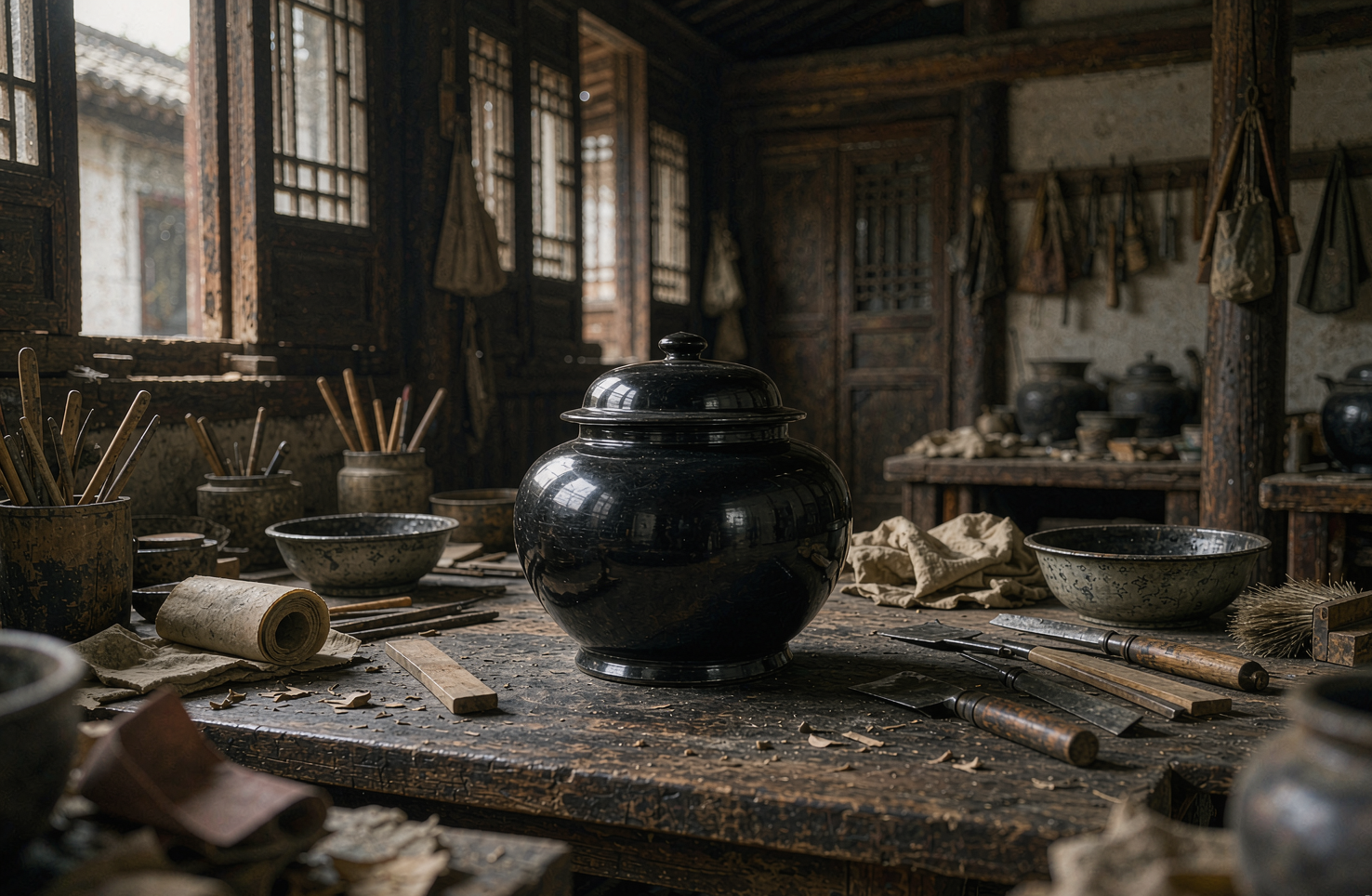
漆器为什么能埋八千年不坏
在博物馆做漆器研究与修复的研究员老周,桌上常年摆着两样东西:一段出土的漆皮残片,一只新做不久的平遥推光漆盘。他说这两样东西隔着八千年,却是同一种材料。这次对话,我们从"漆器为什么埋几千年不坏"聊起,聊到最后,其实是手艺对材料的理解问题。
韵和鸣 · 2026/10/14 · 16 阅读
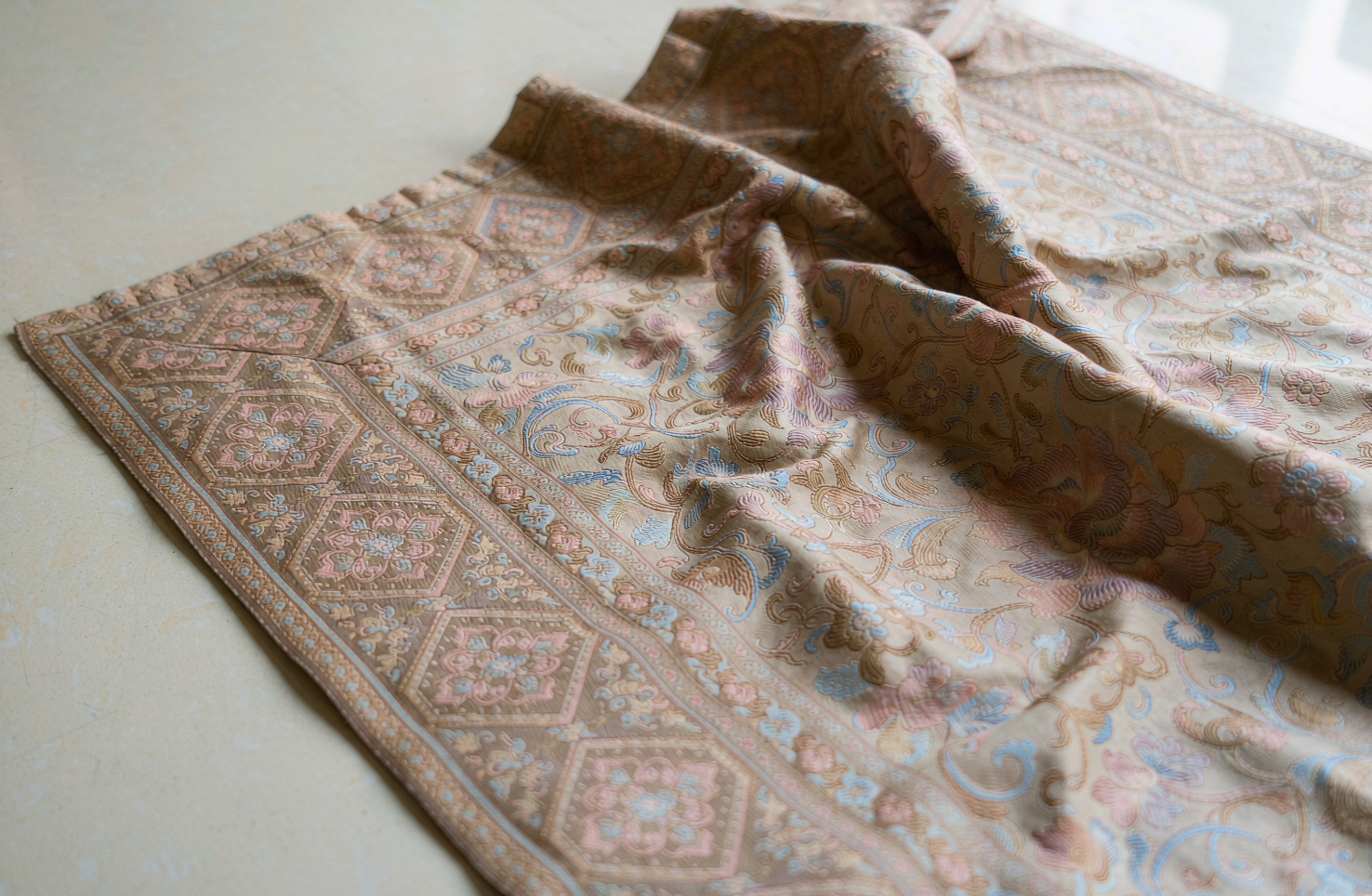
一方宋锦里,藏着宋人的审美秩序
初见宋锦,我的反应不是"好看",而是"安静"。它不像人们想象里的锦那样满身是光。带我看锦的老师傅说,正是这份安静,最难织。
韵和鸣 · 2026/10/8 · 11 阅读
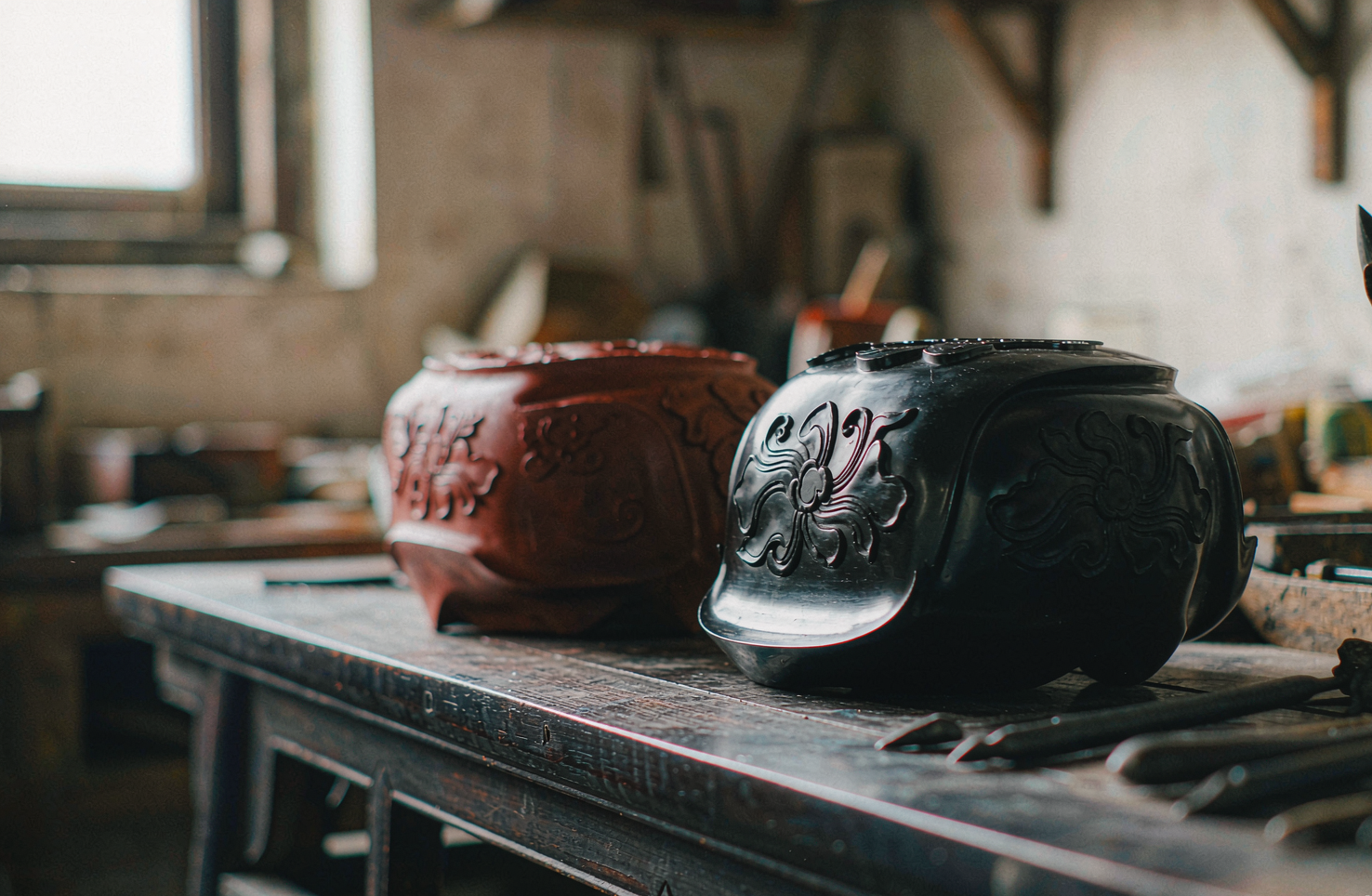
一位漆器匠人的失败清单,那些没做成的器物
一间漆坊的账,通常记的是卖出了多少件;平遥一位做了三十多年推光漆器的老师傅,却另有一个本子,专记做坏了多少件。失败清单这门"倒着记的账",恰恰是手艺扎实与否的底细——器物耐看的那一面,是从废品堆里刨出来的。
韵和鸣 · 2026/10/12 · 9 阅读
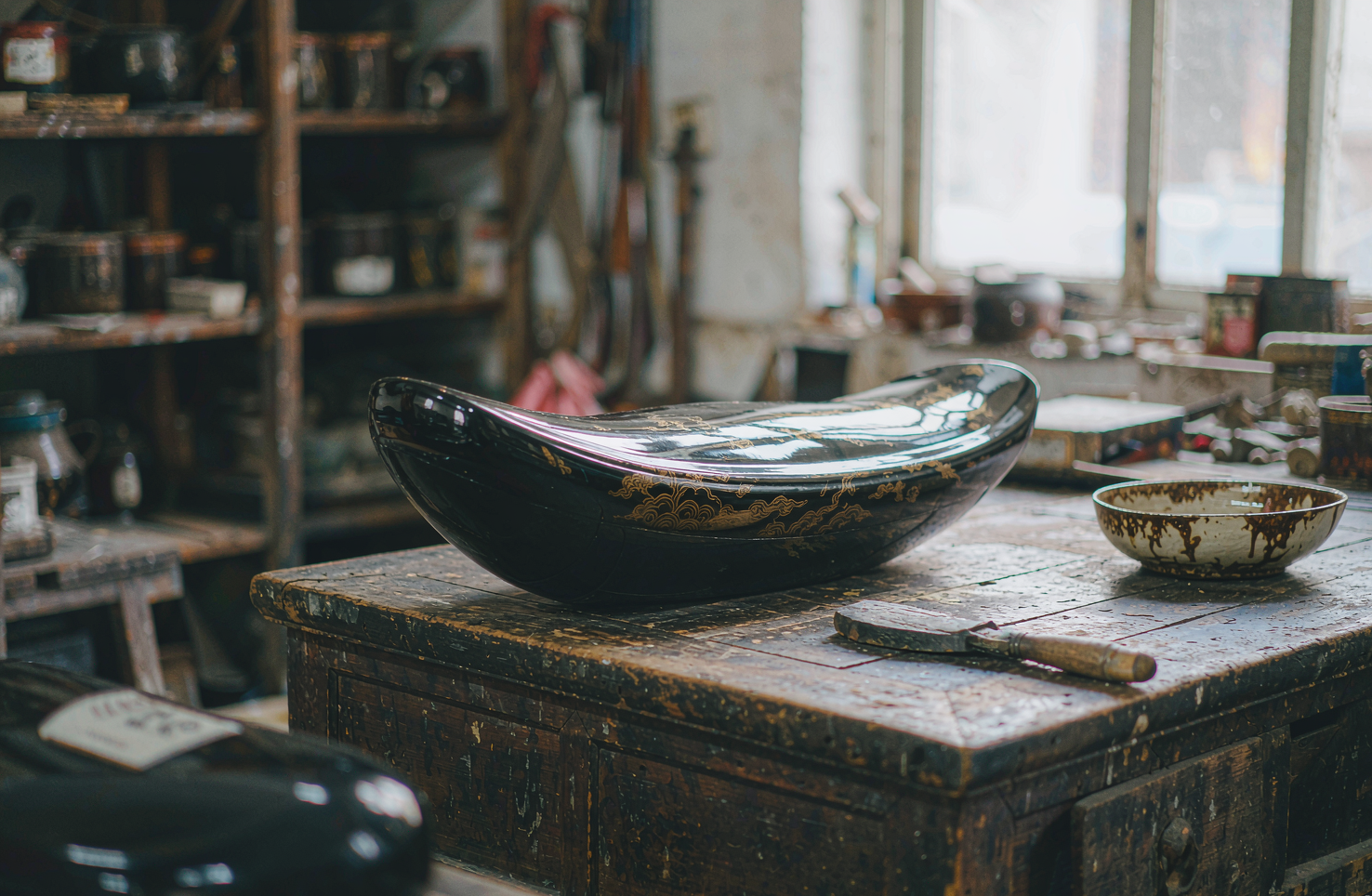
十六岁学艺,他如今想让漆器走进年轻人的家
在平遥,学漆艺的人正在换代。老匠人把五十年的功夫交给徒弟,年轻教师把漆带进课堂。一门千年手艺要传下去,卡住的往往不是技法。
韵和鸣 · 2026/10/2 · 5 阅读
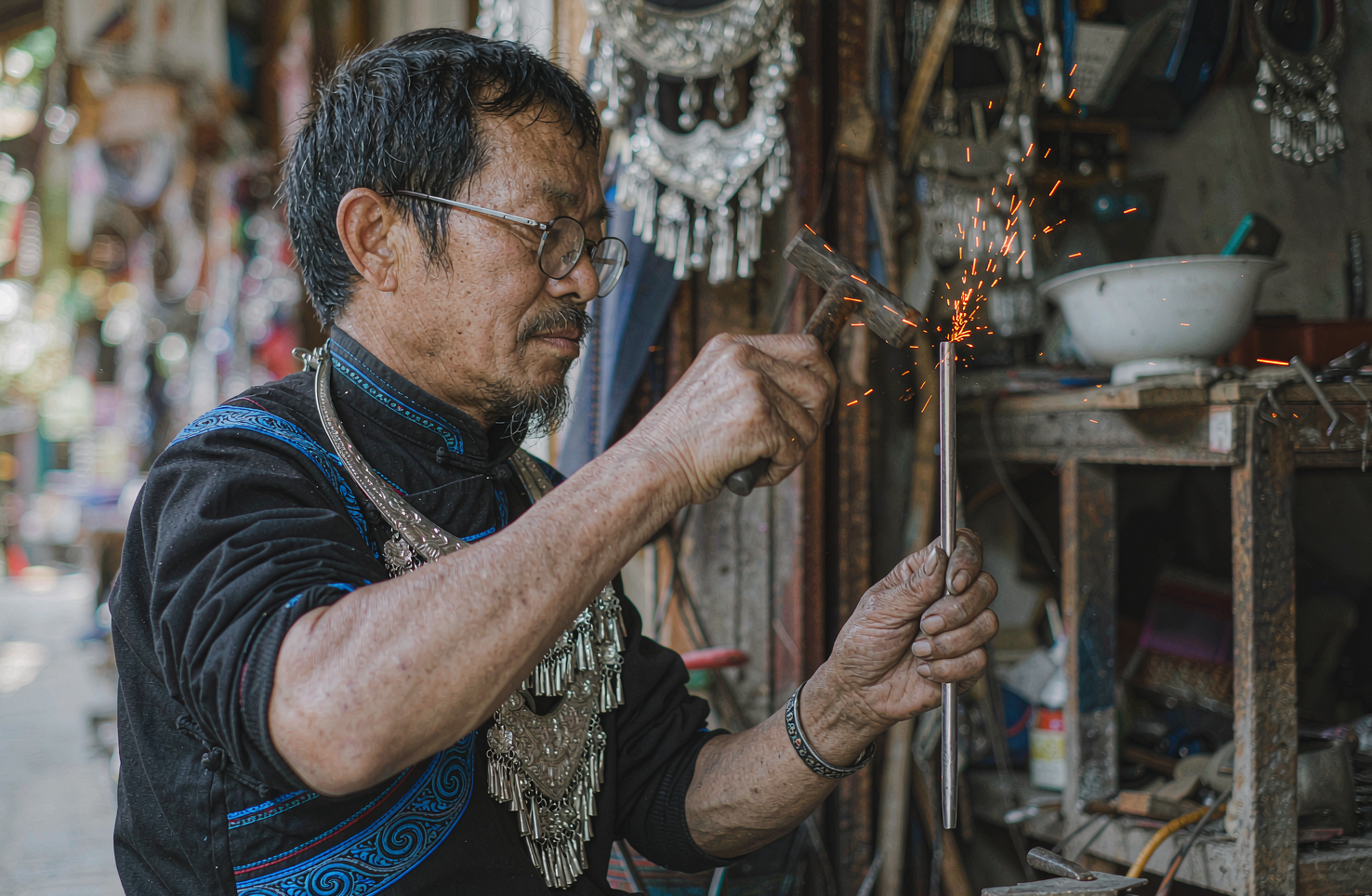
去贵州雷山,看一块银元如何变成一支银簪
在黔东南的苗寨里,银不只是一种首饰材料。它曾经是可以随时熔掉、重新打制的"存款",也是节日里一个女人身上最亮的那部分。关键在于,当一块老银元被放进坩埚,它要经过多少双手、多少道火,才重新成为一件能戴出门的东西。
韵和鸣 · 2026/10/9 · 27 阅读
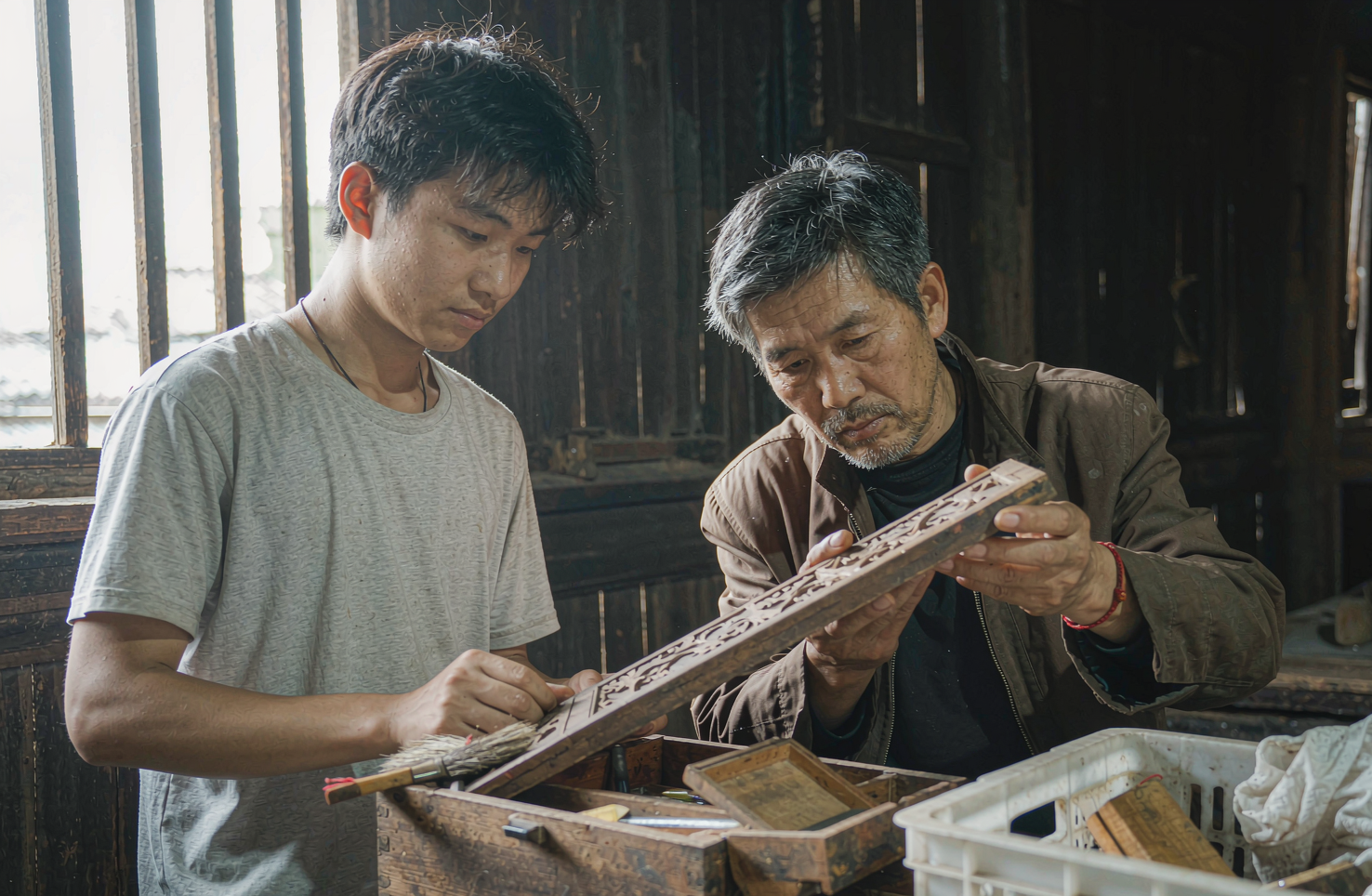
年轻人不愿学老手艺,该怪年轻人,还是怪这门手艺?
非遗传承里被讨论得最多的一句话是"后继乏人"。这句话往下追一层,就分成两条路:一条通向年轻人,说他们耐不住、看不上;一条通向他们面对的那门手艺,说它没能给出一条能活下去的路。这两条路,最近又吵起来了。
韵和鸣 · 2026/10/8 · 11 阅读