一只漆碗的诞生:从木胎到成器
韵和鸣 · 韵和鸣公众号 · 2026/10/7 12:00:00 · 3 阅读
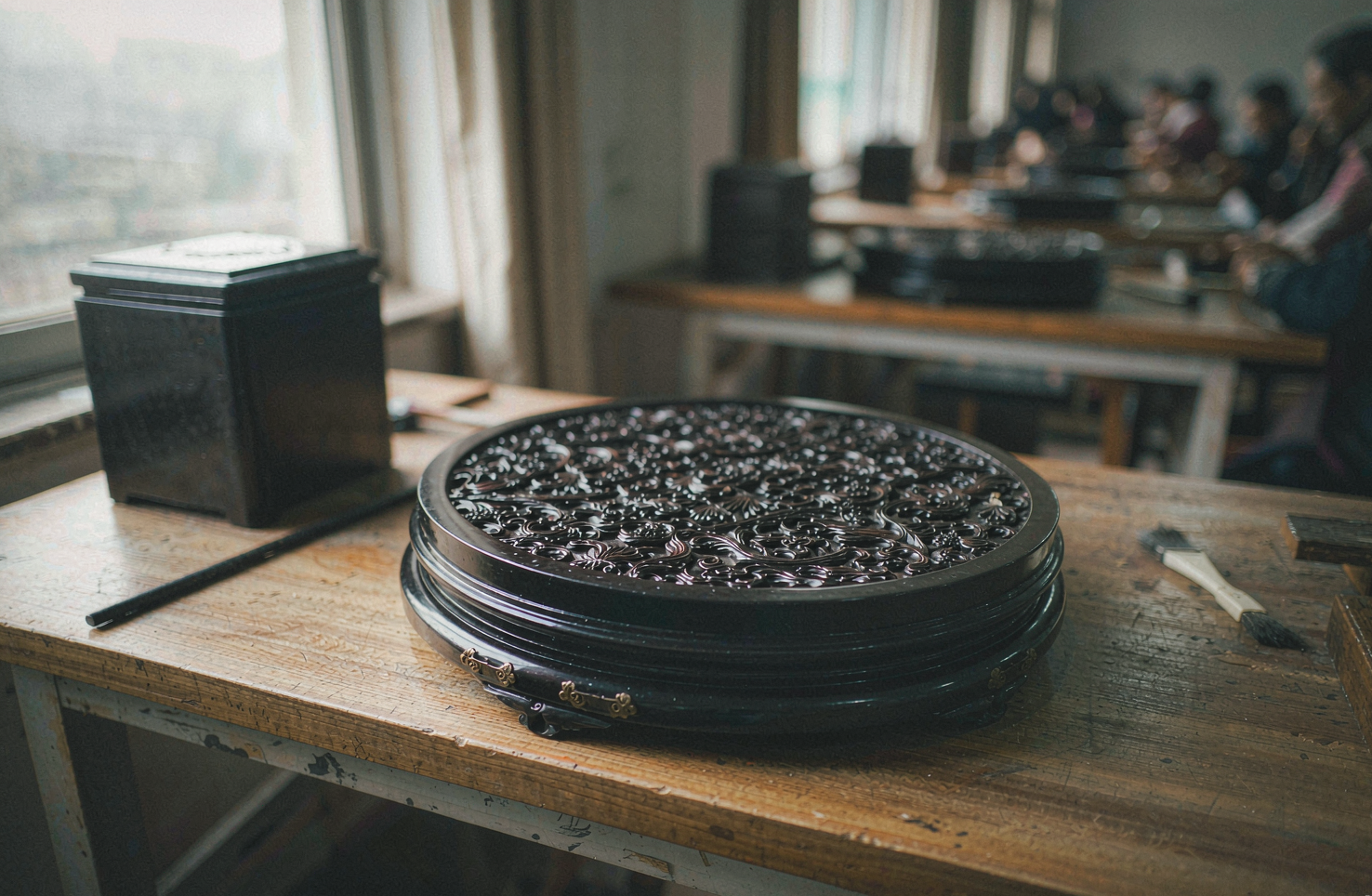
桌上这只漆碗,摸上去是温的。它的起点不是漆,是一块木头。从木胎到成器,中间隔着许多双手、许多个夜。这一篇,我们试着把这只碗的来路,一段一段走完。
▍一切从一块木胎开始
做漆碗,先得有胎。木胎选的是质地轻、不易走形的木料,而且一定要干透——没干透的木头,做的时候看着挺好,过上一年半载,它才开始缩、才开始裂。
木料干好后,上轮车胎:把一方木块旋成碗形,壁要匀,底要平,圈足要正。这一步差一点点,后面层层漆裹上去,误差只会被放大,不会自己消失。
▍刮灰与裱布:给木头加一层"骨"
木头有脾气,会随四季的干湿胀了缩、缩了胀。漆工的办法,是先把它"裹"起来。
先是裱布。用薄薄的布,蘸上生漆,贴在胎体上,让布与木贴合成一体;等它干,再刮灰——生漆调上瓦灰,一遍遍地刮进木纹、填平缝隙。这两步是漆器耐用的关键:布给了韧性,灰给了平整,漆把木头封在里面,空气进不去,它也就不用再随天气进进出出了。
好的漆器底下藏着这么一层看不见的"骨"。你从外面只看到光,看不到它。
▍一层漆,一层磨,来回不知多少遍
底打好,才轮到髹漆。一遍遍刷上去,每一层都要薄而匀,刷完送进阴干房,等它自己结膜——太干结不透,太潮会起皱。等膜到位,再打磨,用细水砂蘸着水,匀着力气走。
平遥的推光漆器讲"七髹八磨"——髹是涂,磨是磨,一层漆配一遍磨,来回往复。听起来像一张工序表,做起来却是日复一日:白天髹漆、打磨,夜里把器物交给阴干房,第二天早上再看结果。一层漆,隔一夜。
▍生漆,是从树上割下来的那一桶
说了这么多遍漆,其实漆并不是化工品,是树汁。漆树的树皮被割开,流出乳白色的液体,接在竹筒里,那就是生漆。割漆有句老话叫"百里千刀一斤漆"——走很远的路,下很多刀,最后才得一小桶。
用生漆而不是一般的化学漆,是有道理的:它干了以后致密、耐磨、耐热,能真正把木头护在里面,而且越用越亮。代价是麻烦——生漆挑温湿度,得靠阴干;它还"咬人",让不少初学的人过敏起疮,行内叫"漆疮"。
也正因为来之不易,漆坊里的匠人对它有种近乎爱惜的克制,一点也舍不得浪费。
▍推光与描金:最后那点光,是手给的
漆髹到最后一层,收尾叫推光。不用机器,用掌心:蘸上细粉,顺着一个方向一下一下地推。手掌的温度和判断,是机器给不了的——哪里该重,哪里该轻,全靠它自己拿捏。推到最后,漆面会亮出来,那亮不是浮在表面的反光,而是从漆里透出来的、温润的一层光。
有的器物,最后还要描金。用金胶描出线稿,再上金箔或金粉。描的是最细的线,手一重,线就粗了;心一急,那点光就"死"了。
▍描金、螺钿、彩绘:器物最后的样子
光有亮还不够,很多器物最后还要装饰。描金,是用金线勾出纹样;螺钿,是把贝壳切成薄片嵌进漆里,光线一动,就泛出虹彩;还有彩绘,直接在漆面上作画。同样一只碗,装饰不同,气质就完全不同。
这些活儿都做在漆面之上,最考验稳当。一笔描歪,往往整件重来。装饰并不改变器物的用处,却决定了它被人记住的样子。
▍一只碗的成本,不在材料,在时间
常有人问,一只漆碗凭什么不便宜。算一笔不完全的账:木头不贵,生漆按斤论价也谈不上天价;真正贵的,是时间——一层漆等的那些夜,一双手磨的那些遍,还有那些不敢省的工序。
所以"严选"这两个字,选的不是标价,而是这件器物背后,有没有一群人肯这么等、这么磨。价格可以商量,工序不能缩水。这也是我们做严选录的初衷:让一件器物的来路,被看清楚。
我们也知道,"值不值"这件事,很难靠一句话说服人。所以与其替一件器物的价格背书,不如把它的来路摊开来看:看过一层漆等一夜,看过一双手磨多少遍,每个人心里自然会生出自己的那把尺。
把这只碗放回桌上,它安静得很。你端起它喝水、吃饭,它一句话不说;可它知道,你指尖那点温润,是从哪个夜里来的。
你家里有没有一件"用久了才好看"的器物?留言说说它的故事。
📩 非遗项目 | 匠人举荐 | 跨境出海 | 线下联营
欢迎留言或后台联系,我们与匠人同行。
—— 韵和鸣 · 与匠人同行
〖 器 〗
English
To make a lacquer bowl, one first needs a body. The wood chosen is light and little given to warping, and it must be thoroughly dry—green wood looks fine while you work it, but a year or so later it begins to shrink and crack.
Once dried, the wood goes on the wheel to be turned: a block of timber shaped into a bowl, walls even, base flat, foot ring true. A small error here, and the coats of lacquer that follow will only magnify it—never smooth it away.
Filling and Lining: Giving the Wood a Skeleton
Wood has a temper; it swells and shrinks with the damp and dry of the seasons. The lacquerer's answer is to wrap it up first.
First comes lining. A thin cloth is dipped in raw lacquer and laid onto the body so cloth and wood become one; once dry, filling follows—raw lacquer mixed with brick dust is spread again and again into the grain, evening every seam. These two steps are the key to a lacquer vessel's durability: the cloth gives toughness, the filler gives flatness, and the lacquer seals the wood away from air, so it no longer breathes in and out with the weather.
Beneath a good lacquer vessel hides an invisible skeleton. From outside you see only the shine, never the bone.
One Coat of Lacquer, One Grinding, Over and Over
With the ground prepared, coating begins. Applied again and again, each coat must be thin and even; once brushed, the piece goes into the drying room to cure on its own—too dry and it will not set through, too damp and it wrinkles. When the film is ready, grinding follows, with fine water-abrasive paper dampened and drawn at an even pressure.
Pingyao's polished lacquerware speaks of "seven coats and eight grindings"—coating and grinding, one coat paired with one round, back and forth. It sounds like a process chart; in practice it is day after day: coat and grind by day, hand the piece to the drying room at night, and see the result next morning. One coat, one night apart.
Raw Lacquer: The Bucket Cut from the Tree
For all this talk of lacquer, it is not a chemical product but tree sap. The bark of the lacquer tree is cut, a milky liquid runs out and is caught in bamboo tubes—that is raw lacquer. An old saying goes, "a hundred li and a thousand cuts for one catty of lacquer": a long road, many cuts, and finally one small bucket.
Using raw lacquer rather than ordinary chemical paint makes sense: once cured it is dense, wear-resistant, heat-resistant, able to truly shield the wood—and it grows brighter with use. The price is inconvenience: raw lacquer is particular about temperature and humidity and must shade-dry; it also "bites," giving many beginners an allergic rash that the trade calls "lacquer sores."
Precisely because it is hard-won, the craftspeople treat it with something close to tenderness, unwilling to waste a drop.
Polishing and Gold Tracing: That Final Light Is a Gift of the Hand
At the final coat, the finishing is called hand-polishing. No machine is used, only the palm: dipped in fine powder, pushed again and again in one direction. The warmth and judgment of a palm are what no machine provides—where to press harder, where to ease off is left entirely to it. Polished to the last, the surface lights up, and that light is not a reflection floating on top but a gentle glow coming from within the lacquer.
Some vessels are then traced with gold. A gold size is used to draw the line work, then gold leaf or powder is applied. What is traced is the finest of lines: press a touch too hard and the line thickens; let impatience rise and that glow goes "dead."
Gold Tracing, Inlay, and Painting: The Vessel's Final Face
A shine alone is not enough; many vessels are decorated at the end. Gold tracing draws a pattern in gold lines; mother-of-pearl inlay cuts shell into thin slips and sets them into the lacquer, so that at a turn of the light a rainbow glints out; and there is painted decoration, drawn directly on the lacquered surface. The same bowl, differently ornamented, takes on a wholly different air.
All of it is done upon the finished surface and most tests steadiness. One crooked stroke and the whole piece often starts over. Decoration does not change what a vessel is for, yet it decides the face by which it is remembered.
The Cost of a Bowl Is Not in Its Materials but in Its Time
People often ask why a lacquer bowl is not cheap. Do an incomplete reckoning: the wood is not dear, and raw lacquer by the catty is hardly a king's ransom; what is truly dear is time—the nights one coat waits, the rounds a pair of hands grinds, and the steps that dare not be cut.
So the two words "curated selection" choose not a price tag but whether, behind a given object, there are people willing to wait and grind like this. Price can be discussed; process cannot be watered down. This is also why we write the curated column: to let the origins of a vessel be seen clearly.
We know too that "worth it or not" is hard to settle with a sentence. So rather than vouch for a price, we lay the object's origins open: see a coat of lacquer wait a night, see how many rounds a pair of hands grinds, and each person will form a measure of their own.
Set this bowl back on the table and it is utterly quiet. Lift it to drink or to eat and it says not a word; yet it knows from which night comes the warmth at your fingertips.
ICH Projects · Artisan Referrals · Global Distribution · Salon Partnerships
你可能还感兴趣
一件漆器该有多重,手感不会说谎
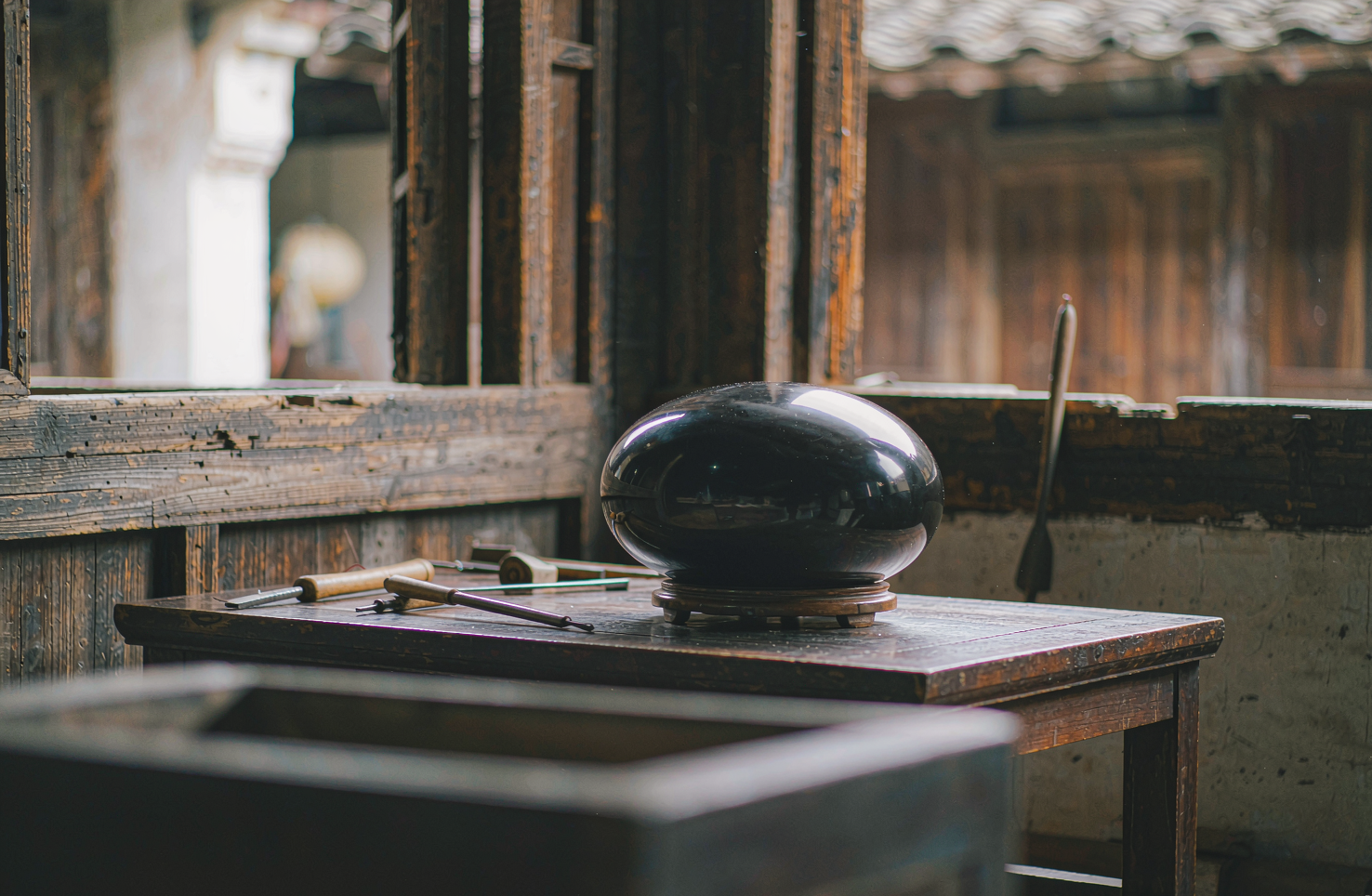
严选器物,看纹样、看款识、看证书,都是明面上的事。但有一道标准写不进任何参数表——上手。同一尺寸的两只漆盘,一只压手温润,一只轻飘干瘪,差别从何而来?这次把"分量"这件事拆开讲。说到底,重量是工序的记账本。
韵和鸣 · 2026/10/14 · 14 阅读
一件非遗手作凭什么"值":把时间的账算一遍
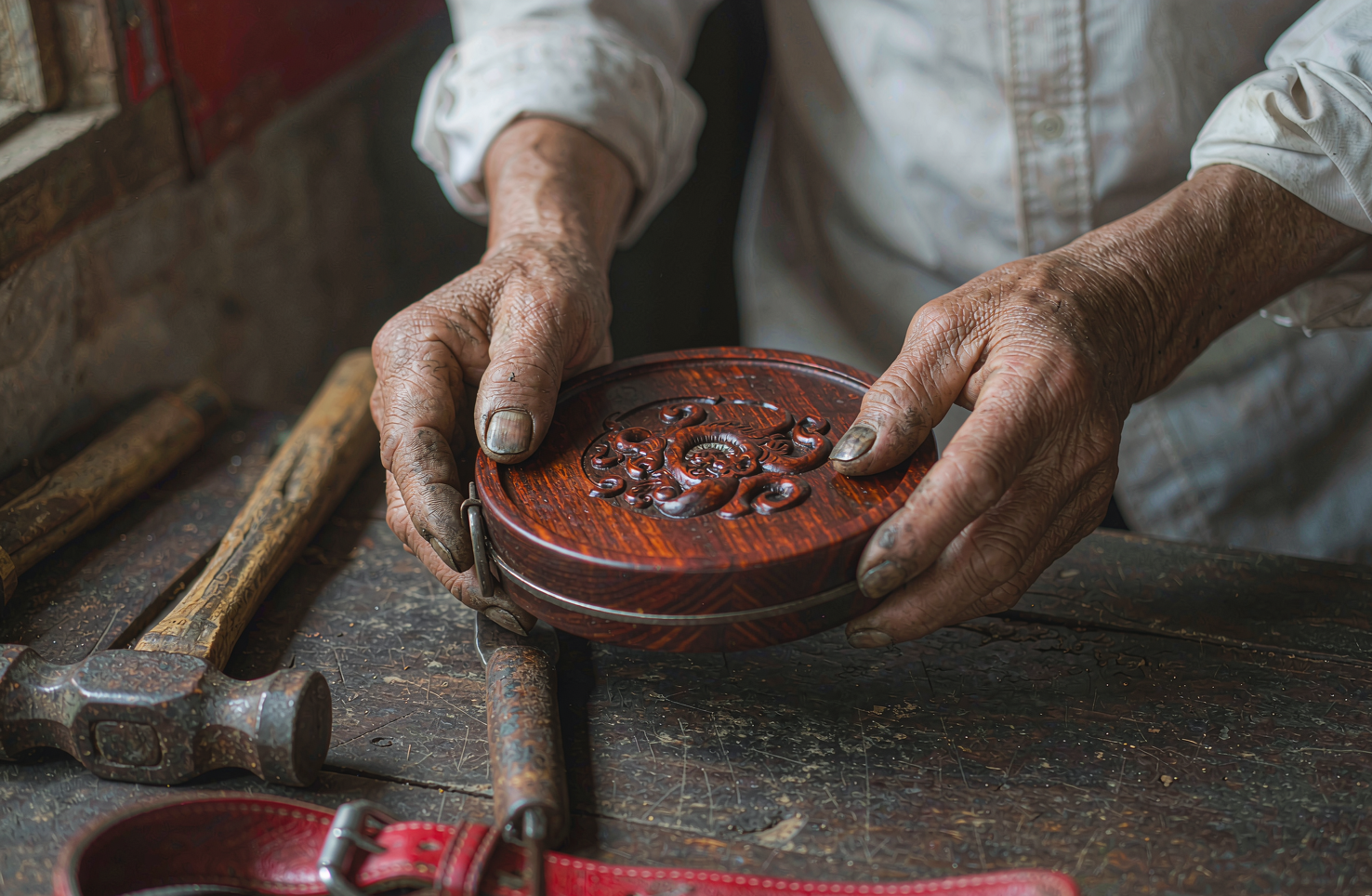
谈非遗手作,绕不开一个字:值。有人觉得贵得离谱,有人觉得便宜得可疑。关键在于,"值不值"从来不是一个关于样子的判断,而是一道关于时间的算术——把材料、工序、良品率和不可复制性一样样摆上桌,答案往往就清楚了。
韵和鸣 · 2026/10/9 · 12 阅读
一面屏风,如何成为一个家的「眼」
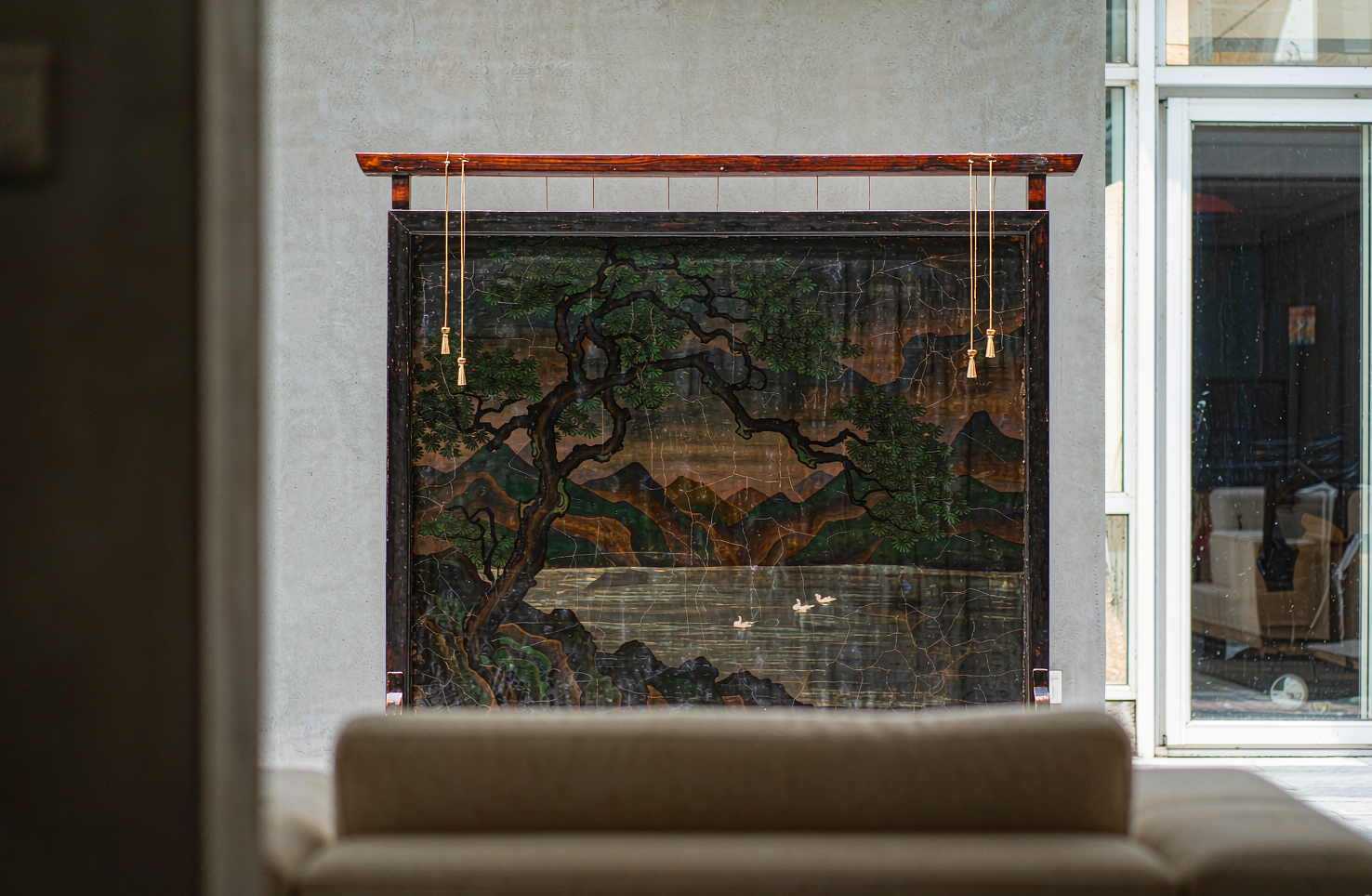
老房子里,屏风从来不只是挡一挡。它决定你一进门先看哪里。四面墙的屋子有了屏风,才像有了一个"眼"。
韵和鸣 · 2026/10/8 · 12 阅读
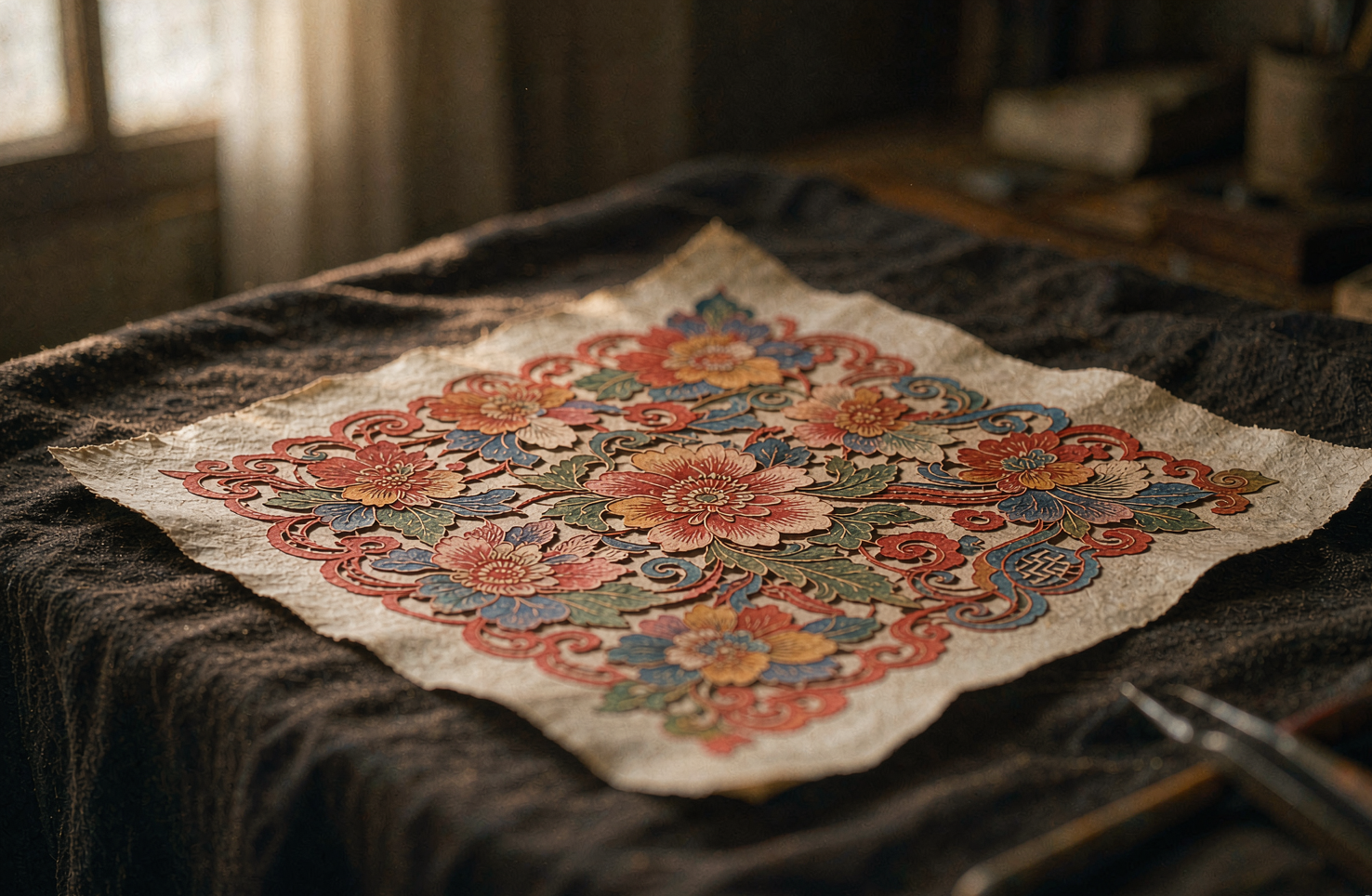
一张蔚县剪纸,彩色的刻刀活
严选录这一期看一张不太一样的剪纸:它不用剪刀,用刻刀;不止红色,还带着点染出来的粉与绿。河北张家口蔚县的剪纸,是剪纸大家族里"反着来"的一支——别处以剪为主、以红为正,蔚县以刻代剪、以点彩上色。说到底,这两个"反着来"的本质,是蔚县人把剪纸从窗前的女红,做成了作坊里的分工手艺:看懂了这一点,才算看懂了这张纸。
韵和鸣 · 2026/10/13 · 10 阅读
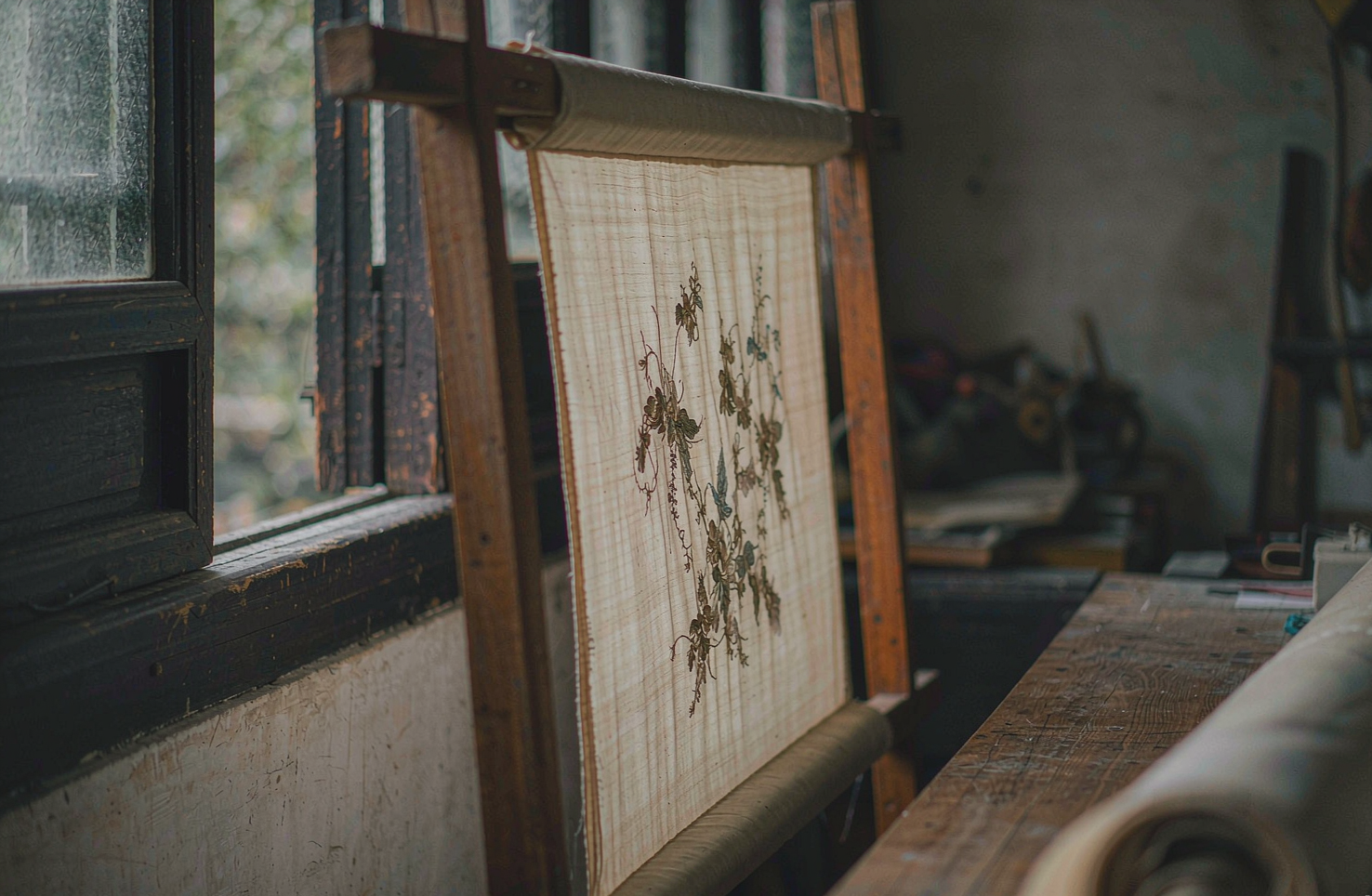
一枚苏绣绣片,丝光里藏着多少根丝
看一枚巴掌大的苏绣绣片,凑近了看,再凑近一点。你会发现它的光不是绣上去的,是"长"出来的——丝被劈到几乎看不见,一针一针顺着一个方向排,光就顺着丝走。说到底,苏绣的讲究,是从把一根丝线"拆开"那一刻开始的。
韵和鸣 · 2026/10/11 · 10 阅读
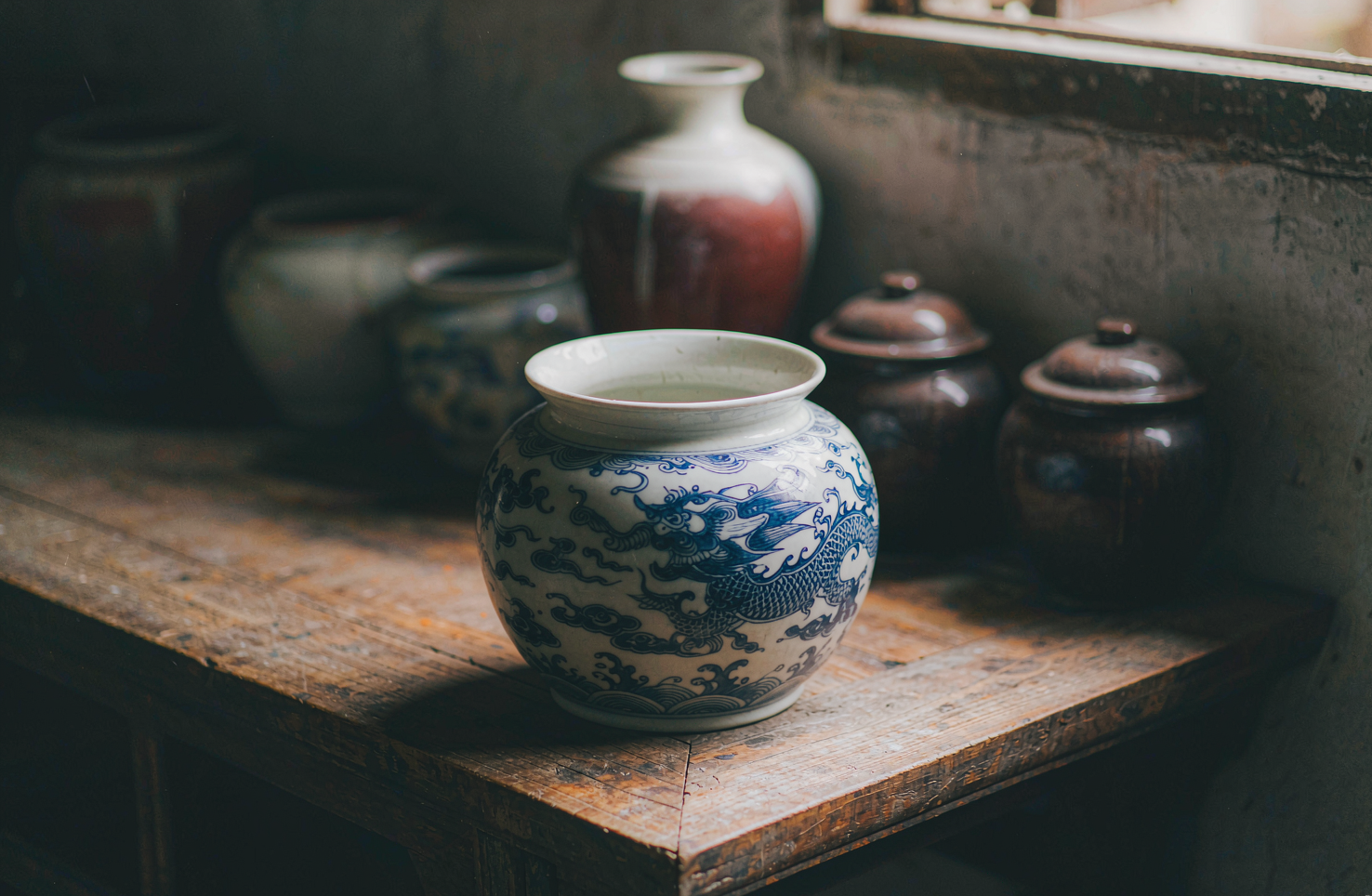
一盏博山琉璃:颜色是炉火给的,不是颜料调的
说到底,琉璃与玻璃的分界,不在透明不透明,而在颜色从哪来。在山东博山,一盏鸡油黄琉璃的颜色长在料里、生在炉里,出炉之后再不改色。这是严选录这一期想讲清楚的事。
韵和鸣 · 2026/10/12 · 9 阅读