錾子落下去,声音就是纹样
韵和鸣 · 韵和鸣公众号 · 2026/10/4 12:00:00 · 3 阅读
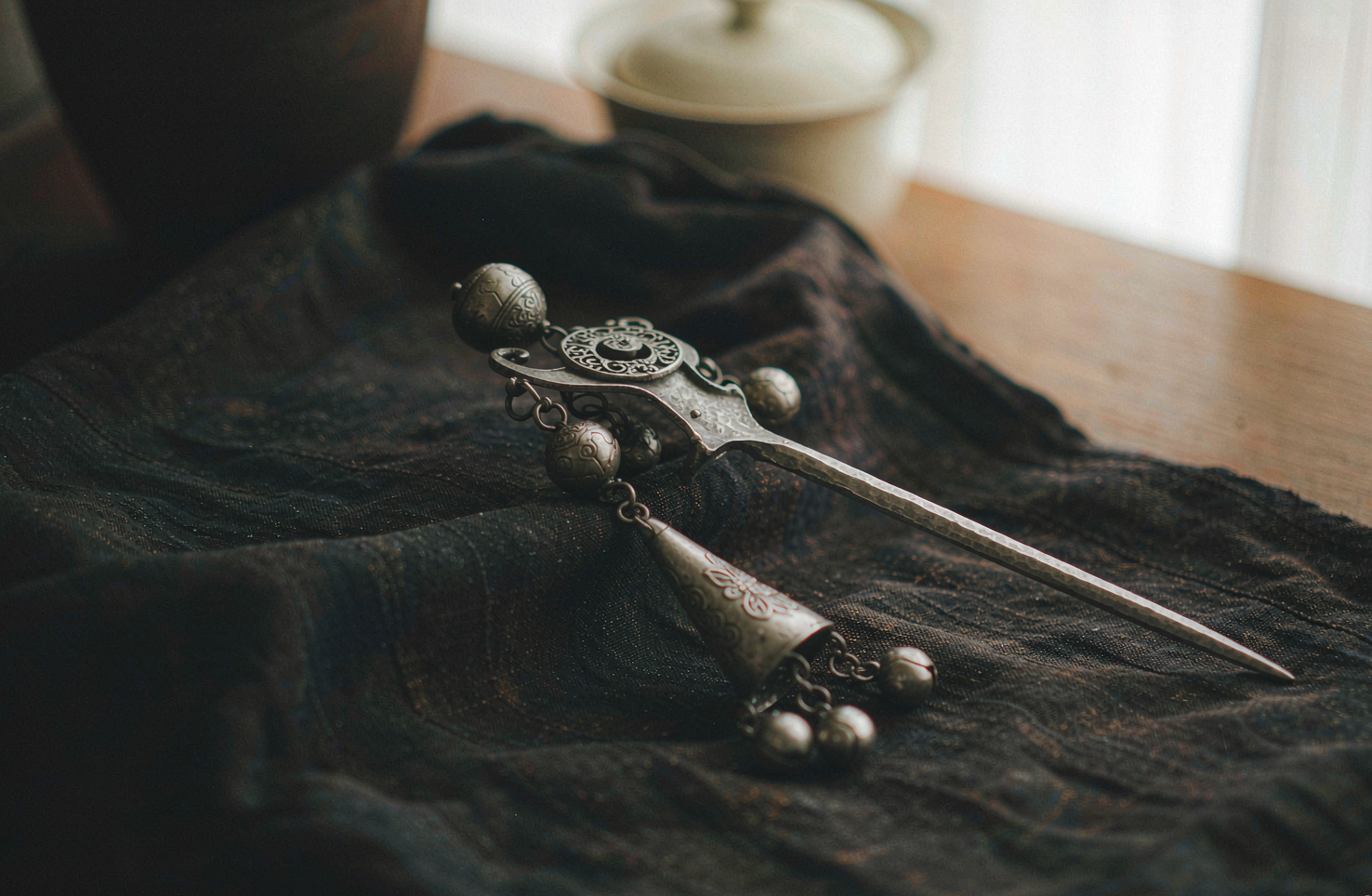
走进雷山的银匠铺,最先撞进耳朵的不是敲打声,而是一种很有节奏的"嗒、嗒、嗒"。老师傅说,那是錾子在走路——每走一步,银片上就多一道纹。
苗族银饰的头一道工序,往往不是锻打,而是回炉。
银料投进炉子,化为银水,倒进槽里凝成细条,再放上铁砧,一锤一锤打长、打薄。这中间要反复退火——银打久了会变硬变脆,得重新烧软,才能接着往下走。一件大件的银饰,光是这一个动作,就要来回几十次。
行里的话说得实在:银是硬的,也是活的,你得顺着它的性子走。
在苗族聚居的山寨里,银饰不只是饰品。它和节日、婚嫁、身份连在一起,是一份"穿在身上的记忆"——那些没有写下来的部分,就记在银片上。
到了节日,你会更明白这些银片的分量。一身盛装的银饰分量不轻,人一走动就叮当作响——那不是装饰的声音,是一个家庭攒了许多年的声音。银饰在苗族家庭里是要一代代往下传的,长辈的头面留给晚辈,再往下一代走。所以匠人打的从来不是一件"货",是一件要被人戴很久的东西。
锻打成形只是把银"打薄",真正让银饰有表情的,是錾刻。
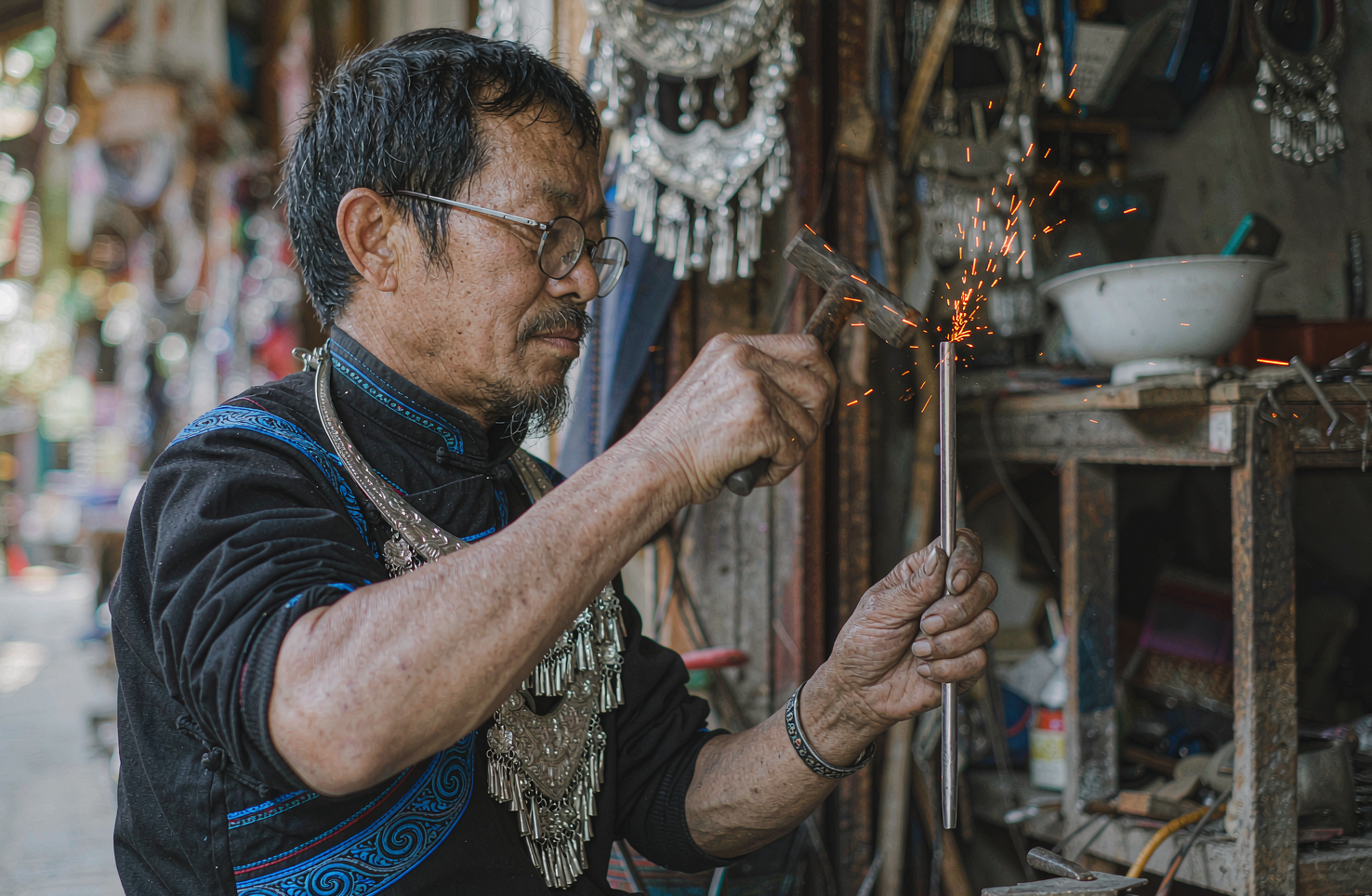
錾子是一组细长的钢棒,下端磨成各种形状:平的、圆的、半月的、带齿的。匠人左手扶定银片,右手持锤,錾尖抵住银面,落锤——银面上就留下一个印子。换一支錾子,就是一个新笔触。
这一步最见功夫的地方,在"听"。银片厚薄不均,落锤的轻重就得随时改;锤子下去的声音发闷,说明这里厚了一点;声音发脆,说明该收了。老师傅不用尺子,靠的是耳朵和几十年攒下的手感。
细看那些纹样,会发现它们大多不是画上去的草稿。蝴蝶、龙、鸟、水波、花草,一锤一锤地走,纹路带着微微的高低起伏。机器压出来的图案是平的,錾出来的图案,光斜着照过去,会一层一层地亮。
苗族的纹样,很少只是为了好看。
同一个母题会在不同支系里变出不同的样子:有的寨子偏爱蝴蝶,有的偏爱鸟与水波;同一支簪子,长辈戴过的和年轻人新打的,纹样重心也不一样。银饰因此成了一本可以互相辨认的"谱"——戴着它出门,别人能从纹样上认出你从哪里来。
也正因为如此,银饰的改动格外谨慎。加一道纹、少一道纹,都可能被视作"不合规矩"。匠人在动錾子之前,先要问清楚的不是客人的预算,而是这支簪子属于谁家、用在什么场合。
从银料到成品,一件银饰要经过熔炼、锻打、退火、錾刻、焊接、修形、抛光等工序,中间的每一步都可能推翻前面的成果。焊接时火大一点,薄的地方就塌了;抛光时手重一点,錾出来的棱角就磨钝了。
我们问过匠人:为什么不用模具?批量做,成本能下来不少。
他想了想说,模具出来的纹样是"别人定好的",而錾刻的纹样,是"一锤一锤长出来的"。前者快,后者慢,可慢有慢的价值——每一支都不一样,就像戴它的人。
这些年,银饰开始被更多年轻人重新看见。有人把苗银做成更轻的耳饰,有人把它嵌进漆器,做成胸针——银的冷光,落在漆的深色里,两种材质互相托着,各自都更清楚了。
这正是我们做「银泽」系列时最在意的部分:不是把苗银"改造"成别的样子,而是替它找到一个能走上更远路程的场景。匠人守着技艺和纹样,我们负责把它的来路讲清楚——从哪个寨子、哪双手、走了多少锤。
我们也在留意另一件事:愿意学錾刻的年轻人,这些年不算多。这门手艺的门槛不在天赋,而在安静——一坐一整天,听一整天的锤声,很多人坐不住。所以匠人愿意收徒、愿意把手上的分寸一点点交出去,本身就值得被记录。
一件银饰能戴多久,取决于它有多结实;一门手艺能传多久,取决于有多少人愿意讲它的来路。
你家里有没有一件"戴了很久"的老银饰?留言讲讲它的来历。
📩 非遗项目 | 匠人举荐 | 跨境出海 | 线下联营
欢迎留言或后台联系,我们与匠人同行。
English
The first step in Miao silverwork is often not hammering but melting.
Silver goes into the furnace and becomes molten; it is poured into a groove and cooled into a thin bar, then laid on the anvil and hammered longer and thinner, blow by blow. In between, it must be annealed again and again — silver hardens and turns brittle with working, and must be softened by fire before the next round. For a large piece, this single motion may repeat dozens of times.
The trade puts it plainly: silver is hard, and silver is alive — you have to go along with its temper.
In the Miao villages, silver ornaments are more than adornment. They are bound up with festivals, marriage, and standing — a memory worn on the body, and the parts never written down are recorded in the silver itself.
At festival time in a Miao village you understand better what these sheets of silver weigh. A full set of ceremonial silver is no light thing, and it chimes as the wearer walks — not the sound of ornament but the sound of a family's savings accumulated over many years. Silver passes down through Miao households from one generation to the next; an elder's headdress goes to the younger, and on down again. So what a craftsman hammers is never a "product" but something meant to be worn for a very long time.
Hammering shapes the silver and thins it; what gives an ornament its expression is chasing.
A chaser's punches are a set of slender steel rods, their tips ground into many shapes: flat, round, crescent, toothed. The artisan steadies the silver with the left hand, holds the hammer in the right, sets the tip against the surface, and strikes — a mark remains. Change the punch, and you change the stroke.
The part that shows real mastery is listening. Silver varies in thickness, so the force of each blow must change with it: a dull note means the metal is a touch thick here; a brittle note means it is time to stop. Masters need no gauge — they rely on their ears and on decades of accumulated touch.
Look closely at the patterns and you find that most were never sketched out. Butterflies, dragons, birds, ripples, flowers — all walked out blow by blow, their lines rising and falling by fractions of a millimeter. Machine-pressed motifs are flat; chased motifs, when the light rakes across them, brighten layer by layer.
Miao patterns are seldom there merely to please the eye.
The same motif takes different forms across different branches of the Miao: one village favors butterflies, another birds and ripples; even on a single hairpin, the patterns a grandparent wore and the ones a young person has newly made carry a different center of gravity. Silver thus becomes a vocabulary of mutual recognition — wear it out, and others can read from the patterns where you come from.
For this very reason, changes to an ornament are made with great care. Adding or dropping a single line may be seen as breaking the rules. Before the chisel moves, the artisan must ask not about the client's budget but about whose family the piece belongs to and on what occasion it will be worn.
From raw silver to finished piece, an ornament passes through melting, forging, annealing, chasing, soldering, shaping, and polishing, and any single step can undo the ones before it. A little too much heat at the soldering stage and a thin section collapses; a little too much pressure at polishing and the sharpness of the chasing is worn away.
We asked a craftsman: why not use molds? Mass production would bring the cost down considerably.
He thought for a moment and said: a mold gives you a pattern someone else decided, while a chased pattern grows out, blow by blow. The one is fast, the other slow — but slowness has its worth: every piece is different, just like the person who wears it.
In recent years, silver ornaments have begun to be rediscovered by younger audiences. Some turn Miao silver into lighter earrings; others set it into lacquer to make brooches — the cold gleam of silver falling into the deep tone of lacquer, each material holding the other up, each becoming clearer for it.
This is exactly what we care about most in our "Silvery Sheen" series: not to remake Miao silver into something else, but to find it a setting from which it can travel farther. The artisan keeps the technique and the patterns; our job is to tell its provenance clearly — which village, whose hands, how many hammer blows.
We have also been watching something else: in recent years, not many young people have been willing to learn chasing. The barrier is not talent but quiet — a whole day seated, a whole day of hammer notes, and many cannot sit through it. That a craftsman is still willing to take on apprentices, to hand over the measure in his hands bit by bit, is in itself worth recording.
How long an ornament can be worn depends on how soundly it is made; how long a craft can be passed on depends on how many are willing to tell where it came from.
ICH Projects · Artisan Referrals · Global Distribution · Salon Partnerships
你可能还感兴趣
漆器为什么能埋八千年不坏
在博物馆做漆器研究与修复的研究员老周,桌上常年摆着两样东西:一段出土的漆皮残片,一只新做不久的平遥推光漆盘。他说这两样东西隔着八千年,却是同一种材料。这次对话,我们从"漆器为什么埋几千年不坏"聊起,聊到最后,其实是手艺对材料的理解问题。
韵和鸣 · 2026/10/14 · 16 阅读
一方宋锦里,藏着宋人的审美秩序
初见宋锦,我的反应不是"好看",而是"安静"。它不像人们想象里的锦那样满身是光。带我看锦的老师傅说,正是这份安静,最难织。
韵和鸣 · 2026/10/8 · 11 阅读
一位漆器匠人的失败清单,那些没做成的器物
一间漆坊的账,通常记的是卖出了多少件;平遥一位做了三十多年推光漆器的老师傅,却另有一个本子,专记做坏了多少件。失败清单这门"倒着记的账",恰恰是手艺扎实与否的底细——器物耐看的那一面,是从废品堆里刨出来的。
韵和鸣 · 2026/10/12 · 8 阅读
十六岁学艺,他如今想让漆器走进年轻人的家
在平遥,学漆艺的人正在换代。老匠人把五十年的功夫交给徒弟,年轻教师把漆带进课堂。一门千年手艺要传下去,卡住的往往不是技法。
韵和鸣 · 2026/10/2 · 4 阅读
去贵州雷山,看一块银元如何变成一支银簪
在黔东南的苗寨里,银不只是一种首饰材料。它曾经是可以随时熔掉、重新打制的"存款",也是节日里一个女人身上最亮的那部分。关键在于,当一块老银元被放进坩埚,它要经过多少双手、多少道火,才重新成为一件能戴出门的东西。
韵和鸣 · 2026/10/9 · 27 阅读
年轻人不愿学老手艺,该怪年轻人,还是怪这门手艺?
非遗传承里被讨论得最多的一句话是"后继乏人"。这句话往下追一层,就分成两条路:一条通向年轻人,说他们耐不住、看不上;一条通向他们面对的那门手艺,说它没能给出一条能活下去的路。这两条路,最近又吵起来了。
韵和鸣 · 2026/10/8 · 10 阅读