犀皮起皱:那一圈圈花纹,是怎么「自然长出来」的
韵和鸣 · 韵和鸣公众号 · 2026/10/3 12:00:00 · 4 阅读
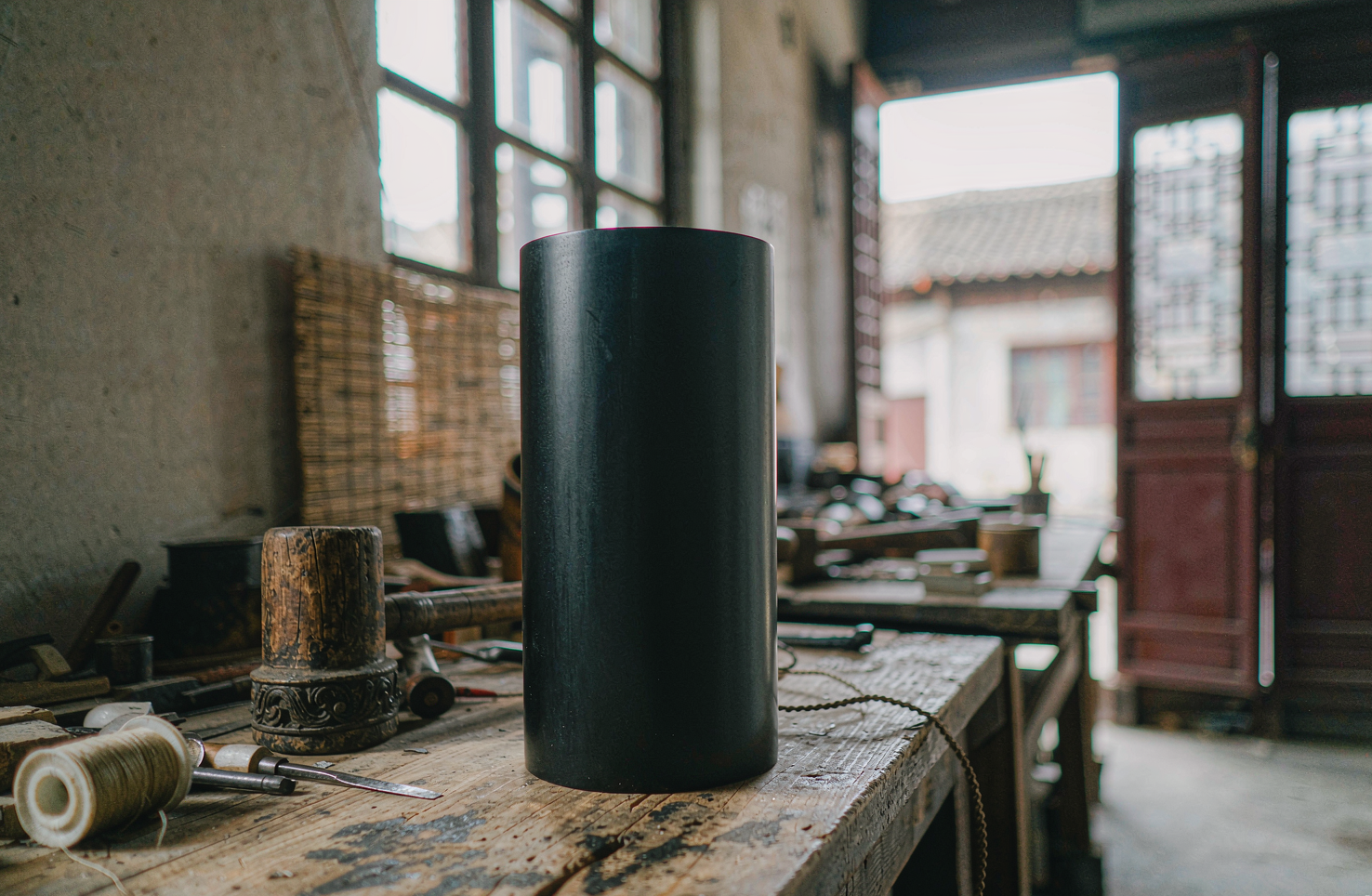
第一次见犀皮漆器的人,往往会问同一个问题:这些一圈一圈、像行云又像水波的纹路,是画上去的吗?答案会让很多人意外——不是画的,是“长”出来的。匠人只造了一个开头,剩下的交给漆自己。
犀皮,不是犀牛的皮。
它是大漆髹饰里的一种传统技法,纹理层叠流转、光泽温润,古人觉得它像犀牛角的断面,才起了这个名字。明代黄成所著的《髹饰录》里,就记下了这门手艺。在平遥推光漆器的髹饰技艺里,“犀皮起皱”是与描金、螺钿并列的看家功夫之一。
如果说描金是“工笔”、螺钿是“镶嵌”,那犀皮就是漆艺里的“写意”——因为它的纹样,人控制不了。
犀皮的起点,是一道叫“打埝”的工序。
匠人用稠漆,在漆面上一点一点地点出凸起——高高低低、疏疏密密,像撒下一把看不见的种子。这些小小的凸起,行话叫“埝”。埝打得大小不均、分布随意,将来的纹理才有流动感;打得整齐划一,花纹反而死了。
所以打埝看着随手,实则是整件器物的构图。有经验的匠人下手前,心里已经有一片云水的走向,手上只是把它“翻译”成一个个漆点。
这一步之后,人就要退场了。
埝干透后,进入最见耐心的环节:层层髹漆。
匠人在凸起之上,一遍遍刷上不同颜色的漆——一层朱、一层黑、一层金,或再夹一层绿。每一层都要进阴干房,慢慢结膜,干透了才轮到下一层。一件犀皮器物,色漆常常要髹上许多道,前后耗时以月计。
这个阶段它还不好看。层层叠叠的颜色,盖在灰扑扑的埝上,浑浊、沉闷,看不出任何花纹的迹象——像一段看不出走向的人生。
奇迹发生在最后一道工序:磨显。
匠人拿炭、拿磨石,开始磨那片“浑浊”的漆面。磨着磨着,最先被磨平的地方,埝顶露出来了——最上面那层色漆被磨穿,下面一层层的颜色,顺着凸起的坡度,一圈一圈地断面上显露出来。
朱环套着黑环,黑环里又渗出一线金。因为埝的高低疏密全不一样,色层的厚薄也各不相同,露出来的纹理便毫无规律可言——像云被风吹开,像水绕过石头,像年轮又不规则于年轮。
磨到什么程度停手,全凭匠人的眼力。磨轻了,花纹藏着掖着;磨过了,前功尽弃。而磨成之后,还要推光,把整片纹理沉入一层温润的光泽里——那才是犀皮漆“看着像活的”的原因。
犀皮最迷人的地方,恰恰是它的不可复制。
同一双手、同一批漆、同一天打的埝,磨出来也是两种纹路。世上没有两件完全相同的犀皮漆器——这不是宣传话术,是工序的物理属性。埝的高低是手劲,色层的断口是偶然,磨显的分寸是即兴。三重不确定性叠在一起,每一件犀皮器物,从出生起就是孤本。
这也是我们做严选时格外看重犀皮的原因。机器可以复制一万只图案一致的首饰盒,但复制不了一份“自己长出来的花纹”。判断手作的价值,从来不是看它有多精致,而是看它身上有多少东西,是人力安排不了的。
如果想认识犀皮,不必一上来就奔大件。
从一枚小盒、一只茶托开始,最合适。先看纹理的“流动性”:好的犀皮,纹路是“绕”出来的,一圈一圈有走向、有呼吸,而不是呆板的同心圆。再看光泽:磨显之后经过推光的漆面,纹理应该是“沉”在光泽底下的,转动角度,光走纹不走。最后上手掂一掂、摸一摸——漆膜的温润感,是眼睛替不了手指的。
挑犀皮有点像挑石头:没有标准答案,只有合不合眼缘。你喜欢的一片云,别人未必喜欢——这恰恰是它最有意思的地方。
犀皮起皱教给我们的,其实是一种做事的态度:造好开端,给出条件,然后把结果交给过程。
匠人控制的是漆的稠度、埝的疏密、色的顺序、磨的深浅;控制不了的,是最终那片云水往哪里流。所谓天然之美,从来不是没有人的参与,而是人恰到好处地退到了花纹的后面。
下一次在案头看见一圈一圈流转的漆纹,不妨凑近些看——那不是图案,是一段被完整保留下来的、无法重来的过程。
📩 非遗项目 | 匠人举荐 | 跨境出海 | 线下联营
欢迎留言或后台联系,我们与匠人同行。
English
Xipi is not rhinoceros hide.
It is a traditional technique within raw lacquer decoration, with layered, flowing patterns and a warm, gentle sheen. The ancients thought it resembled the cross-section of a rhinoceros horn, and so gave it the name. The Xiu Shi Lu (Record of Lacquer Decoration), written by Huang Cheng in the Ming dynasty, already recorded this craft. Within the decoration technique of Pingyao polished lacquerware, "xipi wrinkling" stands alongside gold tracing and mother-of-pearl inlay as one of the signature skills.
If gold tracing is the meticulous brushwork and mother-of-pearl inlay the inlay work, then xipi is the freehand spirit of lacquer art—because its patterns are beyond human control.
The starting point of xipi is a step called "da nian."
The craftsman uses thick lacquer to dot out raised points on the surface, one by one—high and low, dense and sparse, like scattering a handful of invisible seeds. These tiny raised points are called "nian" in the trade. When the nian are uneven in size and scattered at will, the future pattern gains a sense of flow; when they are uniform and orderly, the pattern dies instead.
So da nian looks offhand but is in fact the composition of the entire piece. Before the experienced craftsman begins, the direction of a stretch of cloud and water is already in his mind, and his hand merely "translates" it into one lacquer dot after another.
After this step, the human hand must withdraw.
Once the nian have dried through, the most patience-testing stage begins: applying lacquer layer upon layer.
Over the raised points the craftsman brushes coat after coat of differently colored lacquer—a layer of vermilion, a layer of black, a layer of gold, or perhaps a layer of green in between. Each layer must go into the drying room to cure slowly, and only when dry through does the next one have its turn. A single xipi piece often takes many coats of colored lacquer, and the whole process is measured in months.
At this stage it is not yet beautiful. Layer upon layer of color, laid over the gray nian, is murky and dull, with no sign of any pattern—like a life whose direction cannot yet be read.
The miracle happens in the final step: the grinding that reveals the pattern.
The craftsman takes charcoal and a grindstone and begins to grind that "murky" lacquer surface. As he grinds, the places that flatten first reveal the tops of the nian—the topmost coat of colored lacquer is worn through, and the layers of color below come out on the cut, ring by ring, along the slope of the raised points.
A vermilion ring encircles a black one, and from within the black a thread of gold seeps out. Because the height and spacing of the nian are all different, and the thickness of the color layers varies as well, the pattern that emerges is utterly without rule—like clouds blown open by the wind, like water flowing around a stone, like tree rings yet more irregular than tree rings.
How far to grind before stopping depends entirely on the craftsman's eye. Grind too lightly, and the pattern stays hidden; grind too far, and all the earlier work is lost. And once the grinding is done, there is still hand-polishing, to sink the whole pattern into a layer of warm sheen—which is why xipi lacquer "looks alive."
The most captivating thing about xipi is precisely its unrepeatability.
The same pair of hands, the same batch of lacquer, nian built on the same day, and still two different patterns emerge from the grinding. No two pieces of xipi lacquerware in the world are exactly alike—this is not a sales pitch but a physical property of the process. The height of the nian comes from the strength of the hand, the edges of the color layers from chance, the degree of grinding from improvisation. Three uncertainties stacked together, and every xipi piece is a unique copy from the moment of its birth.
This is also why we prize xipi so highly in our curated selection. A machine can reproduce ten thousand jewelry boxes with an identical pattern, but it cannot reproduce a pattern that "grew on its own." Judging the value of handmade work has never meant looking at how refined it is, but at how much of it is something human effort cannot arrange.
If you want to get to know xipi, you need not go straight for a large piece.
The best place to start is a small box or a tea saucer. First look at the "flow" of the pattern: in good xipi the lines are "wound" into being, ring upon ring with direction and breath, not stiff concentric circles. Then look at the sheen: on a surface that has been polished after grinding, the pattern should be "sunk" beneath the gloss, so that as you turn the piece the light moves while the pattern does not. Finally, weigh it in the hand and feel it—the warmth of a lacquer film is something the eye cannot do for the fingers.
Choosing xipi is a bit like choosing a stone: there is no right answer, only whether it pleases your eye. The stretch of cloud you love, another person may not—and that is precisely what makes it most interesting.
What xipi wrinkling teaches us is really an attitude toward work: make a good beginning, provide the conditions, and then hand the outcome over to the process.
What the craftsman controls is the thickness of the lacquer, the spacing of the nian, the order of the colors, the depth of the grinding; what he cannot control is where the final stretch of cloud and water will flow. Natural beauty has never meant the absence of human participation, but rather a person stepping back just far enough to stand behind the pattern.
Next time you see rings of lacquer pattern flowing across a desk, lean in a little—that is not a design but a process, kept whole, that can never be repeated.
ICH Projects · Artisan Referrals · Global Distribution · Salon Partnerships
你可能还感兴趣
一件漆器该有多重,手感不会说谎
严选器物,看纹样、看款识、看证书,都是明面上的事。但有一道标准写不进任何参数表——上手。同一尺寸的两只漆盘,一只压手温润,一只轻飘干瘪,差别从何而来?这次把"分量"这件事拆开讲。说到底,重量是工序的记账本。
韵和鸣 · 2026/10/14 · 14 阅读
一面屏风,如何成为一个家的「眼」
老房子里,屏风从来不只是挡一挡。它决定你一进门先看哪里。四面墙的屋子有了屏风,才像有了一个"眼"。
韵和鸣 · 2026/10/8 · 12 阅读
一件非遗手作凭什么"值":把时间的账算一遍
谈非遗手作,绕不开一个字:值。有人觉得贵得离谱,有人觉得便宜得可疑。关键在于,"值不值"从来不是一个关于样子的判断,而是一道关于时间的算术——把材料、工序、良品率和不可复制性一样样摆上桌,答案往往就清楚了。
韵和鸣 · 2026/10/9 · 11 阅读
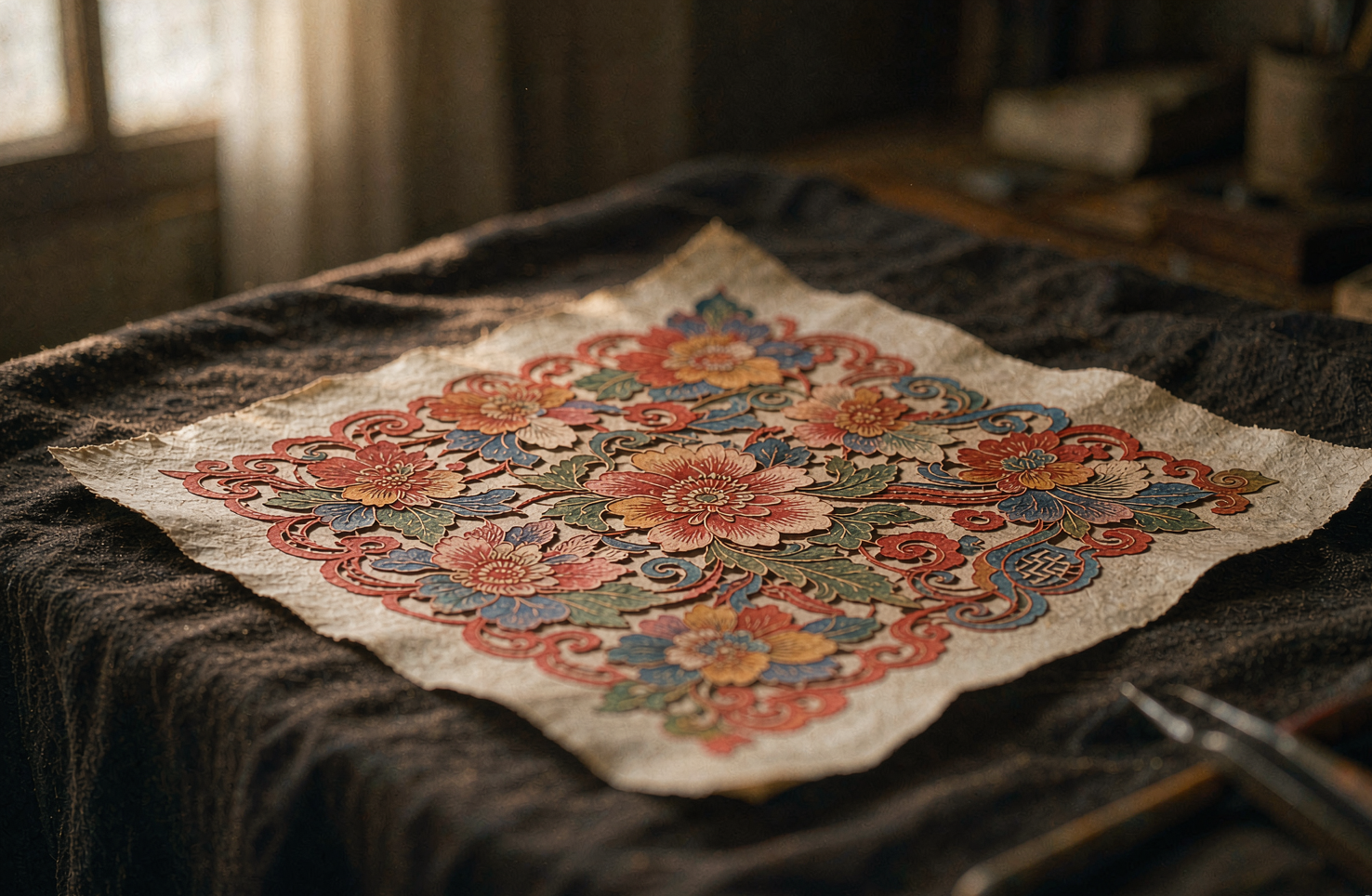
一张蔚县剪纸,彩色的刻刀活
严选录这一期看一张不太一样的剪纸:它不用剪刀,用刻刀;不止红色,还带着点染出来的粉与绿。河北张家口蔚县的剪纸,是剪纸大家族里"反着来"的一支——别处以剪为主、以红为正,蔚县以刻代剪、以点彩上色。说到底,这两个"反着来"的本质,是蔚县人把剪纸从窗前的女红,做成了作坊里的分工手艺:看懂了这一点,才算看懂了这张纸。
韵和鸣 · 2026/10/13 · 10 阅读
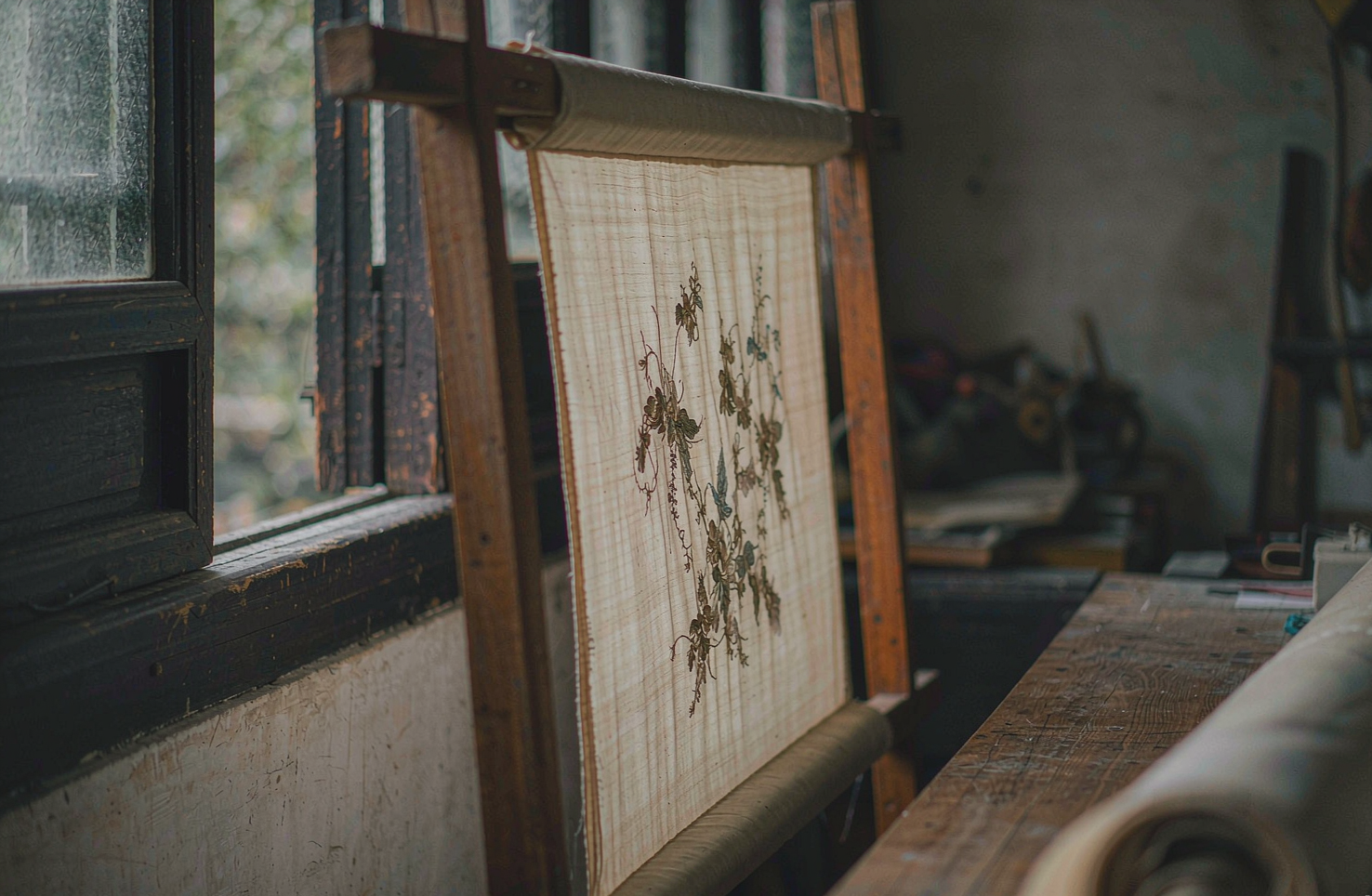
一枚苏绣绣片,丝光里藏着多少根丝
看一枚巴掌大的苏绣绣片,凑近了看,再凑近一点。你会发现它的光不是绣上去的,是"长"出来的——丝被劈到几乎看不见,一针一针顺着一个方向排,光就顺着丝走。说到底,苏绣的讲究,是从把一根丝线"拆开"那一刻开始的。
韵和鸣 · 2026/10/11 · 10 阅读
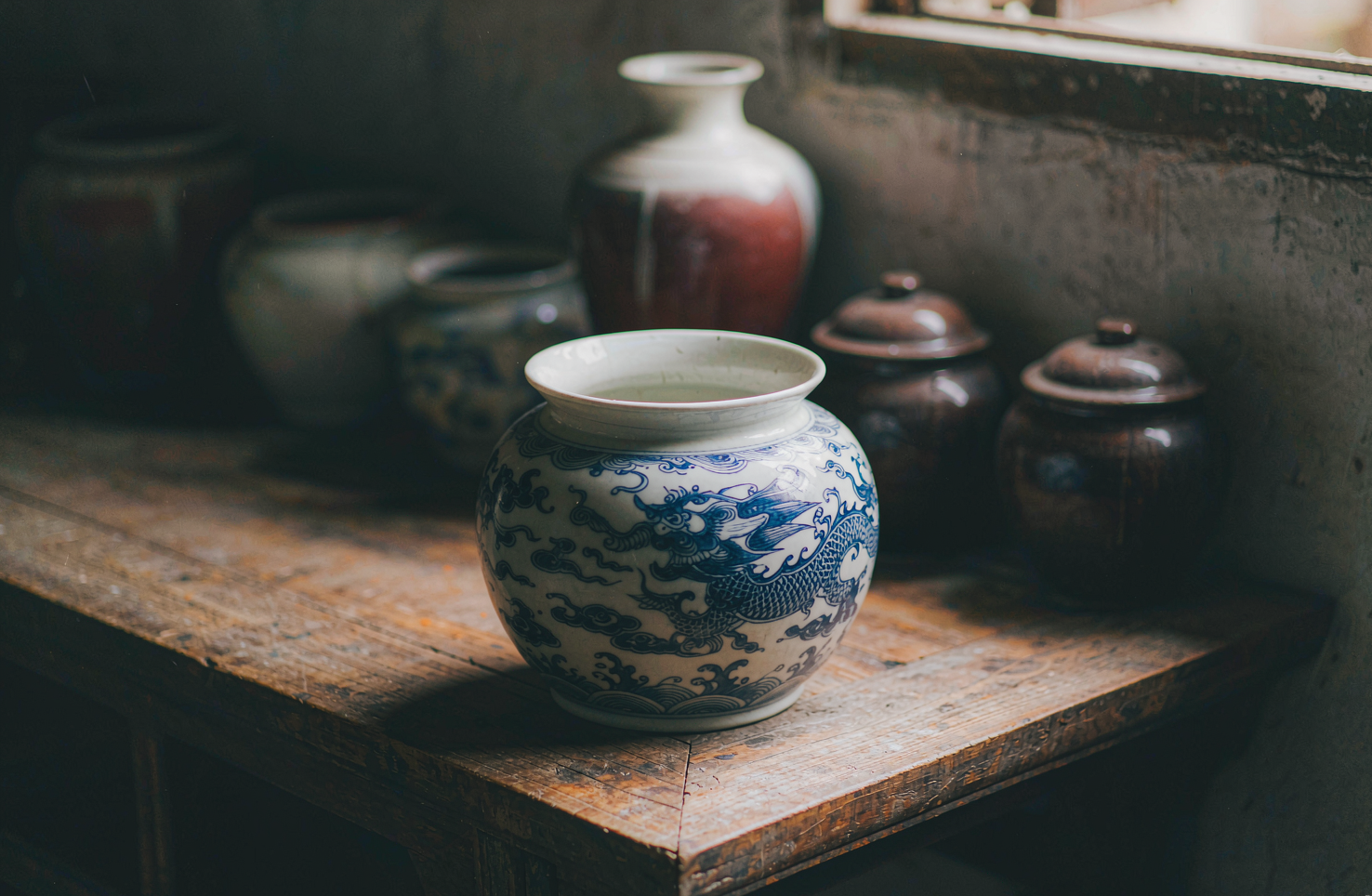
一盏博山琉璃:颜色是炉火给的,不是颜料调的
说到底,琉璃与玻璃的分界,不在透明不透明,而在颜色从哪来。在山东博山,一盏鸡油黄琉璃的颜色长在料里、生在炉里,出炉之后再不改色。这是严选录这一期想讲清楚的事。
韵和鸣 · 2026/10/12 · 9 阅读