开窑前的一夜,黑釉盏要怎么出世
韵和鸣 · 韵和鸣公众号 · 2026/10/11 12:00:00 · 3 阅读
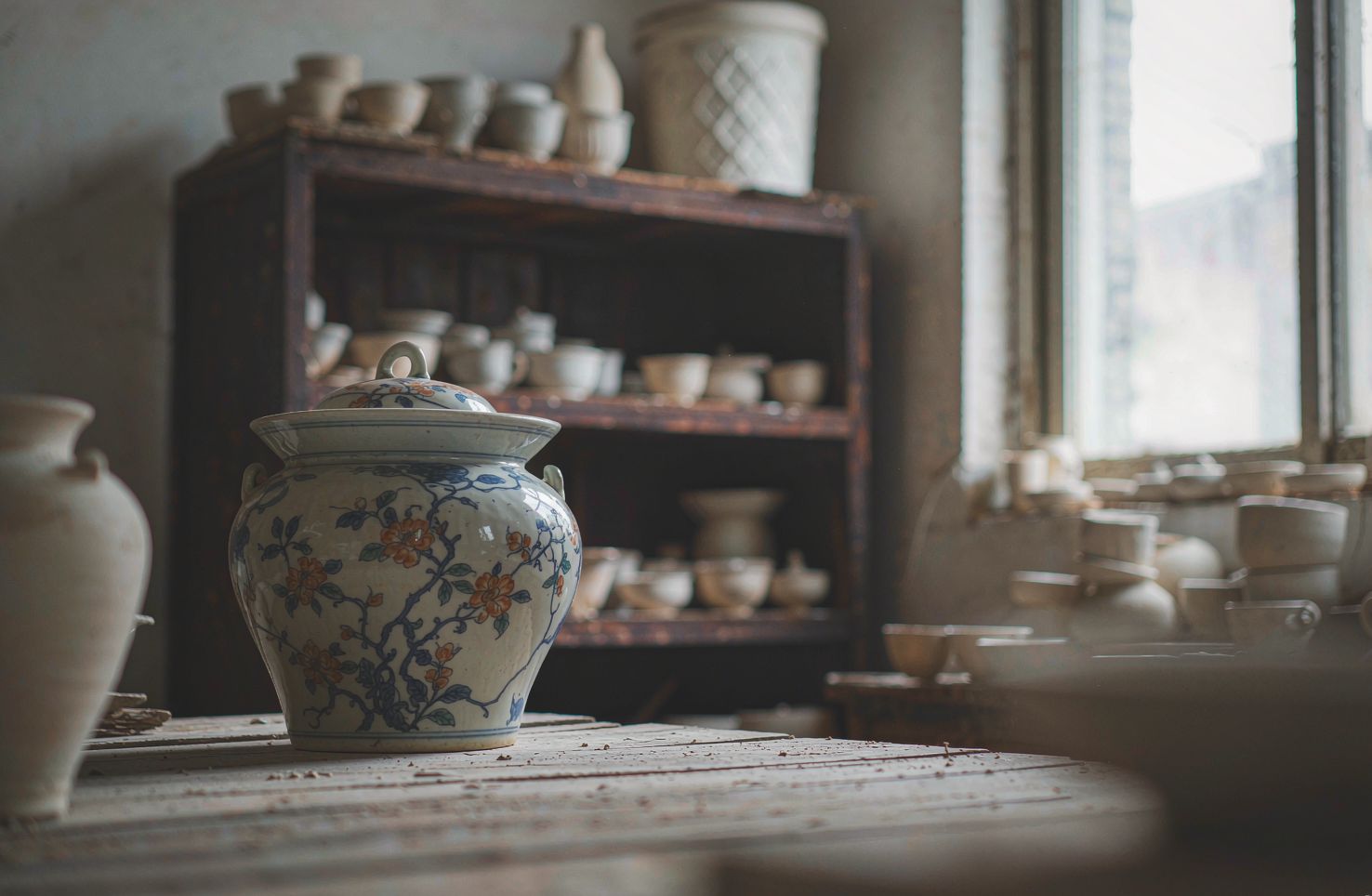
到介休的时候已是傍晚,窑口的师傅说明天开窑,今晚得住下。黑釉这东西,成不成,全在这一夜。说到底,烧窑的人不是在烧器物,是在陪一堆泥土过一道关——过得去,是玄色如漆;过不去,是一窑沉默。
▍窑口的夜,比想象中长
北方秋天的夜来得早。窑房外头黑透了,窑膛里却亮着——观火孔里透出一线橙红,像有人在山的肚子里点了一盏灯。
守窑的师傅姓什么他没说,只让我喊他"守窑的"。他隔一阵就去看火色,把锥形的试片勾出来瞄一眼,再塞回去。问他看什么,他说看"火到了没有"。火到了,釉里的铁才会醒过来;火不到,黑就是死的。
所谓黑釉,是以铁为呈色剂的一类高温釉,铁分够了,窑火够了,釉面才会沉出那种近漆的玄色。山西烧黑釉的窑口,老辈人能数出一串:介休窑、平定窑、怀仁窑,都是北方瓷窑里烧黑的好手。这门传统手工技艺传到今天,靠的仍是口传心授的火色经验。
▍玄色之美,黑不是一种颜色
天快亮的时候,师傅开了话匣子。他说外行人以为黑釉就是黑,内行人看黑釉,看的是黑里的东西。
温度稍变、气氛稍变,黑里就会长出别的东西:有的泛出褐黄,像兔子的毫毛,一丝一丝往下流;有的浮起银亮的圆斑,像油滴落在水面;还有的窑变出意想不到的纹路,人力只能领路,收尾全看窑火。匠人管这个叫"入窑一色,出窑万彩"。
说到黑釉,绕不开福建的建窑。建窑建盏烧制技艺 2011 年列入国家级非物质文化遗产名录,建盏的"兔毫""油滴"让黑釉成了宋人茶席上的主角。而山西的黑釉另有一种脾气:胎骨更厚,釉色更沉,像北方的土地,不事声张。两地隔着千里,烧的是同一种信念——最重的颜色,要最稳的火来养。
▍开窑,是最紧张也最诚实的时刻
早上七点多,窑门一块一块拆开。热气涌出来,带着土和灰的味道。师傅把手伸进窑膛,捧出头一只盏,对着天光转了半圈,没说话,又放回去,再取下一只。
一窑几十件,能入眼的不过半数。变形的不算,火不到的不算,釉水流坏了的也不算。师傅把废件码在墙根,动作很轻。他说这些也不算白费,"下次烧的时候,它们躺在窑底垫着,新盏踩着它们上去。"
所谓开窑的紧张,说到底是一场不接受辩解的验收。拉坯时的手劲、配釉时的分寸、夜里看火的眼力,全在这一刻对账。手艺这东西骗不了人,窑火尤其骗不了。
▍问答
问 | 山西黑釉陶瓷和福建建盏有什么区别?
答 | 两地都以铁为呈色剂烧高温黑釉,但脾气不同:建盏以"兔毫""油滴"闻名,宋代就是茶席名器,建窑建盏烧制技艺 2011 年列入国家级非物质文化遗产名录;山西的介休窑、平定窑、怀仁窑等老窑口,胎釉更厚、釉色更沉,风格偏于朴拙。各美其美,不存在谁高谁低。
问 | 黑釉盏上的"兔毫""油滴"是怎么烧出来的?
答 | 不是画上去的,是烧出来的。釉料里的铁在高温下析出结晶,顺着釉水流淌、聚集,就形成了毫纹或圆斑。温度、气氛、釉的配比差一点,纹路就完全不同——所以同一窑里也没有两件一样的。
问 | 买黑釉盏的时候,手工和机器怎么分辨?
答 | 看三处:一看胎,手工拉坯的盏,底足和盏壁有手的痕迹,厚薄有微妙变化;二看釉,窑变纹路自然舒展,不会件件雷同;三看来源,能讲清哪个窑口、谁烧的,比什么证书都实在。
问 | 韵和鸣是怎么帮助非遗匠人的?
答 | 韵和鸣把自己定位成"非遗经纪人"——以公益的角度帮匠人做事:做内容、做访谈,把手艺讲给更多人听,也帮匠人对接渠道与出海的机会。像守窑这样的现场,品牌做的就是走进去、记下来,让手艺人能安心靠手艺生活。
▍说在最后
临走的时候,师傅往我包里塞了一只盏,釉色不算顶好,毫纹也只有寥寥几丝。他说,好盏他舍不得给,这只你拿去用,用久了,黑会越看越活。
一只黑釉盏的命,一半在窑里,一半在人手里。窑里那一半,匠人管不了全部;人手里这一半,就看用它的人了。
📩 非遗项目 | 匠人举荐 | 跨境出海 | 线下联营
欢迎留言或后台联系,我们与匠人同行。
—— 韵和鸣 · 与匠人同行
〖 寻 〗
相关搜索 | RELATED SEARCHES
山西 黑釉 陶瓷 · 介休窑 平定窑 · 建盏 兔毫 油滴 · 窑变 · 黑釉盏 怎么选
English
The Night at the Kiln Is Longer Than You Think
Autumn nights come early in the north. Outside the kiln shed the dark was complete, yet inside the chamber there was light—a thread of orange-red through the fire-watching hole, as if someone had lit a lamp in the belly of a mountain.
The keeper never gave his surname; he told me to call him "the kiln watcher." Every so often he checked the fire, hooked out a small conical test piece, glanced at it, and pushed it back. I asked what he was looking for. "Whether the fire has arrived," he said. When the fire arrives, the iron in the glaze wakes up; if it doesn't, the black stays dead.
Black glaze, as it is called, is a family of high-fired glazes colored by iron; with enough iron and enough fire, the surface settles into that lacquer-like black. In Shanxi, the old kilns famed for firing black form a string of names—Jiexiu, Pingding, Huairen—all masters of black among northern kilns. Handed down to this day, this traditional craft still depends on fire-reading experience passed from mouth to heart.
The Beauty of Black: Black Is Never One Color
Toward dawn, the keeper grew talkative. Outsiders think black glaze is just black, he said; those who know look at what lives inside the black.
Shift the temperature a little, shift the kiln atmosphere a little, and something else grows out of the black: some pieces flush brownish-yellow, streaking down like a hare's fur; some surface with silvery round spots, like oil drops on water; still others transmute into patterns no one planned—the craftsman can only lead the way, and the kiln fire finishes the sentence. The old saying goes: one color goes in, ten thousand come out.
Any talk of black glaze leads to the Jian kilns in Fujian. The Jian ware firing technique was inscribed on the national list of intangible cultural heritage in 2011, and the "hare's fur" and "oil spot" of Jian cups made black glaze the protagonist of Song-dynasty tea tables. Shanxi's black glaze has another temperament: thicker bodies, deeper color, like the northern land itself—unassuming. A thousand miles apart, the two places fire the same conviction: the heaviest color demands the steadiest fire.
Opening the Kiln: The Tensest and Most Honest Moment
A little after seven in the morning, the kiln door came down brick by brick. Heat rolled out, smelling of earth and ash. The keeper reached into the chamber, brought out the first cup, turned it halfway against the daylight, said nothing, set it down, and took the next.
Of the dozens of pieces in a firing, barely half pass the eye. Warped ones don't count, under-fired ones don't count, ones with ruined glaze runs don't count. The keeper stacked the rejects gently against the wall. They are not wasted either, he said: "Next firing, they lie at the bottom of the kiln, and the new cups climb up on their backs."
The tension of opening a kiln is, in the end, an inspection that accepts no excuses. The strength of the fingers at the wheel, the measure in mixing the glaze, the eyes that read the fire through the night—all of it is audited in this moment. Craft cannot be faked, and kiln fire least of all.
What is the difference between Shanxi's black-glazed ware and Fujian's Jian ware?
Both fire high-temperature black glazes colored by iron, but their temperaments differ: Jian ware, famed for "hare's fur" and "oil spot," starred on Song-dynasty tea tables, and its firing technique entered the national ICH list in 2011; Shanxi's old kilns—Jiexiu, Pingding, Huairen—produce thicker bodies and deeper, plainer black. Each has its own beauty; neither ranks above the other.
How do the "hare's fur" and "oil spot" patterns on black-glazed cups form?
They are not painted on but fired into being. Iron in the glaze crystallizes at high temperature and flows and gathers with the melting glaze, forming streaks or round spots. A slight change in temperature, atmosphere or glaze recipe produces entirely different patterns—which is why no two pieces from the same firing are alike.
When buying a black-glazed cup, how can one tell handwork from machine work?
Look at three things: the body—a wheel-thrown cup bears traces of the hand and subtle variations in thickness; the glaze—kiln patterns unfold naturally and never repeat exactly; and the provenance—a seller who can name the kiln and the maker offers something more solid than any certificate.
How does YUNHEMING help heritage craftspeople?
YUNHEMING positions itself as a "heritage agent"—helping craftspeople from a public-spirited angle: producing content and interviews so more people hear about the craft, and connecting makers with channels and overseas opportunities. For a scene like this kiln watch, what the brand does is walk in, record it faithfully, and let craftspeople live by their craft in peace.
As I was leaving, the keeper slipped a cup into my bag. The glaze was not his best, with only a few faint streaks. He said he could not part with the fine ones, but this one was mine to use—and with use, the black would grow more alive.
The life of a black-glazed cup is half in the kiln and half in the hand. The kiln half is beyond the maker's full control; the hand half belongs to whoever uses it.
ICH Projects · Artisan Referrals · Global Distribution · Salon Partnerships
你可能还感兴趣
去贵州雷山,看一块银元如何变成一支银簪
在黔东南的苗寨里,银不只是一种首饰材料。它曾经是可以随时熔掉、重新打制的"存款",也是节日里一个女人身上最亮的那部分。关键在于,当一块老银元被放进坩埚,它要经过多少双手、多少道火,才重新成为一件能戴出门的东西。
韵和鸣 · 2026/10/9 · 27 阅读
灯下刻蛋的一夜,一枚蛋壳上的毫米功夫
寻访蛋雕匠人的那个晚上,工作台上一盏台灯、一把刻刀、一碟画好底稿的蛋壳。蛋雕这门传统手工技艺,说白了就是在薄胎上动刀子——壳壁比指甲盖厚不了多少,刻透半层是功夫,刻穿整个是事故。我们坐下来看了大半夜,看懂了这门手艺的关键不在"刻",在"忍"。
韵和鸣 · 2026/10/13 · 4 阅读
漆器为什么能埋八千年不坏
在博物馆做漆器研究与修复的研究员老周,桌上常年摆着两样东西:一段出土的漆皮残片,一只新做不久的平遥推光漆盘。他说这两样东西隔着八千年,却是同一种材料。这次对话,我们从"漆器为什么埋几千年不坏"聊起,聊到最后,其实是手艺对材料的理解问题。
韵和鸣 · 2026/10/14 · 16 阅读
一方宋锦里,藏着宋人的审美秩序
初见宋锦,我的反应不是"好看",而是"安静"。它不像人们想象里的锦那样满身是光。带我看锦的老师傅说,正是这份安静,最难织。
韵和鸣 · 2026/10/8 · 11 阅读
年轻人不愿学老手艺,该怪年轻人,还是怪这门手艺?
非遗传承里被讨论得最多的一句话是"后继乏人"。这句话往下追一层,就分成两条路:一条通向年轻人,说他们耐不住、看不上;一条通向他们面对的那门手艺,说它没能给出一条能活下去的路。这两条路,最近又吵起来了。
韵和鸣 · 2026/10/8 · 10 阅读
一位漆器匠人的失败清单,那些没做成的器物
一间漆坊的账,通常记的是卖出了多少件;平遥一位做了三十多年推光漆器的老师傅,却另有一个本子,专记做坏了多少件。失败清单这门"倒着记的账",恰恰是手艺扎实与否的底细——器物耐看的那一面,是从废品堆里刨出来的。
韵和鸣 · 2026/10/12 · 9 阅读