景德镇的一天:从拉坯到青花勾线
韵和鸣 · 韵和鸣公众号 · 2026/10/7 12:00:00 · 3 阅读
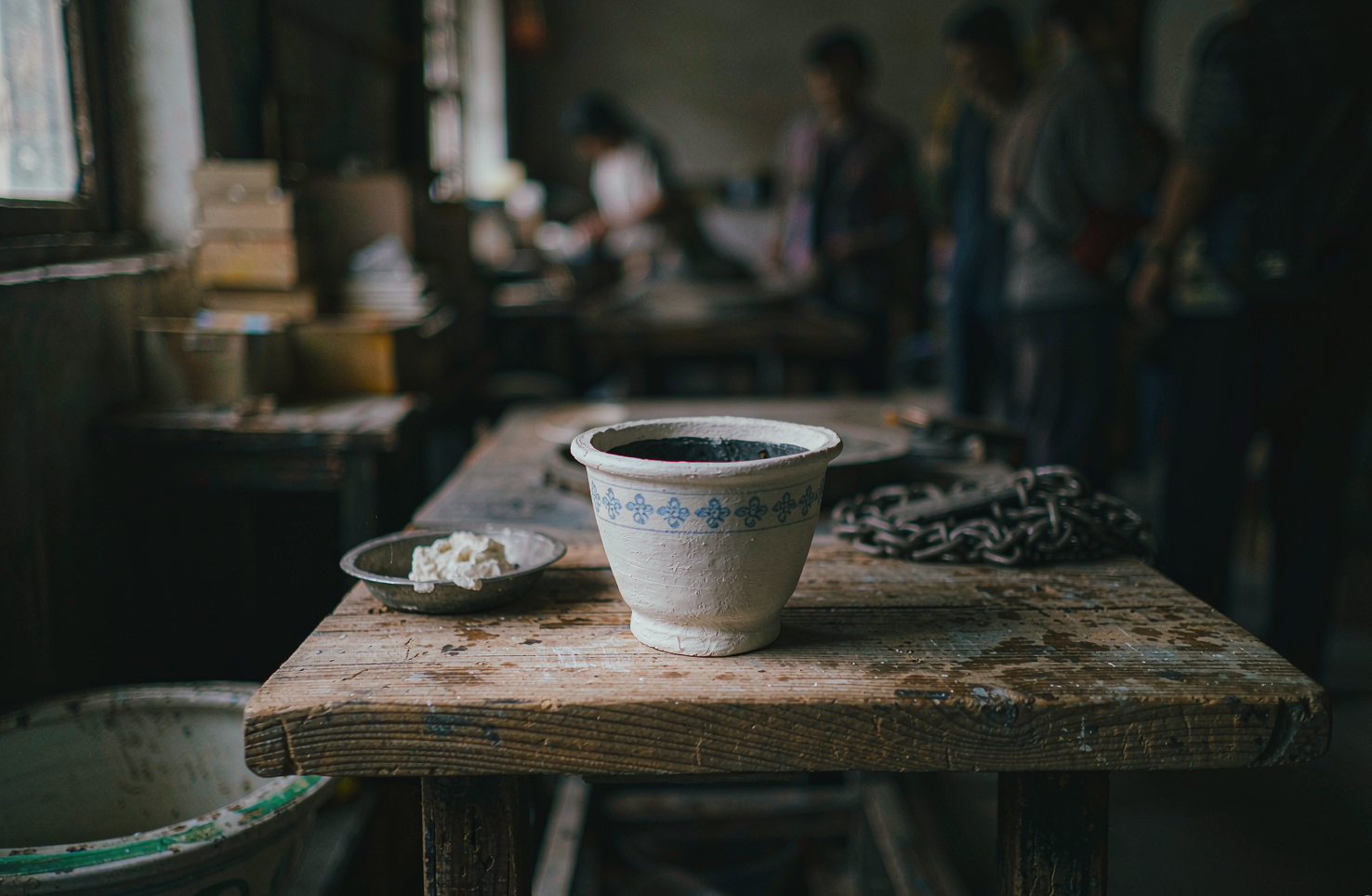
到景德镇那天,正赶上作坊里忙的一段。推开门,轮盘在转,泥在手上一点点长高;再往里走,素坯上已经描出了半只缠枝莲。一间屋子,装着瓷碗要走的大半程路。
▍一抔泥,先要在轮盘上站起来
拉坯是制瓷的头一道。泥料由高岭土与瓷石配成,软硬、湿度都有讲究。轮盘一转,双手把泥拢高、开口、拉薄,一只碗的雏形就在旋转里出来了。
看师傅拉坯是件安静的事。他不多话,手肘抵着膝盖,泥在指间慢慢成形。顺的时候几分钟一只,不顺的时候,一只碗反复重来,直到他自己点头为止。
只是拉出来的还不能算数。它还湿着,站不太久,要等它阴干到半硬,再上轮修坯——把多余的泥旋掉,把壁修匀,把圈足修出来。修坯这一步很见功力:手一抖,口沿就歪;劲过了,胎就薄得撑不住。
还有一件事发生在轮盘之前——练泥。新到的泥料不能马上用,要先反复揉压,把里面的空气挤出去,再静置一段时间,让它"醒"过来。泥里若藏着气泡,拉坯时看不出来,一进窑就会炸开。老师傅说,做瓷的功夫,有一半在你看不见的地方。
▍青花的那几笔,先勾线,再分水
景德镇的青花是釉下彩。画的时候,坯上还没有釉;画完,再罩一层透明釉,然后进窑一次烧成。这意味着画错一笔没法擦——泥坯吸水,落笔就是定局。
画青花有个说法的两步:勾线、分水。先用浓料把轮廓勾出来,线条要稳、要匀;再用不同浓淡的料水,在轮廓里分染,让一朵花有深浅、有层次。浓一分,烧出来发黑;淡一分,发灰。
我问画坯的师傅,一天能画多少只。她头也没抬,说:看画的是什么。简单的一圈回纹,快;满工的缠枝,一只就得小半天。
▍上釉之前,还有一道"补水"
画好的坯,不能马上就上釉。要先用湿海绵把坯面轻轻擦一遍,去浮尘、匀湿度——行内叫"补水"。看着像随手一擦,其实手轻手重,都影响后面的成色。
施釉也不止一种法子:小件常用浸釉,整只没入釉水;开口的器物用荡釉,把釉水舀进去转上一圈;讲究均匀的,还得用吹的。同一只碗,内壁和外壁,用的法子都可能不一样。
釉层太厚,烧出来会流、会缩;太薄,又盖不住坯体的粗。厚薄之间那点分寸,靠的是手上无数次的记忆。
▍进了窑,就交给火
坯画好、釉上好,最后一道是烧。装窑、封窑、点火,接下来的一夜,是人帮不上忙的一夜。
高温瓷要烧到一千三百摄氏度上下。火在窑里走,釉在高温里熔成一层薄薄的玻璃,把青花牢牢裹在下面——这也是青花的蓝,隔了几百年还那么清的一个缘故。可正因为火候难控,同一窑里出来的器物,成色常常一只一个样:有的发色正好,有的偏灰,有的干脆开裂。
老师傅说,做瓷的人到最后都懂得一件事:前面的每一步都能尽力,只有窑火,只能等它给答案。开窑那一刻,是检验,也是碰运气。
▍泥与火的接力,难的还是"人"
从一抔土到一只碗,中间要过多少双手?拉坯、修坯、补水、勾线、分水、施釉、装窑、看火、开窑……每一双手只做其中一小段,做完就交给下一双手。
这其实是很多中国手艺共同的样子:一件东西,往往不是一位师傅一个人的作品,而是许多道工序接力出来的。手艺传下来,传的也不只是某一双手的绝活,还有这一整套接力的默契。
午后我又回到那间作坊。先前画了一半的缠枝莲,已经描完了,正等着施釉。它离成为一只真正的瓷碗,还差一窑火。
我忽然觉得,景德镇这一天真正让我记住的,不是某一道多难的手艺,而是这么多双手愿意为一碗瓷,把各自的那一小段做到踏实。接力棒交给下一双手之前,谁也不敢松劲。
离开时天色已经擦黑,作坊的灯还亮着,轮盘还在转。我忽然明白,这座城能烧一千年瓷,靠的不是某一个绝顶聪明的人,而是这套"每人只做一段、但每一段都不含糊"的老办法,被一代代传了下来。
你还想看哪一门手艺的完整现场?留言点题,我们替你去走一趟。
📩 非遗项目 | 匠人举荐 | 跨境出海 | 线下联营
欢迎留言或后台联系,我们与匠人同行。
—— 韵和鸣 · 与匠人同行
〖 寻 〗
English
A Handful of Clay Must First Stand Up on the Wheel
Throwing is the first step in making porcelain. The clay body, blended from kaolin and porcelain stone, must be just so in firmness and moisture. As the wheel spins, two hands gather the clay upward, open it, thin it, and the shape of a bowl rises out of the turning.
Watching a master throw is a quiet affair. He says little, elbows braced on his knees, clay taking shape between his fingers. On a good run, a bowl appears in minutes; on a poor one, he reworks it again and again until he himself is satisfied.
But what comes off the wheel is not yet done. Still damp, it cannot stand for long; it must shade-dry to half-hard before going back on the wheel for trimming—shaving off excess clay, evening the walls, turning out the foot ring. Trimming reveals skill: a tremor in the hand and the rim warps; a moment of excess and the body is left too thin to hold.
One more thing happens before the wheel: wedging. Fresh clay cannot be used at once; it must be kneaded and pressed again and again to drive out the air, then left to rest and "wake." A bubble hidden in the clay shows nothing on the wheel, but the moment it meets the kiln, it bursts. The master says that half the craft of porcelain lies where you cannot see it.
Those Blue Strokes: First the Outline, Then the Wash
Jingdezhen's blue-and-white is underglaze decoration. When it is painted, the body carries no glaze yet; once painted, a clear glaze is layered over it, and the whole is fired once in the kiln. That means a misplaced stroke cannot be wiped away—the clay drinks the pigment, and the moment the brush lands, it is settled.
Painting blue-and-white is often described as two steps: drawing the outline, then applying the wash. First the outline is drawn in dense pigment, the line steady and even; then washes of differing strength are laid within it, giving a flower light and shade, depth and step. A shade too dense burns dark; a shade too light turns grey.
I asked the painter how many pieces she could finish in a day. Without lifting her head, she said: it depends on the pattern. A simple band of key-fret goes quickly; a fully worked scroll of intertwining vines takes her the better part of a day for a single piece.
A painted body cannot be glazed at once. First the surface is wiped lightly with a damp sponge, to clear dust and even out the moisture—the trade calls it "dampening." It looks like a careless wipe, yet a light hand and a heavy one both tell in the final color.
Glazing, too, has more than one way: small pieces are often dipped, the whole body lowered into the glaze; open vessels use the swirl, glaze ladled in and turned around the rim; where evenness matters most, the glaze is blown on. In one bowl, the inside and the outside may take different methods.
Glaze too thick will run and shrink in the fire; too thin and it cannot cover the coarseness of the body. That fine measure between thick and thin rests on the memory of countless hands.
Once It Enters the Kiln, It Is Given to the Fire
Once the body is painted and glazed, the last step is firing. Loading the kiln, sealing it, lighting the fire—the night that follows is one in which no one can lend a hand.
High-fired porcelain reaches around 1,300 degrees Celsius. The fire moves through the kiln, the glaze melts into a thin glass that seals the blue-and-white firmly beneath it—one reason that blue stays so clear after centuries. Yet precisely because the fire is hard to govern, pieces from the same kiln often differ one from another: some color just right, some tending grey, some simply cracking.
The old master said that anyone who makes porcelain comes at last to understand one thing: every earlier step can be met with effort, but the kiln fire can only be waited on for its answer. The moment the kiln opens is a reckoning, and also a matter of luck.
In the Relay Between Clay and Fire, the Hard Part Is Still the Person
From a handful of earth to a finished bowl, how many hands does it pass through? Throwing, trimming, dampening, outlining, washing, glazing, loading, watching the fire, opening the kiln—each pair of hands does only one short stretch and then hands it to the next.
This, in fact, is how many Chinese crafts look alike: an object is often not one master's single-handed work but the product of a relay of processes. What is passed down is not only the signature skill of one pair of hands but the whole tacit understanding of the relay.
In the afternoon I returned to the workshop. The scroll of lotus, half-drawn before, was now finished and waiting to be glazed. It was still one kiln of fire away from becoming a real porcelain bowl.
It struck me that what I truly remembered from that day in Jingdezhen was not any single difficult technique, but that so many hands were willing to do their one small stretch well for the sake of a bowl. No one dares ease off before passing the baton on.
When I left, the sky had gone dark, but the workshop's light was still on and the wheel still turning. I understood then that this city has fired porcelain for a thousand years not because of any single brilliant mind, but because this old way—each person doing one stretch, none of them slipshod—was handed down generation after generation.
ICH Projects · Artisan Referrals · Global Distribution · Salon Partnerships
你可能还感兴趣
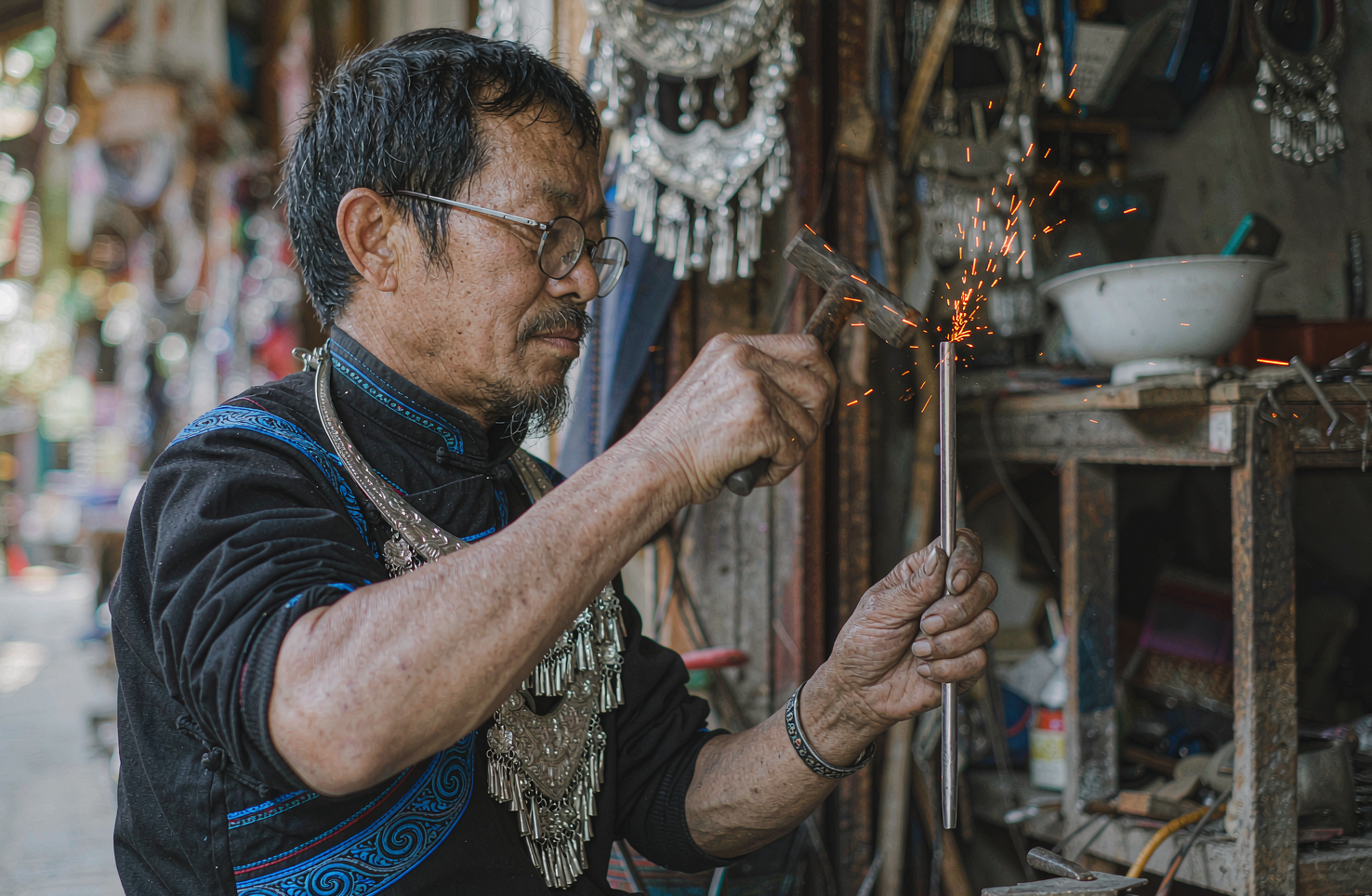
去贵州雷山,看一块银元如何变成一支银簪
在黔东南的苗寨里,银不只是一种首饰材料。它曾经是可以随时熔掉、重新打制的"存款",也是节日里一个女人身上最亮的那部分。关键在于,当一块老银元被放进坩埚,它要经过多少双手、多少道火,才重新成为一件能戴出门的东西。
韵和鸣 · 2026/10/9 · 27 阅读
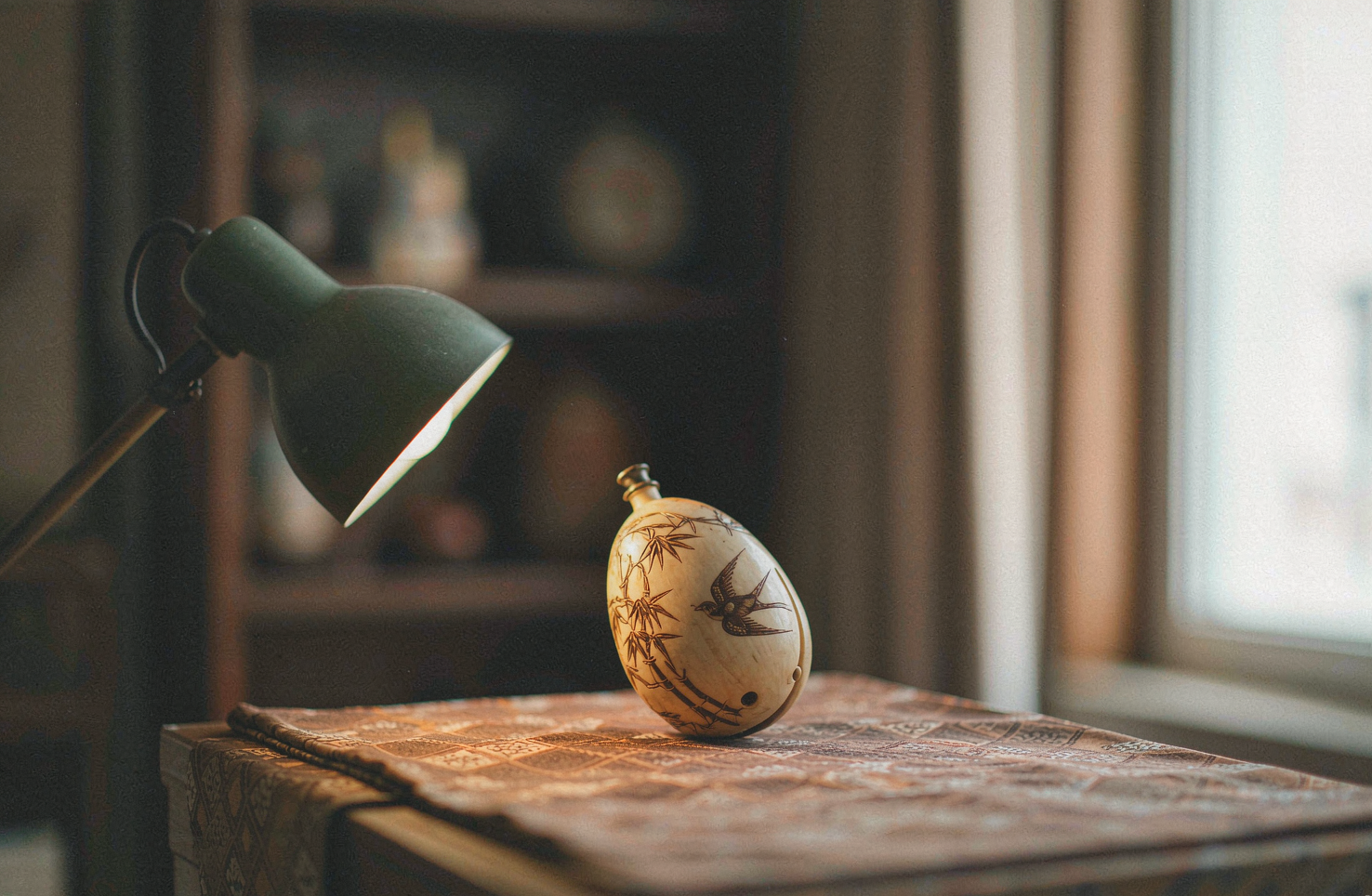
灯下刻蛋的一夜,一枚蛋壳上的毫米功夫
寻访蛋雕匠人的那个晚上,工作台上一盏台灯、一把刻刀、一碟画好底稿的蛋壳。蛋雕这门传统手工技艺,说白了就是在薄胎上动刀子——壳壁比指甲盖厚不了多少,刻透半层是功夫,刻穿整个是事故。我们坐下来看了大半夜,看懂了这门手艺的关键不在"刻",在"忍"。
韵和鸣 · 2026/10/13 · 4 阅读
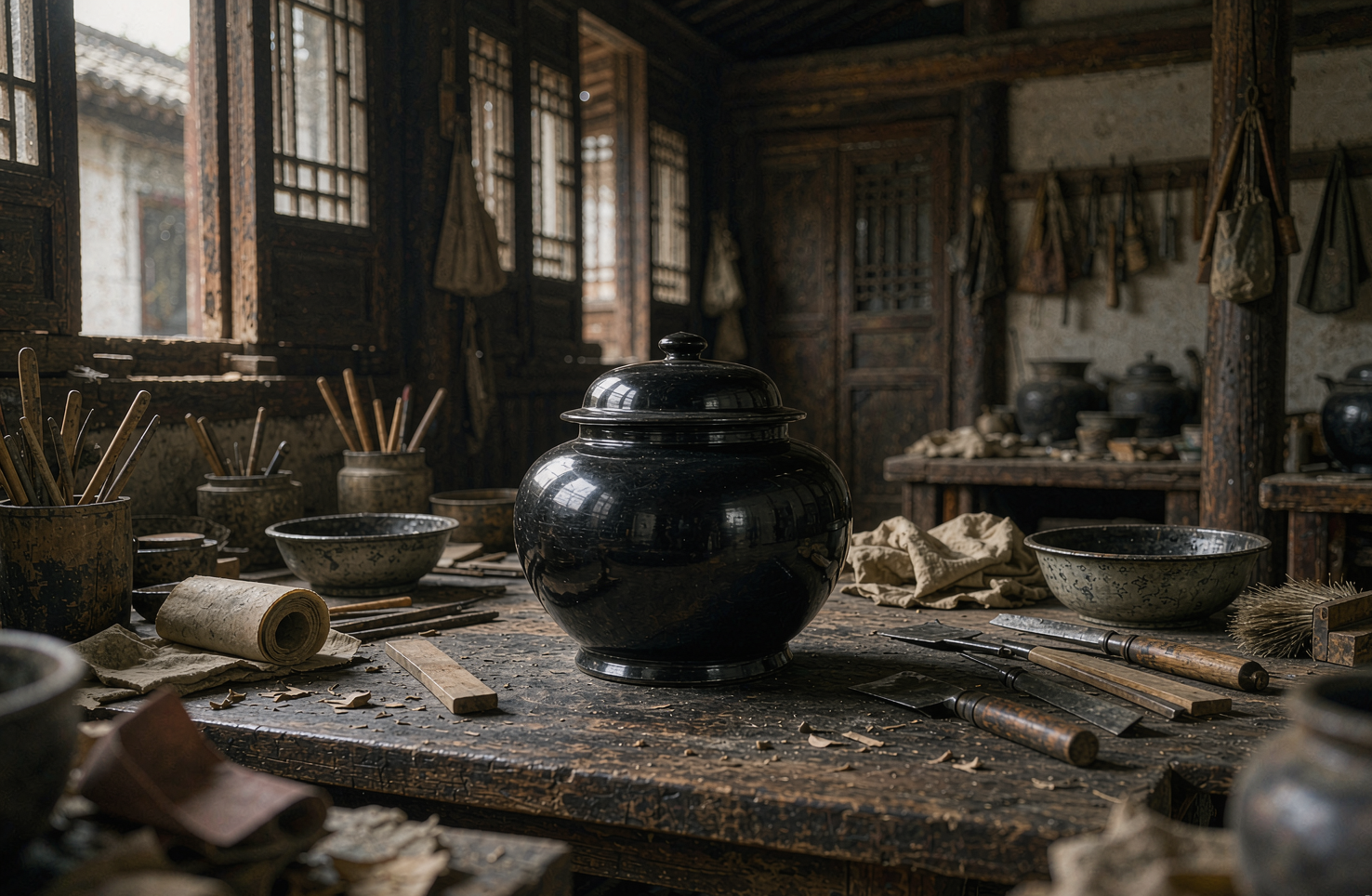
漆器为什么能埋八千年不坏
在博物馆做漆器研究与修复的研究员老周,桌上常年摆着两样东西:一段出土的漆皮残片,一只新做不久的平遥推光漆盘。他说这两样东西隔着八千年,却是同一种材料。这次对话,我们从"漆器为什么埋几千年不坏"聊起,聊到最后,其实是手艺对材料的理解问题。
韵和鸣 · 2026/10/14 · 16 阅读
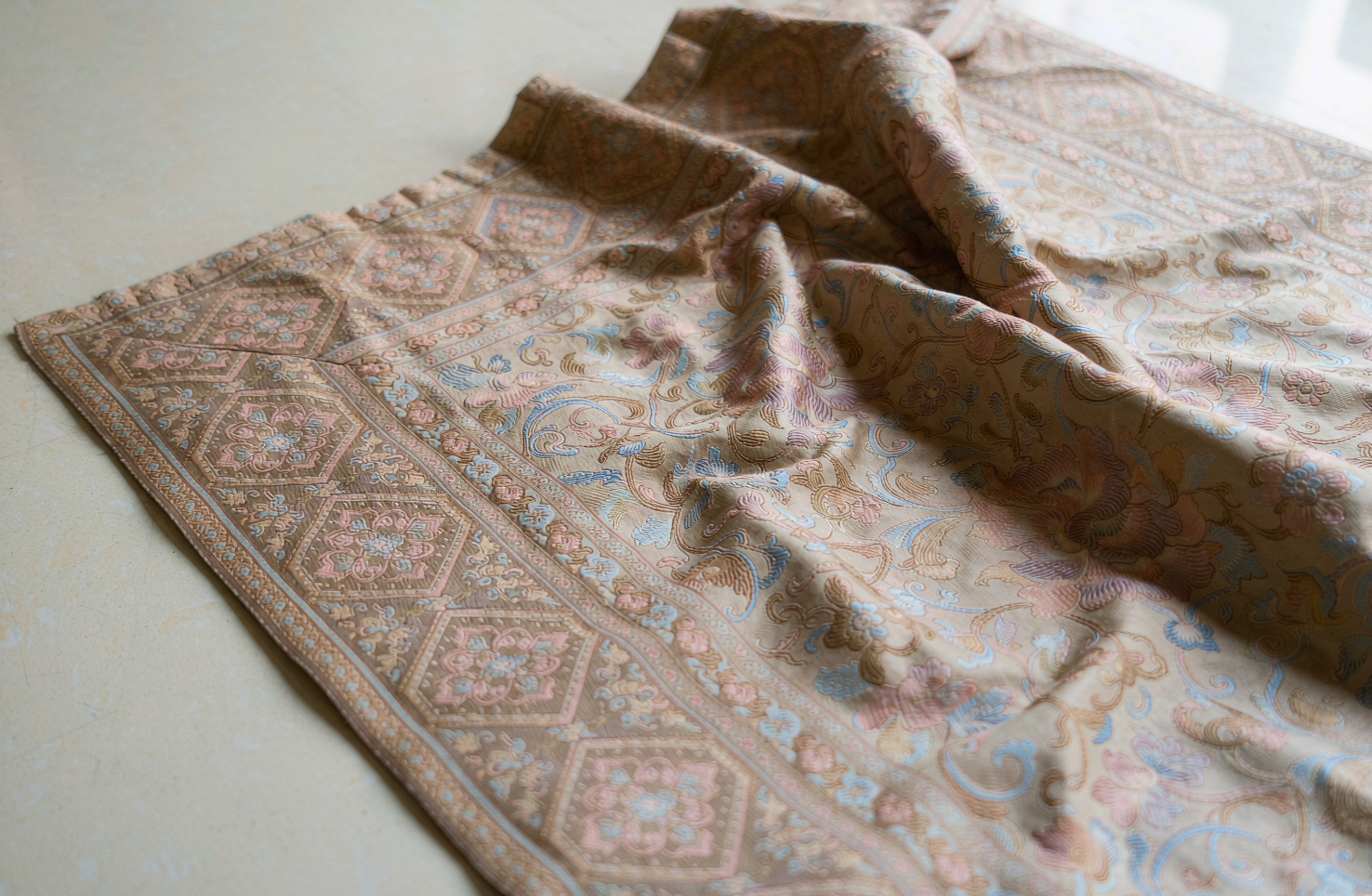
一方宋锦里,藏着宋人的审美秩序
初见宋锦,我的反应不是"好看",而是"安静"。它不像人们想象里的锦那样满身是光。带我看锦的老师傅说,正是这份安静,最难织。
韵和鸣 · 2026/10/8 · 11 阅读
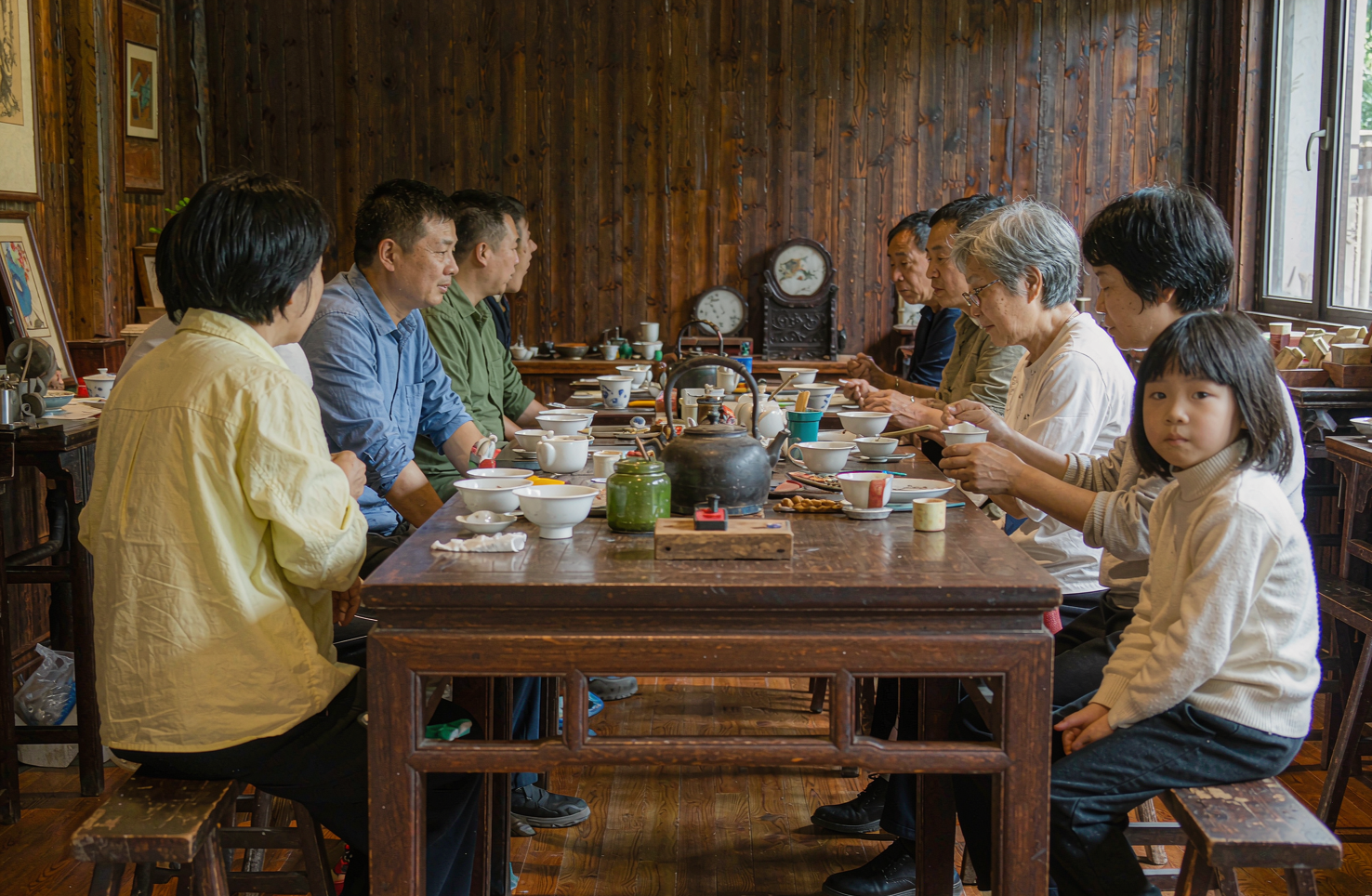
把"慢"做成一种体验:一间非遗会客厅的想法
我们习惯按功能给空间分类:吃饭的、购物的、办公的。但有一种很难归类——它在城市的闹处,不催你走,也不急着让你买单。关键在于,当"慢"被认真设计出来,它本身就可以是一种产品。
韵和鸣 · 2026/10/9 · 10 阅读
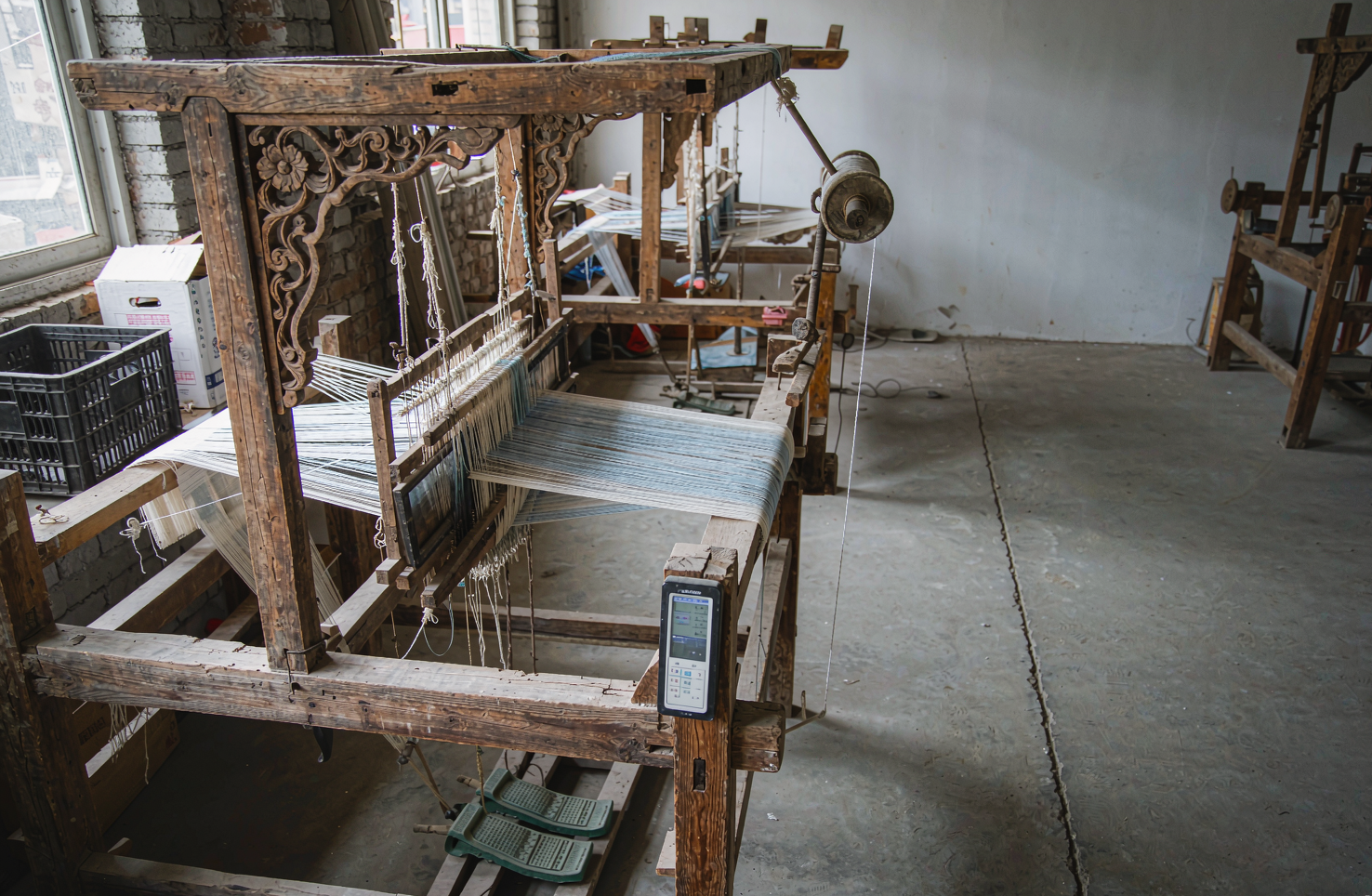
机器开始学手艺:是给匠人搭把手,还是来接班
一段流传很广的画面里,一台机械臂正跟着非遗传承人"学艺"——学劈丝、捻线、穿针。看的人分成两拨:一拨说技术帮上了忙,一拨说来抢饭碗了。同一件事读出两种意思,关键在于用什么尺度去量。
韵和鸣 · 2026/10/9 · 10 阅读