阴干房的秘密:大漆为什么要「看天吃饭」
韵和鸣 · 韵和鸣公众号 · 2026/10/3 12:00:00 · 4 阅读
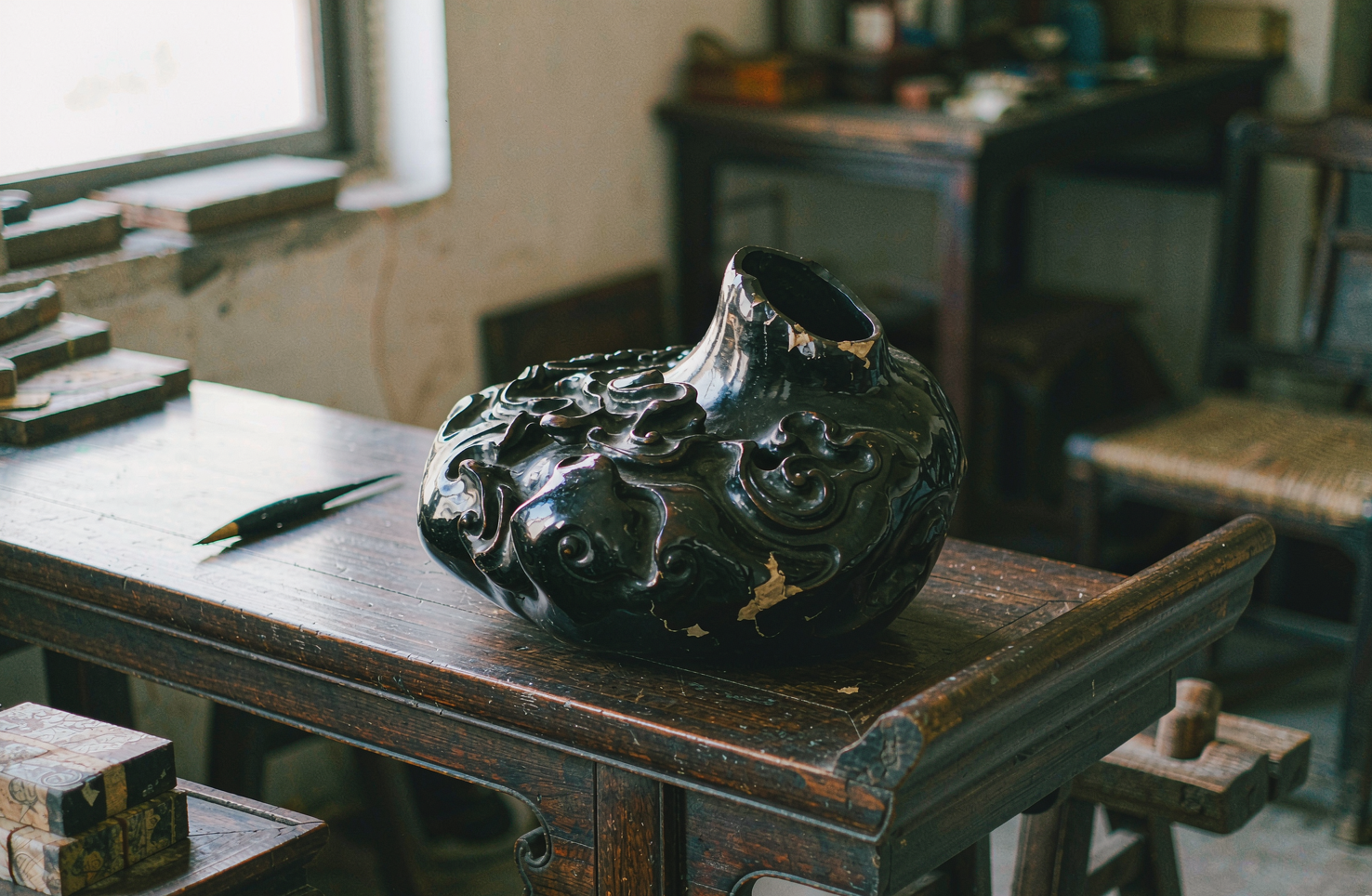
在平遥的漆坊里转了半天,最让我意外的房间,是一间什么都没“生产”的小屋。它叫阴干房。器物进去,什么都不做,只是待着。可漆匠说,漆器的成败,一半押在这间屋里。
推开门,一股潮气先到。
屋里没有机器,没有工位,只有一层层木架。架上静静躺着髹过漆的器物——木胎的盒、盘、瓶,漆面还泛着未干的光。地上洒着水,墙角挂着温湿度计。要说这是车间里最闲的地方,不如说是最忙的地方:所有漆器都要在这里排队,一排就是一整天,或者更久。
阴干房做的事,说来只有一件:让漆慢慢结膜。
大漆的干燥,和颜料风干完全是两回事。生漆里起作用的是漆酶,这种活性物质喜欢温暖潮湿的环境——温度不低、湿度够高,它才肯卖力干活。太干、太冷,漆面可能几天都干不透;太热太过,又容易起皱发笑。所以漆匠要做的,不是催它,而是伺候它。
平遥地处北方,秋冬的空气干得能听见静电响。可漆偏偏要“潮”。于是洒水、关门、不开窗,把一间屋子硬生生养成一个江南的雨季。
我问过一位老匠人一个外行问题:现代烘干技术这么发达,为什么不用烤箱,非要等?
他反问我:你见过漆面“起皱”的器物吗?
急火烘出来的漆,膜是死的。表面看着干了,内部没有真正固化到位,日后容易发脆、失光,严重的整层起壳。而阴干房里慢慢结出来的膜,致密、坚韧,才经得起后面一遍遍的打磨与推光。推光漆器讲究“漆面如镜、越擦越亮”,那个底子,就是在阴干房里一天一天攒下的。
“漆要人等它,不是它等人。”这句话他说得很慢,像是替大漆讲情面。
阴干房的墙上,其实挂着一张看不见的日程表,执笔的是天气。
伏天湿热,是漆匠最喜欢的季节——别人躲空调,他们的漆活儿却在阴干房里跑得飞快,一天能顶平时两三天。入了十月,天高气爽,人舒服了,漆却慢了下来,原本一天结膜的活儿要拖到两天。到了冬天,平遥屋里屋外一样的干冷,阴干房就得整日洒水加湿,稍一疏忽,一批活儿就得返工。
所以漆坊里真正的老师傅,看阴历比看日历多,看天气预报比看订单多。什么天气该髹第几道漆,什么日子适合推光,心里都有一本账。这门手艺从建账那天起,就把天气写进了工序——不是用文字,是用几十年的经验。
有意思的是,这套“看天”的本事,如今也在和现代工具握手。有的漆坊装了加湿器,有的在阴干房里挂上了记录温湿度的本子,一天几笔,像给天气记流水账。工具在变,逻辑没变:漆的脾气,终究要顺着来。
在阴干房里站久了,我慢慢明白一件事:这间屋子不是工艺的“成本”,而是工艺的一部分。
七髹八磨,一层漆一道阴干。有人说这是效率的敌人,可换一个角度看——正因为漆必须慢,这件器物才有了被时间反复检查的机会。每一层漆膜都要在阴干房里合格结膜,才能轮到下一层。哪一层急了、糊弄了,后面推光时全部会暴露出来。
木头会记住每一次敷衍,漆会记住每一回急躁。所谓手艺的严谨,一半是人的自律,另一半,是材料本身不容你讨价还价。
后来我还留意到一个小细节:阴干房里不能开大灯,匠人取放器物,多半借着窗光和一盏小灯。问缘故,说是强光暴晒会让局部温度升高,结膜就不匀了。你看,连光都要计较的地方,才养得出经得起推敲的漆面。
离开漆坊的时候,正赶上一批首饰盒进阴干房。匠人把架子腾好,洒了水,关门前回头看了一眼——像把什么托付给了时间。
那扇门里没有奇迹,只有湿度、温度和耐心。但每一件能照见人影的漆器,都是从那扇门里走出来的。
📩 非遗项目 | 匠人举荐 | 跨境出海 | 线下联营
欢迎留言或后台联系,我们与匠人同行。
English
Open the door and the damp air arrives first.
There are no machines and no workstations inside, only tier upon tier of wooden racks. On the racks lie lacquered objects in silence—wooden-bodied boxes, trays, and vases, their surfaces still giving off the sheen of lacquer not yet dry. Water is sprinkled on the floor, and a thermo-hygrometer hangs in the corner. Call it the idlest place in the workshop if you like, but it is really the busiest: every piece of lacquerware must queue here, and a single wait lasts a whole day, or longer.
The drying room does only one thing, really: it lets the lacquer slowly form its film.
The drying of raw lacquer and the air-drying of paint are two entirely different things. What works in raw sap lacquer is laccase, an active substance that favors a warm, humid environment—only when the temperature is not too low and the humidity is high enough will it do its work with gusto. Too dry or too cold, and the surface may not dry through for days; too hot or too much, and it easily wrinkles and crazes. So what the lacquerer must do is not hurry it, but wait on it.
Pingyao lies in the north, where the autumn and winter air is so dry you can hear static crackle. But lacquer insists on being damp. So they sprinkle water, shut the door, and keep the windows closed, forcing a single room into the rainy season of the Jiangnan south.
I once asked an old craftsman a layman's question: with modern drying technology so advanced, why not use an oven instead of waiting?
He asked me in return: have you ever seen a piece whose lacquer surface has "wrinkled"?
Lacquer dried by a fierce flame has a dead film. The surface may look dry, but the interior has not truly cured, and in time it grows brittle and dull, and in severe cases the whole layer lifts. A film formed slowly in the drying room, by contrast, is dense and tough, and only it can withstand the repeated rounds of grinding and hand-polishing that follow. Polished lacquerware prizes a surface like a mirror, brighter with every rub, and that foundation is accumulated day by day in the drying room.
"Lacquer waits for a person, not a person for lacquer." He said it very slowly, as if pleading on the lacquer's behalf.
On the wall of the drying room hangs, in fact, an invisible schedule, and it is the weather that holds the pen.
The hot, humid dog days are the lacquerer's favorite season—while others hide from the air conditioning, their lacquer work races along in the drying room, one day matching two or three ordinary days. Come October, with high skies and crisp air, people feel comfortable but the lacquer slows down, and a job that once cured in a day drags out to two. In winter, Pingyao is as dry and cold indoors as out, and the drying room must be sprinkled and humidified all day long; the slightest lapse, and a whole batch has to be redone.
That is why the true masters in a lacquer workshop consult the lunar calendar more than the wall calendar, and the weather forecast more than the order book. Which coat of lacquer a given weather calls for, and which day suits hand-polishing, are all kept in an account book in the mind. From the day the account was opened, this craft has written the weather into its process—not in words, but in decades of experience.
Interestingly, this skill of "reading the weather" now shakes hands with modern tools. Some workshops have installed humidifiers; others hang a notebook in the drying room to record temperature and humidity, a few entries a day, as if keeping a running ledger on the weather. The tools change; the logic does not: in the end, the temper of lacquer must be humored.
Standing in the drying room for a long while, I gradually understood something: this room is not a "cost" of the craft but a part of the craft itself.
Seven coats of lacquer, eight rounds of grinding, one coat and one spell of drying each time. Some call this the enemy of efficiency, but seen another way—precisely because the lacquer must be slow, the piece is given the chance to be checked again and again by time. Every layer of film must cure properly in the drying room before the next one has its turn. Rush or scamp any layer, and it all shows up later in the hand-polishing.
Wood remembers every half-hearted pass, and lacquer remembers every burst of impatience. The rigor of a craft is half the maker's self-discipline, and the other half the material itself, which allows no bargaining.
Later I noticed a small detail: no bright lights may be turned on in the drying room, and the craftspeople fetch and set down objects mostly by window light and a single small lamp. Asked why, they said that harsh light raises the local temperature, and the film then cures unevenly. You see, only a place that is so particular about even the light can raise a lacquer surface that stands up to scrutiny.
When I left the workshop, a batch of jewelry boxes was just going into the drying room. The craftsman cleared the racks, sprinkled the water, and glanced back once before closing the door—as if entrusting something to time.
Behind that door there is no miracle, only humidity, temperature, and patience. Yet every piece of lacquerware that can mirror a figure has come walking out of that door.
ICH Projects · Artisan Referrals · Global Distribution · Salon Partnerships
你可能还感兴趣
去贵州雷山,看一块银元如何变成一支银簪
在黔东南的苗寨里,银不只是一种首饰材料。它曾经是可以随时熔掉、重新打制的"存款",也是节日里一个女人身上最亮的那部分。关键在于,当一块老银元被放进坩埚,它要经过多少双手、多少道火,才重新成为一件能戴出门的东西。
韵和鸣 · 2026/10/9 · 27 阅读
灯下刻蛋的一夜,一枚蛋壳上的毫米功夫
寻访蛋雕匠人的那个晚上,工作台上一盏台灯、一把刻刀、一碟画好底稿的蛋壳。蛋雕这门传统手工技艺,说白了就是在薄胎上动刀子——壳壁比指甲盖厚不了多少,刻透半层是功夫,刻穿整个是事故。我们坐下来看了大半夜,看懂了这门手艺的关键不在"刻",在"忍"。
韵和鸣 · 2026/10/13 · 4 阅读
漆器为什么能埋八千年不坏
在博物馆做漆器研究与修复的研究员老周,桌上常年摆着两样东西:一段出土的漆皮残片,一只新做不久的平遥推光漆盘。他说这两样东西隔着八千年,却是同一种材料。这次对话,我们从"漆器为什么埋几千年不坏"聊起,聊到最后,其实是手艺对材料的理解问题。
韵和鸣 · 2026/10/14 · 16 阅读
一方宋锦里,藏着宋人的审美秩序
初见宋锦,我的反应不是"好看",而是"安静"。它不像人们想象里的锦那样满身是光。带我看锦的老师傅说,正是这份安静,最难织。
韵和鸣 · 2026/10/8 · 11 阅读
年轻人不愿学老手艺,该怪年轻人,还是怪这门手艺?
非遗传承里被讨论得最多的一句话是"后继乏人"。这句话往下追一层,就分成两条路:一条通向年轻人,说他们耐不住、看不上;一条通向他们面对的那门手艺,说它没能给出一条能活下去的路。这两条路,最近又吵起来了。
韵和鸣 · 2026/10/8 · 10 阅读
一位漆器匠人的失败清单,那些没做成的器物
一间漆坊的账,通常记的是卖出了多少件;平遥一位做了三十多年推光漆器的老师傅,却另有一个本子,专记做坏了多少件。失败清单这门"倒着记的账",恰恰是手艺扎实与否的底细——器物耐看的那一面,是从废品堆里刨出来的。
韵和鸣 · 2026/10/12 · 9 阅读